Ultrasonic Cleaners
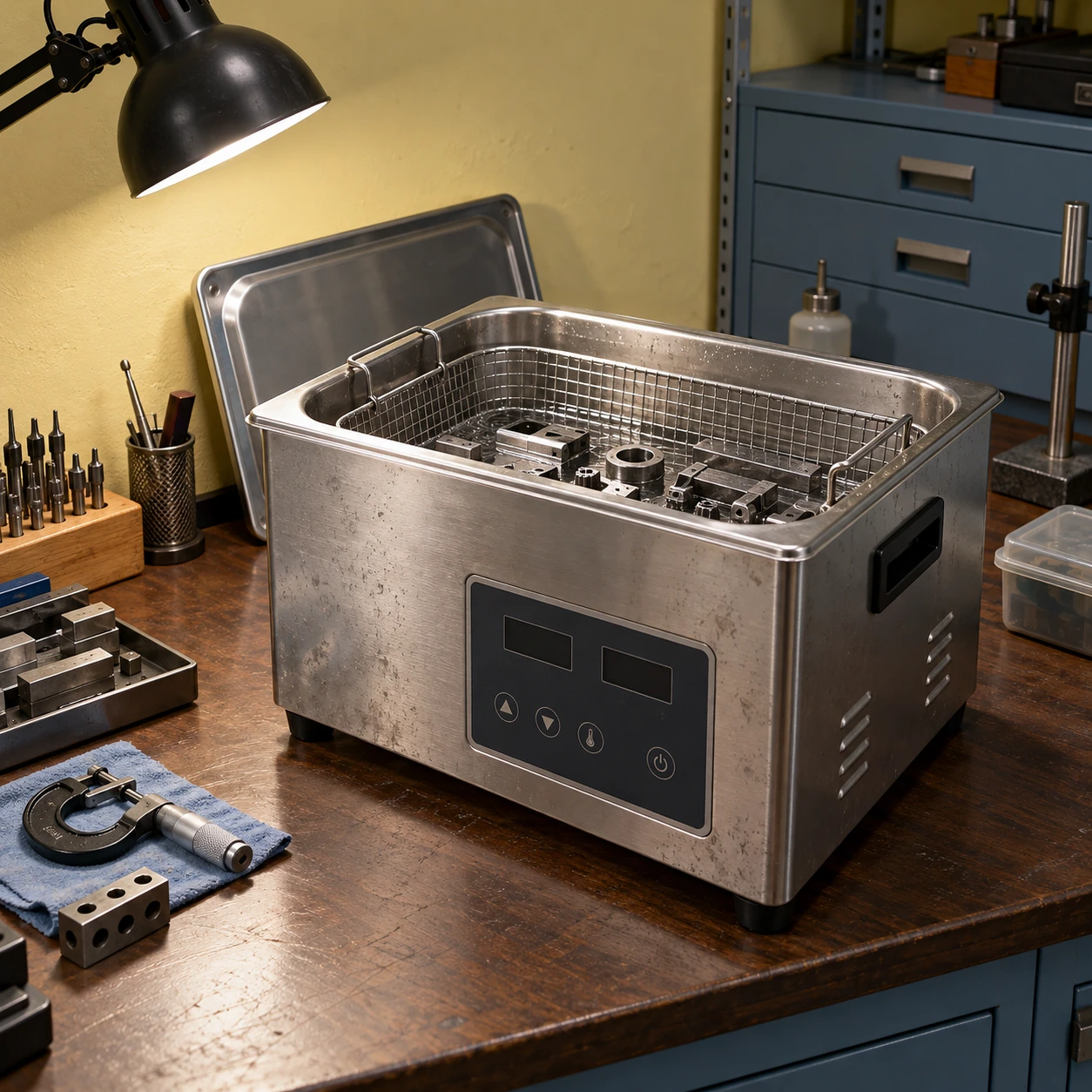
digital ultrasonic cleaner
| Tank family | 10 / 15 / 30 L nominal capacity |
|---|---|
| Internal tank W × D × H (mm) | 300 × 240 × 150 / 330 × 300 × 150 / 500 × 300 × 200 |
| External W × D × H (mm) | 330 × 270 × 310 / 360 × 330 × 310 / 530 × 330 × 350, respectively |
| Ultrasonic frequency / power | 40 kHz; 240 / 360 / 600 W options by tank size |
| Heating | 200 / 300 / 500 W; adjustable up to 80 °C, subject to chemistry and material limits |
| Controls | Timer up to 30 minutes; rotary or digital controls; selectable degassing function |
| Construction / accessories | 304 stainless steel tank and case; suspended basket, lid and drain valve |
| Electrical supply | 220–240 V, 50/60 Hz; 100–120 V variants by configuration |
Functions vary by configuration. Set temperature, measured bath temperature, ultrasonic power selection and degassing are separate controls and should be identified in the offer.
Display functions, operating controls and tank size can be selected for your work instructions and component range.
A digital ultrasonic cleaner makes selected operating values easier to see and repeat. This is useful when different operators process similar components, or when a workstation changes between several established cleaning tasks.
A display shows a setting, not a clean part
The timer can stop a selected exposure, while the temperature control manages heating. Neither measures residual oil, particles or detergent on the workpiece. Process acceptance still depends on inspecting the part using a method appropriate to the next operation.
Check whether the temperature shown is a target value or a measured bath value. A cold incoming load can change the actual liquid temperature, and ultrasonic operation can continue to add heat even when the heater is off.
Choose functions with a defined purpose
- Timed operation
- Useful for repeating an established exposure. The work instruction should also identify when timing starts and what preparation happens before the load is treated.
- Degassing
- A selected mode can assist removal of dissolved gas from newly prepared liquid. It is a preparation function, not a substitute for cleaning or for checking liquid access inside a component.
- Power selection
- Where provided, a lower or higher setting should be evaluated with the intended part. More energy is not automatically suitable for delicate surfaces or bonded assemblies.
- Stored programmes
- If required, specify recipe storage explicitly. A basic digital timer does not imply memory, data logging, remote control or production-line connectivity.
Make operator actions unambiguous
Separate controls for heat and ultrasound can make the machine easier to understand. Keep the display readable with the lid open and the basket in its draining position. Operators should not have to reach over the liquid to change a routine setting.
Record more than the numbers
A repeatable task includes solution identity, bath condition and basket arrangement alongside time and temperature. If those change, the same displayed values may produce a different result.
Select the interface after the hardware
First establish the useful tank and basket space, then choose the controls needed by the process. A more elaborate display cannot compensate for a poorly loaded bath. Compare benchtop ultrasonic cleaner for installation and loading considerations.
Display functions, operating controls and tank size can be selected for your work instructions and component range.