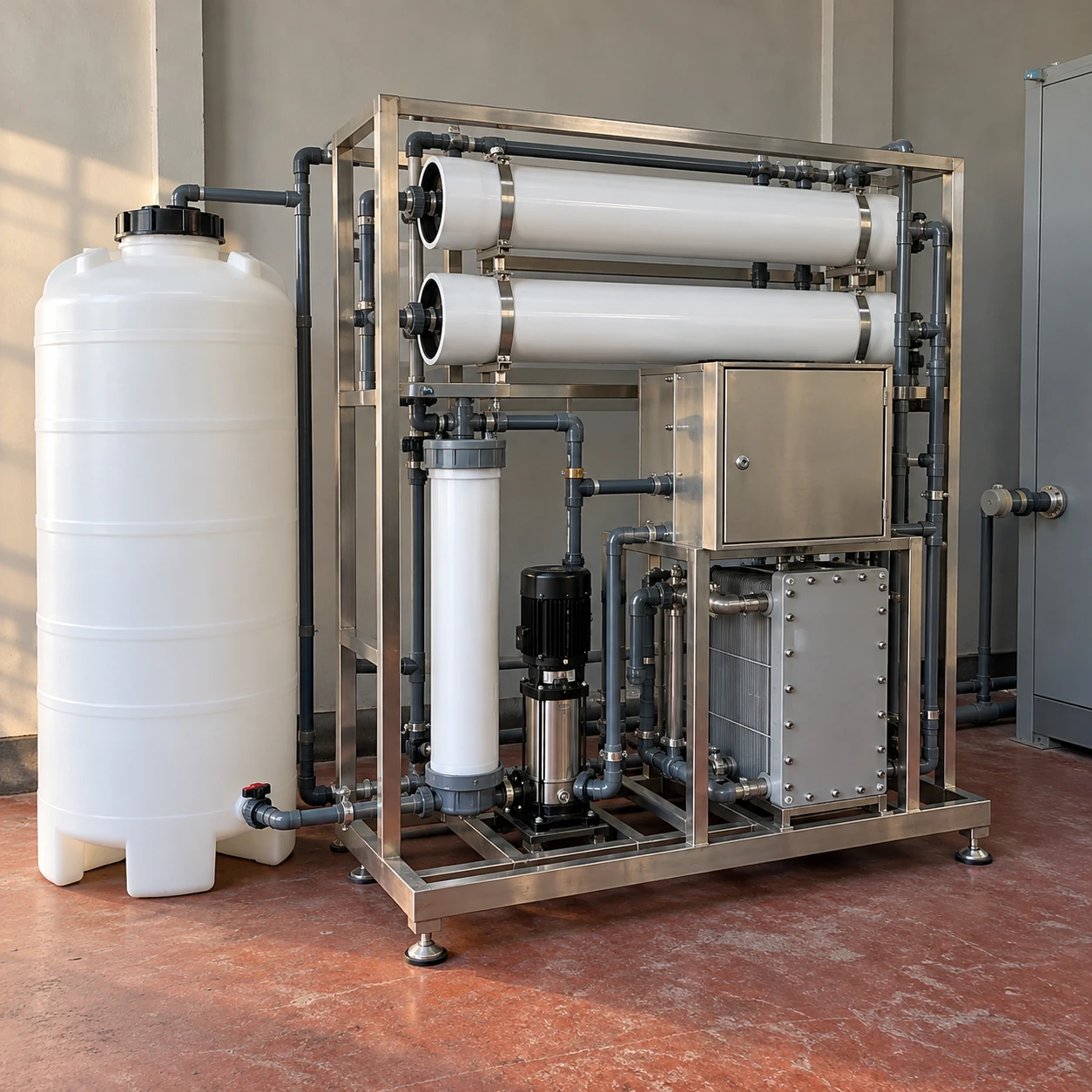
Ultrapure Water Systems
ultrapure water systems suppliers for electrolyzers
| Supply boundary | Electrolyzer make-up water; internal process-loop treatment separately specified |
|---|---|
| Small EDI skid, L × W × H | Approx. 838 × 1016 × 2032 mm |
| Alternative EDI skid, L × W × H | Approx. 991 × 1041 × 2032 mm |
| Process options | RO with deionization, degassing or final polishing as required |
| Water acceptance | Electrolyzer manufacturer's approved quality and inlet conditions |
| Demand and control | Variable-load storage, transfer and agreed quality interlocks |
EDI dimensions exclude upstream RO, storage and transfer equipment. The selected water package must match the electrolyzer's approved feed requirements.
The make-up water package can be customized to the electrolyzer interface, source water and operating demand profile.
An electrolyzer water package should meet the equipment manufacturer's inlet specification across the intended duty. Match source-water treatment, protected storage and transfer to a clearly defined handover point.
Start at the electrolyzer's water inlet
Ultrapure water systems suppliers for electrolyzers need a defined feed-water specification from the electrolyzer manufacturer. PEM, alkaline and other technologies do not justify one universal inlet limit. The selected stack, balance of plant and operating arrangement matter. A water package should be assessed against that requirement at the actual handover point, including the storage and piping between the treatment skid and the electrolyzer.
Make-up water is also a different procurement scope from an electrolyzer's internal circulating liquid. An alkaline electrolyte circuit is not simply an ultrapure-water distribution loop. Any treatment connected to an internal process circuit requires the equipment manufacturer's specific approval and compatible design.
Match treatment to both source and destination
Source-water analysis establishes what the treatment system must remove; the electrolyzer inlet specification establishes the endpoint. RO, deionization, degassing and polishing can be combined to bridge that gap, but each stage must receive water within its own feed limits. Supplying nominally demineralized water does not establish that every relevant impurity is controlled.
Consider conductivity alongside the individual substances identified by the electrolyzer manufacturer. Feed variations and carbon dioxide can influence the load reaching downstream deionization. That is why two sites using the same electrolyzer may require different pretreatment and operating arrangements.
Keep the acceptance boundary clear
Define water temperature, pressure, flow and quality at the electrolyzer connection. Include how unacceptable water is isolated or diverted and how accepted service is restored. The water supplier and electrolyzer supplier should agree this interface before commissioning.
Size for the production profile, not only the nameplate
For water electrolysis, the reaction consumes approximately 9 kg of water per kilogram of hydrogen. This is the reaction requirement, not the total site-water demand. Treatment reject, conditioning, flushing and other plant utilities must be added to the appropriate water balance. Cooling-water requirements are a separate part of that balance and should not be presented as ultrapure make-up consumption.
A changing power supply can produce a changing water demand. Storage may smooth short variations, while treatment equipment operates within a manageable range. Establish how the reservoir is protected and how the system behaves during prolonged low demand. More stored water is not automatically a better solution if turnover and water-quality maintenance are neglected.
EUROWATER's hydrogen water-treatment paper distinguishes the reaction-water requirement from broader plant use and explains why the required quality varies with the electrolyzer. Its project examples should not be treated as limits or capacities applicable to every installation.
Buy a complete water-package interface
| Interface | Define in the enquiry |
|---|---|
| Incoming water | Analysis, seasonal variation, available pressure and supply interruptions |
| Delivered water | Electrolyzer-approved specification, normal and peak demand, connection conditions |
| Storage and transfer | Responsibility for tank, vent, transfer pump, connecting pipework and sampling points |
| Controls | Demand request, available-water indication, quality alarm and response to loss of supply |
| Maintenance | Consumable access, cleaning scope, isolation points and return-to-service acceptance |
Compare the cost of accepted water
Compare proposals at the same incoming-water conditions and duty. Include energy, consumables, reject-water handling and the time required to recover accepted quality after an interruption. A high nominal output has limited value if the required water is unavailable during the production schedule. Equally, extra treatment stages should address a defined contaminant or operating need rather than simply lengthen the equipment list.
shengtongjh can coordinate a water-treatment equipment enquiry using the electrolyzer manufacturer's approved interface requirements. Review the general system configuration choices, then provide the feed analysis, demand profile and installation constraints. The quotation can identify the supplied package and the site or electrolyzer work that remains with other parties.
The make-up water package can be customized to the electrolyzer interface, source water and operating demand profile.