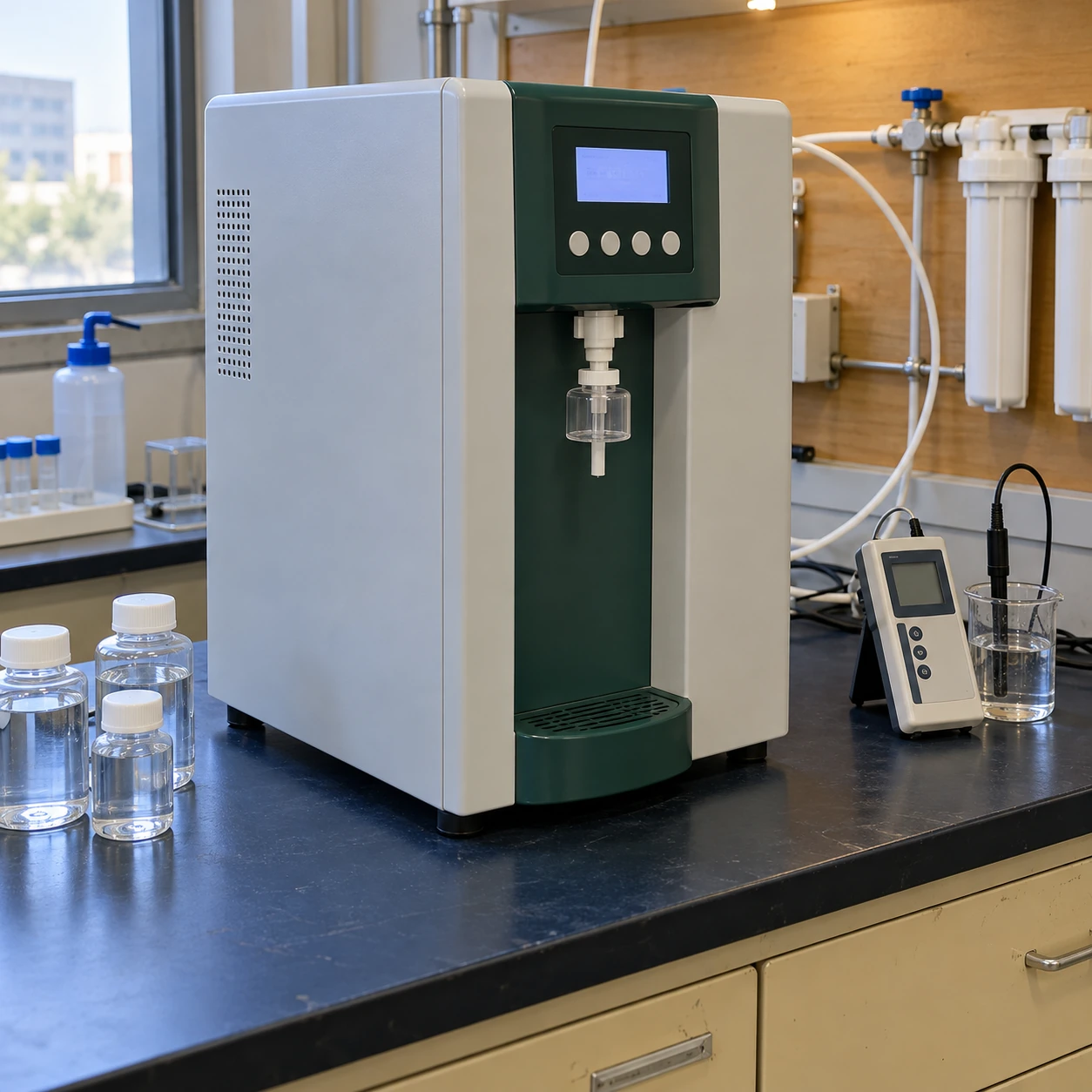
Ultrapure Water Systems
trusted ultrapure water system for labs
| Incoming water | Compatible RO, DI or EDI supply; tap-fed configuration requires its own pretreatment and RO stage |
|---|---|
| Body W × D × H (mm) | 280 × 530 × 510 without an attached dispense unit; 370 × 610 × 640 with an attached dispense assembly |
| Withdrawal options | Up to 1 L/min with a matched feed and polishing circuit; fixed outlet or remote dispensing |
| Purity acceptance | 18.2 MΩ·cm at 25°C ionic-purity target; low-TOC acceptance specified separately for the selected UV configuration |
| Polishing stages | Mixed-bed ion exchange; optional organic adsorption and 185/254 nm UV; selected terminal particle filter |
| Recirculation | Internal polishing-loop circulation; reservoir and remote-dispenser coverage specified with the layout |
| Electrical and monitoring | 100–240 V AC, 50/60 Hz supply options; resistivity, temperature and consumable alarms; TOC monitoring by configuration |
| Service interfaces | Accessible cartridge connections, isolated feed and drain provisions; matched seals and low-leaching water-contact materials |
Acceptance requirements and the evidence supplied with the selected configuration are agreed in the quotation. No certification or independent endorsement is implied.
Trust in laboratory water comes from evidence that operators can use: defined incoming-water limits, relevant output measurements, clear alarms and a documented way to return the system to service after maintenance.
Specify the evidence before comparing the equipment
A photograph, a familiar cabinet shape or a high resistivity value in a brochure is not a complete basis for laboratory confidence. The proposed unit should have a defined feed range, an identifiable treatment path and acceptance measurements relevant to the work. The water tested must come from the intended dispense point under stated conditions.
For sensitive chemistry, ionic purity and organic background are different questions. For biological work, microbiological and application-specific requirements add further questions. Avoid accepting a certificate for one component as proof of the entire installed system's water quality.
Useful records
Ask what the system measures, where the sensors are located and how the values are presented. A reading before the last length of tubing may not describe water after that tubing. Temperature compensation and sensor verification matter when comparing results taken at different times.
A practical record can identify feed condition, water-quality status, relevant alarms, consumable changes and the operator's release decision. The required level of logging depends on laboratory procedures; a basic unit should not be described as having an audit trail merely because it shows a number on a screen.
Useful acceptance checks
Agree the checks with the person responsible for the method. These can include the selected water-quality measurements, response to low feed or unsuitable water, recovery after an ordinary draw and inspection of the outlet and connections.
The purpose is to demonstrate that the supplied arrangement works under the laboratory's conditions. A short demonstration using different feed water or a separate sampling point may not answer that question.
Look for understandable failure information
Feed or production issue
A falling refill rate can arise upstream of the final polishing cartridge. Distinguishing low supply pressure, pretreatment restriction and membrane condition avoids treating every shortage as exhausted resin.
Quality trend
A gradual change in ionic readings deserves a different investigation from a sudden change following maintenance. Logged conditions help distinguish loading, a connection problem and measurement error.
Outlet or handling issue
If the instrument reading is stable while method blanks change, investigate collection and use. A contaminated closure or unsuitable transfer vessel can affect the result after the system has finished its job.
Include the supply relationship
Reliable operation also depends on identifying compatible consumables, retaining their records and knowing what support is included. Define replacement part specifications and the maintenance responsibilities at purchase. Do not assume indefinite availability or a response time that has not been agreed.
shengtongJH acts as a procurement and equipment-supply integrator. Identify the documents, test results and service scope required with your enquiry so they can be addressed in the proposed supply. A clear purchase scope connects the selected equipment, compatible consumables and acceptance responsibilities before installation.
For the physical side of upkeep, review service access and cartridge handling alongside the documentation.
Monitoring, documentation, consumable identification and the dispensing layout can be customized to your laboratory's operating and acceptance requirements.