Ultrapure Water Systems
maintenance-friendly ultrapure water system
| Feed arrangement | Tap-water pretreatment with RO and final polishing; prepurified-feed versions also selectable |
|---|---|
| RO production options | 3 / 6 / 12 L/h at 15°C feed temperature; feed pressure and quality affect output |
| Cabinet W × D × H (mm) | 260 × 470 × 470; 280 × 530 × 510; 305 × 400 × 545 — footprint depends on configuration |
| Storage and dispensing | 5 / 6 / 12 L storage options; up to 1 L/min intermittent ultrapure dispense with a matched unit |
| Ionic-purity acceptance | 18.2 MΩ·cm at 25°C at point of dispense, subject to the selected system and agreed feed conditions |
| Treatment options | Ion-exchange polishing; 185/254 nm UV; selected 0.2 or 0.22 μm final filter; application-specific UF |
| Fluid path | Low-leaching polymer tubing and compatible cartridge housings; seals selected for the treatment and cleaning method |
| Power and controls | 100–240 V AC, 50/60 Hz supply options; resistivity/temperature display, tank-level control and feed alarms |
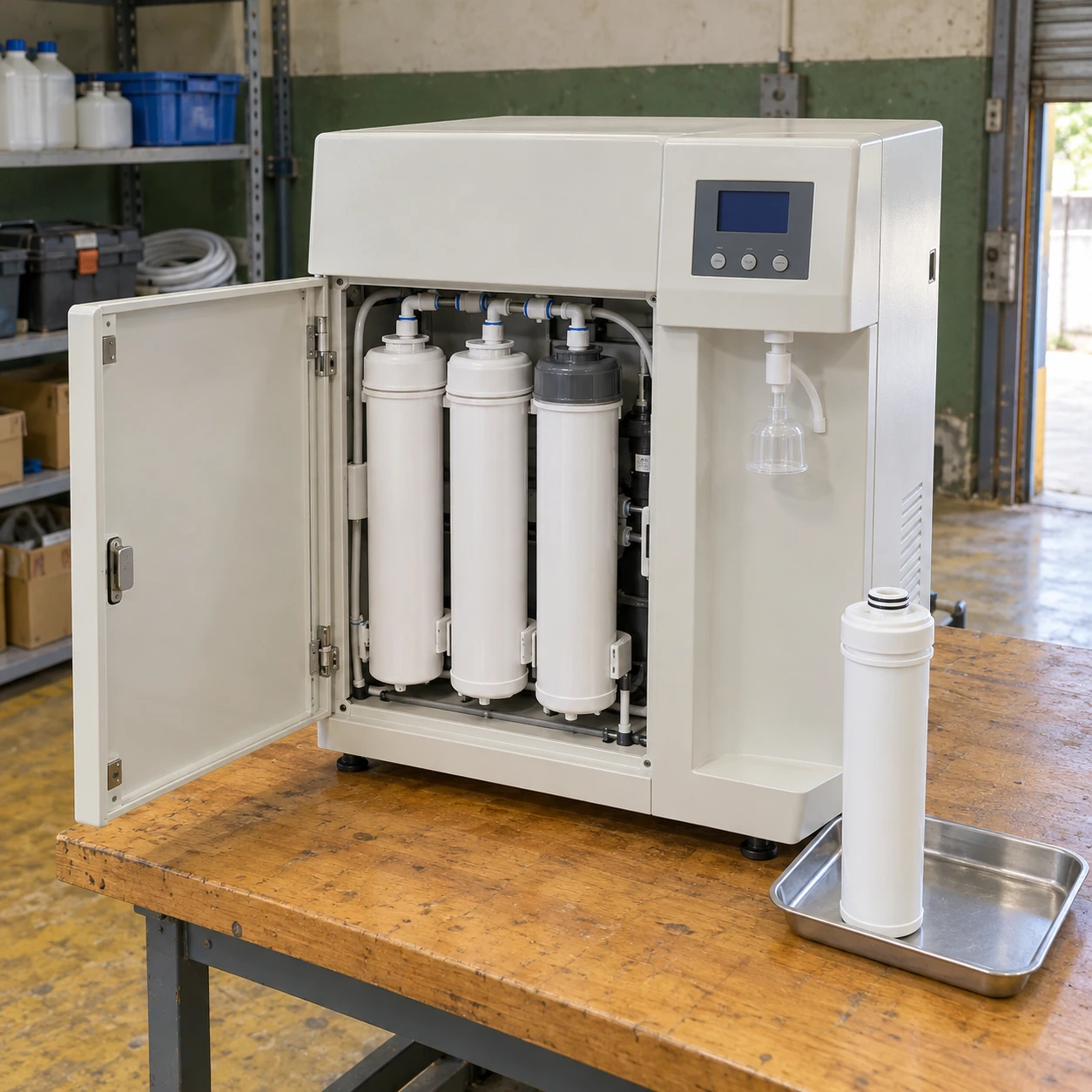
| Maintenance access | Front or side cartridge access, protected electrical section, feed isolation and drain access; removal clearances agreed with the selected cabinet |
Access direction and removal space must match the selected cabinet. Replacement intervals and cleaning instructions follow the supplied equipment and actual operating conditions.
Maintenance-friendly ultrapure water equipment lets the operator reach service parts without dismantling the workstation, identify the correct replacement and confirm that the water path is ready for use afterwards.
Service space must remain usable after installation
A cartridge that is easy to reach on a demonstration bench can become difficult to replace beside a wall or beneath a fixed shelf. The service opening, cartridge extraction direction and space for a tray all belong in the installation envelope. Moving a connected cabinet every time it needs attention increases the chance of disturbing tubing or damaging a fitting.
Front access can suit a narrow bench position, while side access may be convenient where the cabinet has an open end. Neither is inherently better. Select the direction that remains available when bottles, neighbouring instruments and storage are in their normal positions.
Identify the replacement before opening the water path
Cartridges that look alike can contain different media, flow restrictions or connection details. Record the supplied part specification and compatible replacement before purchase. A matching external shape is not sufficient evidence of compatibility.
Separate membrane, resin, UV and final-filter requirements where the design permits independent replacement. This can avoid discarding serviceable parts, but it also requires clear identification so one maintenance action is not mistaken for completion of the whole service scope.
Design the maintenance task as a complete cycle
Prepare and isolate
Accessible feed isolation, electrical isolation and a controlled drain route allow service work to be planned. Keep replacement parts protected from dust and handling contamination. Follow the equipment's instructions rather than improvising with fittings or cleaning agents.
Replace without contaminating
Clean working space, protected connector ends and suitable handling are as important as the mechanical release mechanism. Avoid laying water-contact parts on the bench or touching internal surfaces. A sealed electrical compartment should remain separate from wet service work.
Restore and release
Replacement is not complete when the door closes. The prescribed rinsing or sanitation and relevant acceptance checks must be finished. Record the change and investigate leaks or abnormal quality before the water is returned to analytical use.
Use alarms to locate work, not just to count days
Time reminders are useful, but loading varies with feed quality and consumption. A restricted pretreatment stage, declining RO performance and depleted polishing resin require different responses. Quality and production trends help direct attention to the right part of the system rather than prompting repeated replacement of the easiest cartridge.
Do not extend a specified replacement interval solely because the ionic reading is still high. Some maintenance requirements concern microbial control, lamp condition or material ageing that the resistivity sensor cannot measure. The selected system's instructions and the laboratory's quality procedure determine the release decision.
Specify an operable service package
A practical enquiry includes the proposed cabinet position, available access sides, staff capability and the documentation needed for routine work. Include replacement seals, any special tools and consumable identification in the supply discussion. The quality-evidence page explains how these records connect maintenance to continued confidence in the water.
Cartridge access, service connections, maintenance documentation and consumable packages can be customized for your installation and staff requirements.