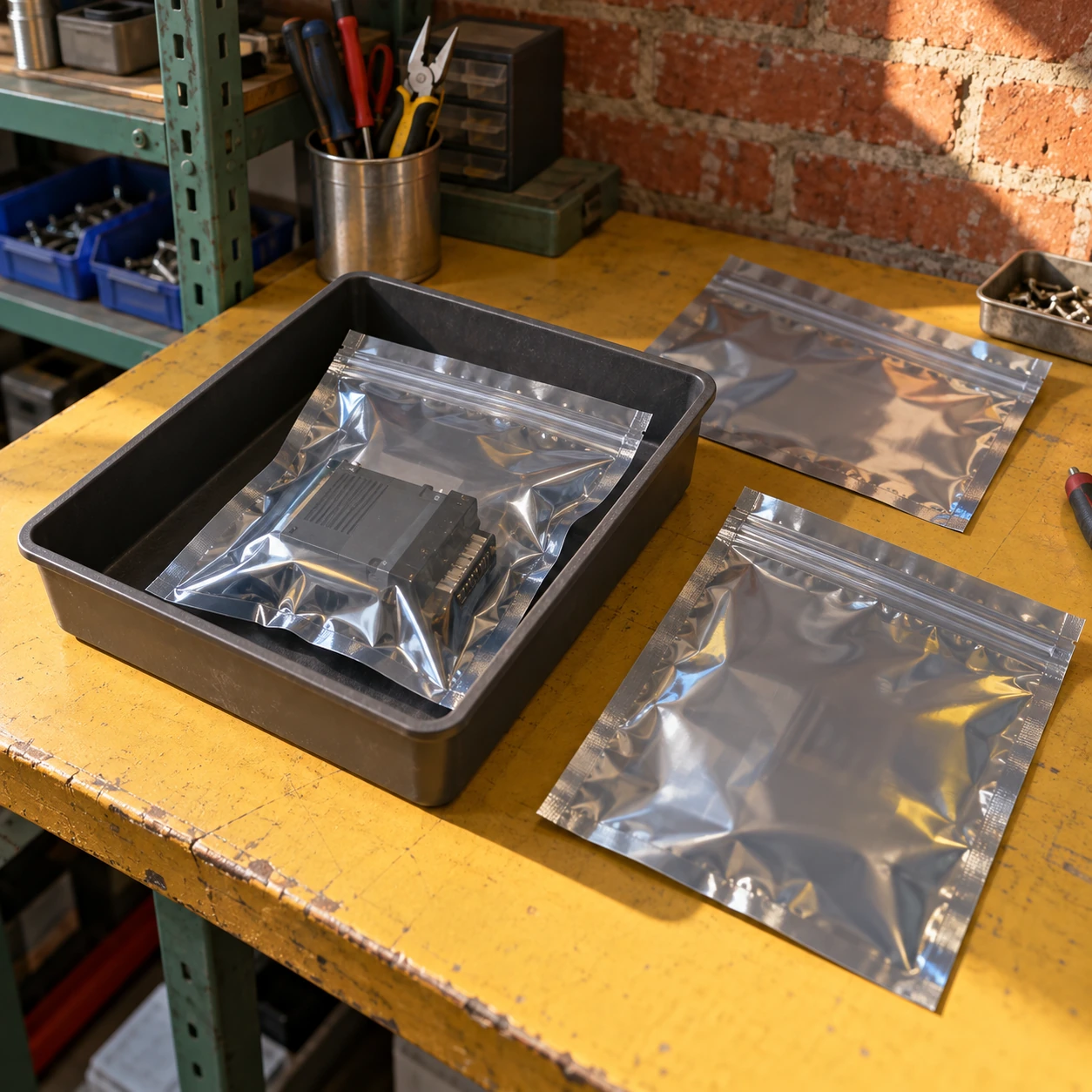
Static Shielding Bags
static shielding bags reclosable
| Closure format | Press-to-close zipper on a metallized shielding pouch |
|---|---|
| Nominal flat W × L | 127 × 203.2; 203.2 × 304.8; 254 × 304.8 mm |
| Material option | Approximately 0.071 mm metal-in laminate; approved heavier construction where needed |
| Use assessment | Film integrity, seams, zipper, contamination and readable identity |
| Storage | Original protective packaging where practical; dry sheltered storage away from heat and direct sunlight |
| Reuse release | Site-defined inspection and electrical verification; no universal reuse-cycle allowance |
The nominal flat size is separate from the useful cavity. Continued suitability depends on the specified bag, its condition and the handling process, not simply the presence of a zipper.
Reclosable shielding bags can support repair returns and repeated issue of electronic spares, but each reuse carries a new handling history. A return process should decide whether the package remains suitable before the part goes back into stock.
Give returned packaging a decision point
A spare may come back in a bag that has been folded into a tool case, rubbed against screws or exposed to an uncontrolled store. The fact that the zipper still operates does not establish that the shielding laminate is intact. Keep returned packaging separate until the part and its enclosure have been assessed at the appropriate workstation.
A useful return record connects the part identity, service status and bag disposition. It prevents an untested spare or a suspect package from being mixed with ready-to-issue stock simply because everything looks similar through silver film.
Inspect by failure mechanism
Film and sealed margins
Look for punctures, tears, scratches that compromise the laminate, damaged seams and heavy creasing. Retire compromised bags instead of covering the damage with ordinary tape.
Zipper engagement
Check whether the closure joins continuously without trapped debris, distortion or damaged ends. A closure that repeatedly separates should not be treated as a minor inconvenience.
Contents and contact surfaces
Check for loose screws, fragments, contamination or residue from the previous task. Do not introduce an unapproved cleaning chemical to make a suspect bag appear reusable.
Appearance cannot establish electrical performance
Visible damage is a reason to reject a bag, but the absence of damage is not proof of continued ESD properties. Define verification with the site's ESD responsible person, using methods appropriate to the actual laminate and intended use. A generic resistance spot check alone does not demonstrate discharge shielding.
Do not assign a universal number of trips or calendar life to all bags. Material construction, storage and handling differ. The approved reuse policy should connect those conditions to evidence and replacement criteria.
Make storage less damaging
Keep unused stock protected from direct sunlight, excessive heat and moisture. Retain the original outer packaging when practical, and avoid crushing stacks into narrow bins. Keep sizes and lots identifiable so staff can select a suitable bag without unfolding and refolding many others.
For a packed spare, use a support arrangement that keeps protrusions away from the film. Store it where retrieval does not drag the pouch across rough shelves.
Replace the package without losing the record
When a bag is rejected, transfer the part only under the required ESD handling controls. Carry the correct identity and status into the replacement package, and prevent the rejected bag from returning to the usable stock bin.
If the same damage repeats, revise the fit, tray or handling method. Buying more of the same bag may preserve the failure pattern; compare the packing-space choices before the next order.
Bag size, closure and return-stock identification can be customized for the component, service route and reuse controls.