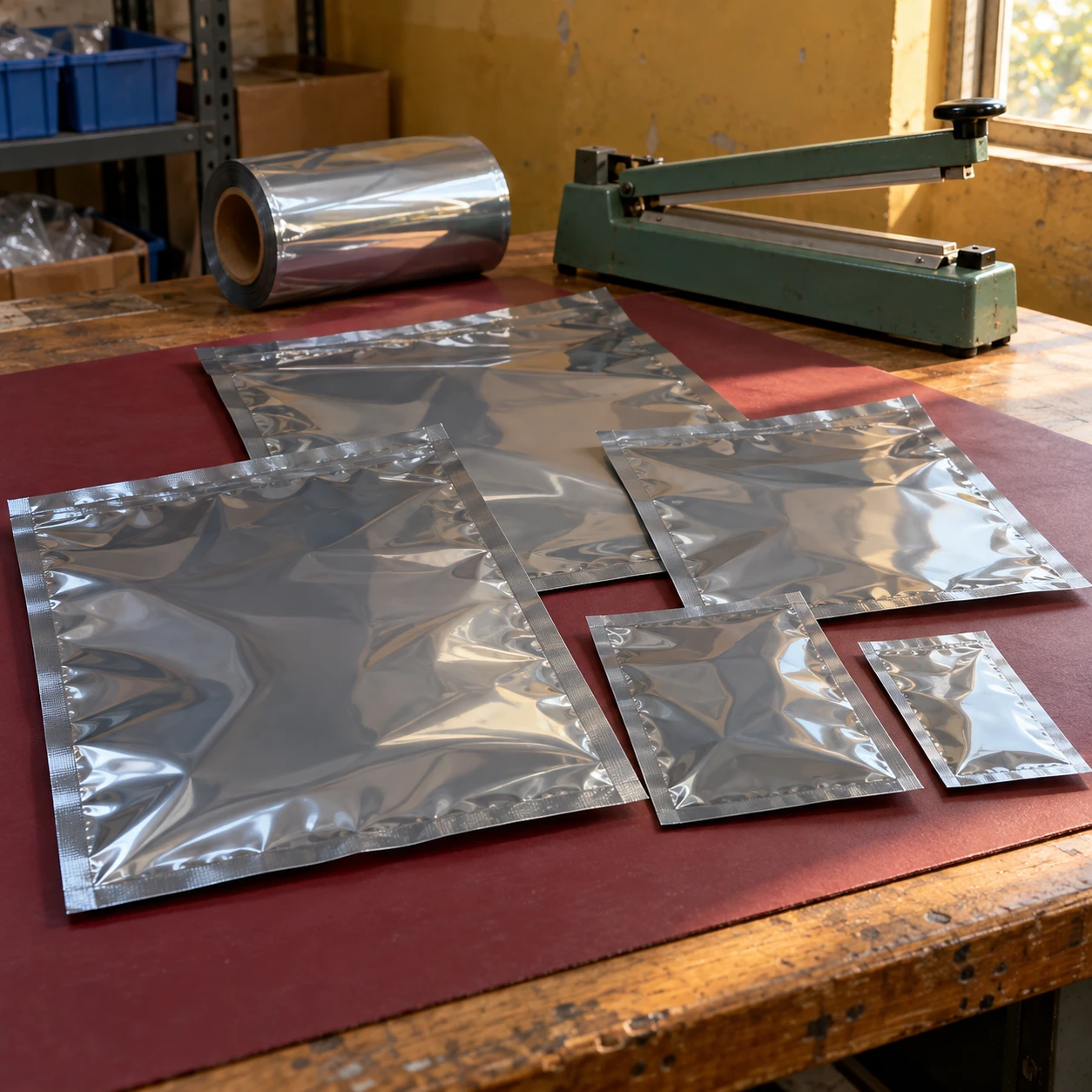
Static Shielding Bags
static shielding bags manufacturer
| Manufacturing form | Flat side-sealed metallized laminate bag; open-top or reclosable construction |
|---|---|
| Nominal W × L options | 152.4 × 203.2; 203.2 × 304.8; 254 × 304.8 mm; other dimensions by specification |
| Laminate selection | Metal-in polyester / metal / polyethylene; other constructions assessed separately |
| Thickness options | Approximately 0.071 and 0.081 mm laminate classes; tolerance specified with the selected material |
| Seam and closure details | Seal position, usable opening, zipper location and closure allowance agreed on the bag drawing |
| Order identification | Material specification, size designation, batch marking and approved artwork |
The bag drawing must distinguish nominal width and length from usable cavity dimensions. Manufacturing tolerances and electrical properties must correspond to the selected construction.
A static shielding bag order needs more than a silver film sample. Laminate selection, conversion quality, seal geometry and identification must remain consistent with the approved specification. shengtongJH supports industrial materials sourcing as a procurement supplier; manufacturing capability and product evidence are assessed for the proposed source.
Specify the finished bag, not only the film
A laminate can have suitable electrical properties yet become an unsuitable package if conversion leaves a weak seal, an undersized cavity or a closure that cannot shut over the contents. The manufacturing brief should therefore cover both material performance and the finished form. Identify the assembly, its vulnerable projections and how operators load it before fixing the bag drawing.
Metal-in construction places the metal layer within the laminate. The surrounding polymer layers contribute handling strength, sealing and surface behavior. Changing the film supplier, laminate thickness or surface treatment can affect more than appearance, so those changes should be reviewed against the approved requirement.
Three points to resolve before a production order
Material identity
Record the laminate designation and intended electrical properties. A generic description such as antistatic plastic does not identify discharge shielding or make two films interchangeable.
Conversion geometry
Fix the opening direction, seal arrangement and useful internal space. If a zipper or hanging feature is requested, establish its location so it does not intrude into the protected cavity.
Release evidence
Connect the agreed specification to a representative finished bag and relevant test documentation. Film data, dimensional checks and finished-package handling each answer a different question.
What a sample trial should reveal
Use the actual part or a dimensionally faithful packing sample. Watch how it passes through the opening, whether corners drag against the film and how the closure behaves once the item settles. Test it with the intended tray and outer carton, since those can change the pressure on seams.
If the operator must force the part through or sharply crease the bag to make it fit, revise the package before ordering volume. Making the film thicker alone may leave the underlying fit problem unchanged.
Keep repeat orders comparable
A retained bag and drawing are useful only when their version is identifiable. Record which material, dimensions, printing and closure were accepted. Ask for proposed substitutions to be identified before shipment rather than discovering a different film or opening at the packing station.
Batch marking helps connect a delivery with its purchasing and quality records. It is useful for isolating a problem batch without treating every bag in stores as suspect.
Define the procurement responsibility
Provide the packing specification and required documentation when requesting a quotation. The proposed supply should state what is included, what needs a sample approval and which properties are supported by the offered product. As a procurement supplier, shengtongJH works from the agreed purchasing requirements and documentation for the proposed manufacturing source. For order quantities, mixed sizes and delivery documentation, continue to shielding bag supply planning.
Bag geometry, seal arrangement, zipper position and identification can be customized for the assembly and its packing process.