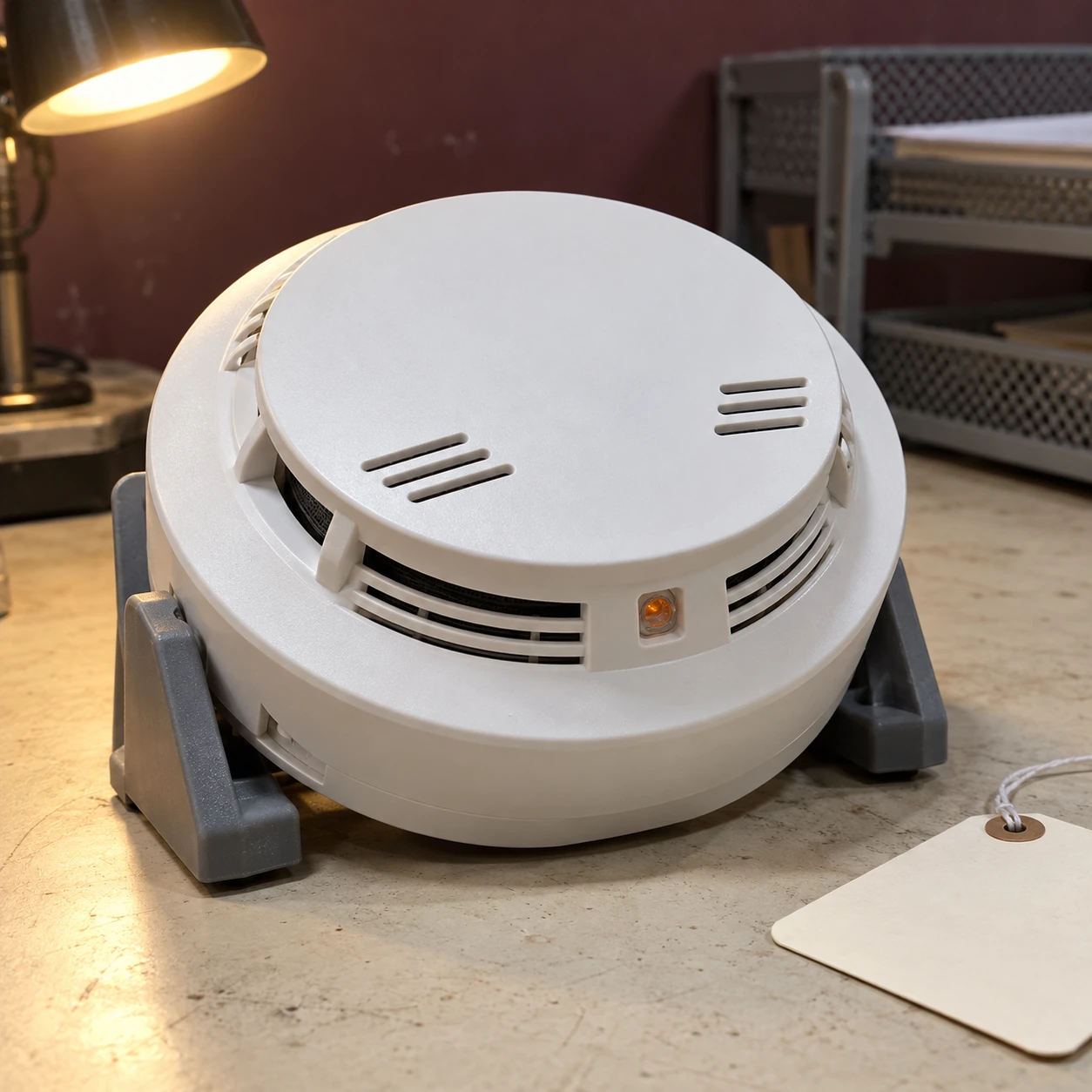
Smoke Detectors & Alarms
smoke detector three quick chirps
| Selection purpose | Model-specific fault identification and compatible replacement supply |
|---|---|
| Signal information required | Sound duration, pause between groups, LED pattern and panel event |
| Typical replacement formats | Self-contained alarm, detector with sounder base or supervised system head |
| Round assembly size options, diameter × height (mm) | 100 × 50 conventional assembly; 110 × 70 or 111 × 57 wireless assembly |
| Power options | Supported low-voltage circuit or exact manufacturer-specified battery arrangement |
| Fault / life indication | Defined by the selected device manual; not inferred from chirp count alone |
| Mounting / enclosure | Matched base and intact moulded cover |
| Service outcome | Approved test after authorized repair or replacement; updated location record |
These specifications describe replacement choices. They do not label every three-chirp signal as a low battery, fault or end-of-life warning.
The replacement detector and accessory supply can be customized after the signal and installed system have been correctly identified.
Three quick chirps do not have one universal meaning. Some alarms use a group of short chirps for a malfunction, while repeated groups of alarm beeps can indicate smoke. The duration, repetition interval, light pattern and exact model must be considered together.
Do not confuse a fire pattern with a service code
If there is an unexplained repeating loud alarm, a fire indication or signs of smoke or heat, use the building's emergency procedure immediately. Do not remain inside trying to decide whether the sounds are “beeps” or “chirps.”
Once safe, the exact product instructions become the reference. A group repeated after a long service interval is not the same observation as a repeating alarm cadence with short pauses. Casual descriptions of both as “three sounds” can lead to a wrong conclusion.
Capture enough information for a useful diagnosis
- Identify the device from the site's equipment record. Note whether it is a smoke-only alarm, a smoke/CO combination or a system sounder.
- Record whether the sound occurred during a planned test, after a power event or during normal occupancy. Preserve any related panel event before an authorized reset.
- After safety has been established, note the sound group, interval and matching light indication, then compare the full pattern with that model's manual.
Some documented alarm families use three periodic chirps for a malfunction. Other equipment uses different codes. This is why replacing a battery based only on the number three can leave a defective unit in service.
If the manual identifies a fault
Follow its permitted service or replacement process. A unit that repeatedly reports an internal fault should not be kept in service merely because its horn still makes noise. The facilities team needs a restored detection and warning arrangement.
Do not repeatedly disconnect power, cover vents or remove batteries to make the room quiet. Any necessary system impairment belongs under the site's controlled maintenance procedure.
If a replacement is required
Provide the confirmed device identity, power arrangement and base details. An interconnected alarm or system head must remain compatible with the existing equipment; replacing it with a standalone device can remove a required reporting function.
For a more general recurring maintenance sound, see smoke detector chirping. The purchase decision should follow the diagnosis, with the completed service and testing recorded against the actual location.
The replacement detector and accessory supply can be customized after the signal and installed system have been correctly identified.