Smoke Detectors & Alarms
smoke detector chirping
| Service focus | Recurring intermittent chirps after the emergency condition has been ruled out |
|---|---|
| Battery choices | Only the chemistry, cell type and part specification approved for the installed alarm |
| 9 V battery envelope, H × W × T (mm) | Up to 48.5 × 26.5 × 17.5 for the standard alkaline snap-terminal format |
| System detector size options, diameter × height (mm) | 100 × 50 wired assembly; 110 × 70 or 111 × 57 wireless assembly |
| Body / mounting | Moulded polymer enclosure; matched twist-lock or dedicated mounting base |
| Fault indication | Model-dependent acoustic, LED or panel messages |
| Serviceable items | Approved replaceable battery and permitted external cleaning; sealed units remain sealed |
| Replacement matching | Detector family, base, communication method and approved building application |
A detector-size option is not a battery substitution guide. Battery-powered and panel-powered devices have different service procedures.
Replacement device selection, approved battery packs and supply quantities can be customized for your facility maintenance programme.
A short chirp is commonly a service signal, but its meaning belongs to the exact alarm model. In commercial premises, the objective is to restore a functioning warning system and document the repair, not merely stop the noise.
Why a fresh battery may not end the chirp
A battery warning is only one possible cause. The device may be reporting the end of its permitted service life, a sensor fault or a supply problem. A battery can also have the right printed voltage while being the wrong type for the alarm, beyond its useful storage life or incorrectly seated in its compartment.
Start with the model's signal guide. Record the chirp interval and associated indicator, then compare them with the manual. Do not apply a timing chart from a different product simply because its case looks similar. If the sound changes to a full alarm or a hazard is suspected, use the site's emergency procedure immediately.
Where the battery is replaceable
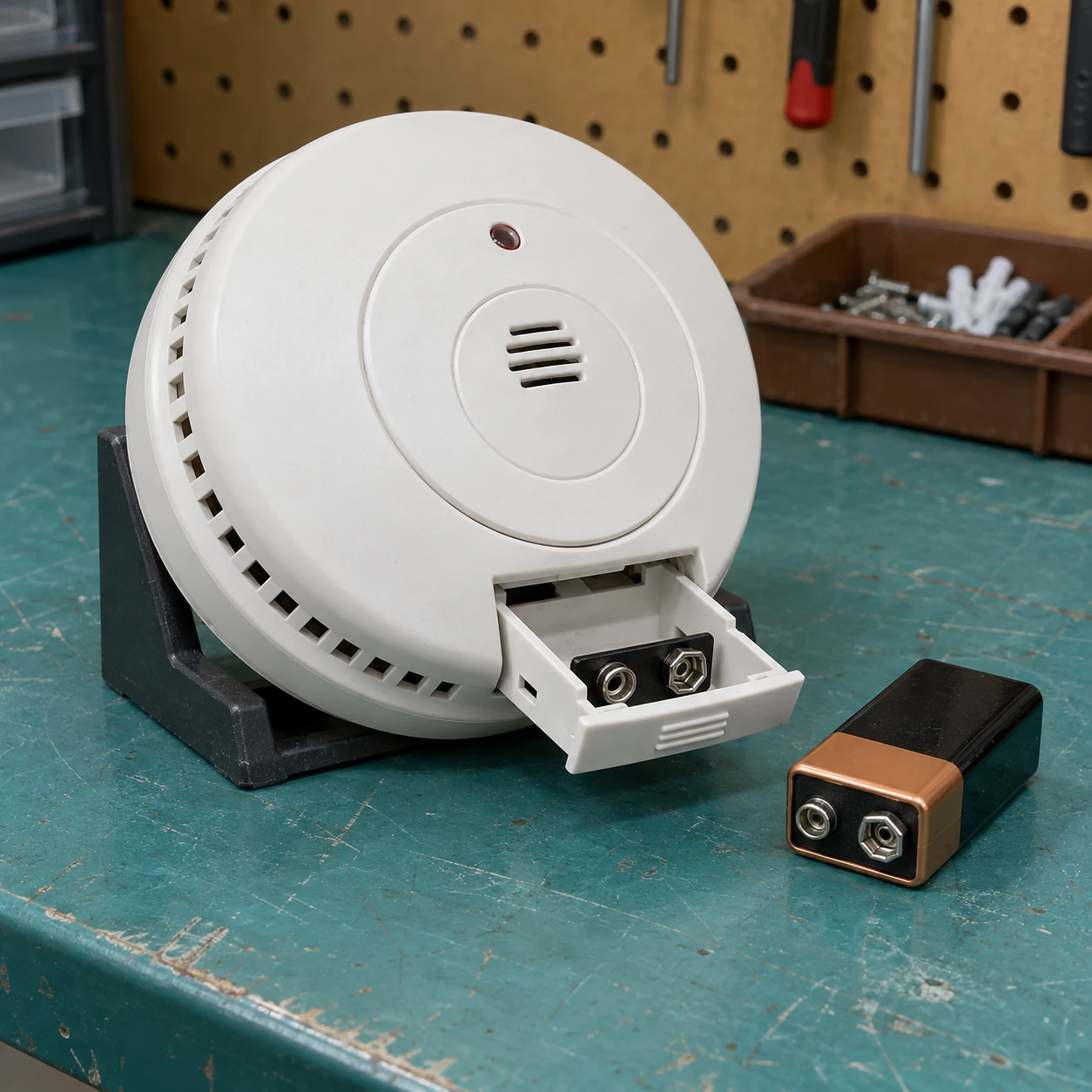
Use the battery listed for that model and follow its service instructions. A rechargeable cell is not an automatic substitute for a primary cell. The compartment must close normally; forcing the cover can damage a contact or trap a lead.
For a battery-only purchase, the 9-volt smoke detector batteries page explains fit, approved chemistry and maintenance stock. A sealed battery alarm needs the manufacturer's complete-unit replacement route when it reaches its replacement condition.
Where the detector belongs to a panel
Many commercial system heads draw power from the fire panel and have no user battery. A nearby chirp may come from another component. The panel's location and trouble information helps a technician identify the affected circuit or device.
Do not unplug equipment repeatedly to locate the sound or leave a zone disabled. Planned service must follow the site's impairment arrangements and restore the required protection before the job is closed.
Close the service job with a working system
- Match the service finding to a specific approved part: a battery, a complete alarm or a compatible detector/base assembly.
- Have the designated person install and test it using the device and system procedures. A quiet device alone does not demonstrate that detection and notification work.
- Record the replacement date, exact part and test outcome against the building location. This prevents the same unidentified unit from returning to the maintenance queue.
Where chirping continues after the permitted maintenance steps, arrange qualified assessment or replacement rather than repeated resets. Supply enquiries are more precise when they include the device label, power type, installed quantity and confirmed service requirement.
Replacement device selection, approved battery packs and supply quantities can be customized for your facility maintenance programme.