Alarm Batteries & Accessories
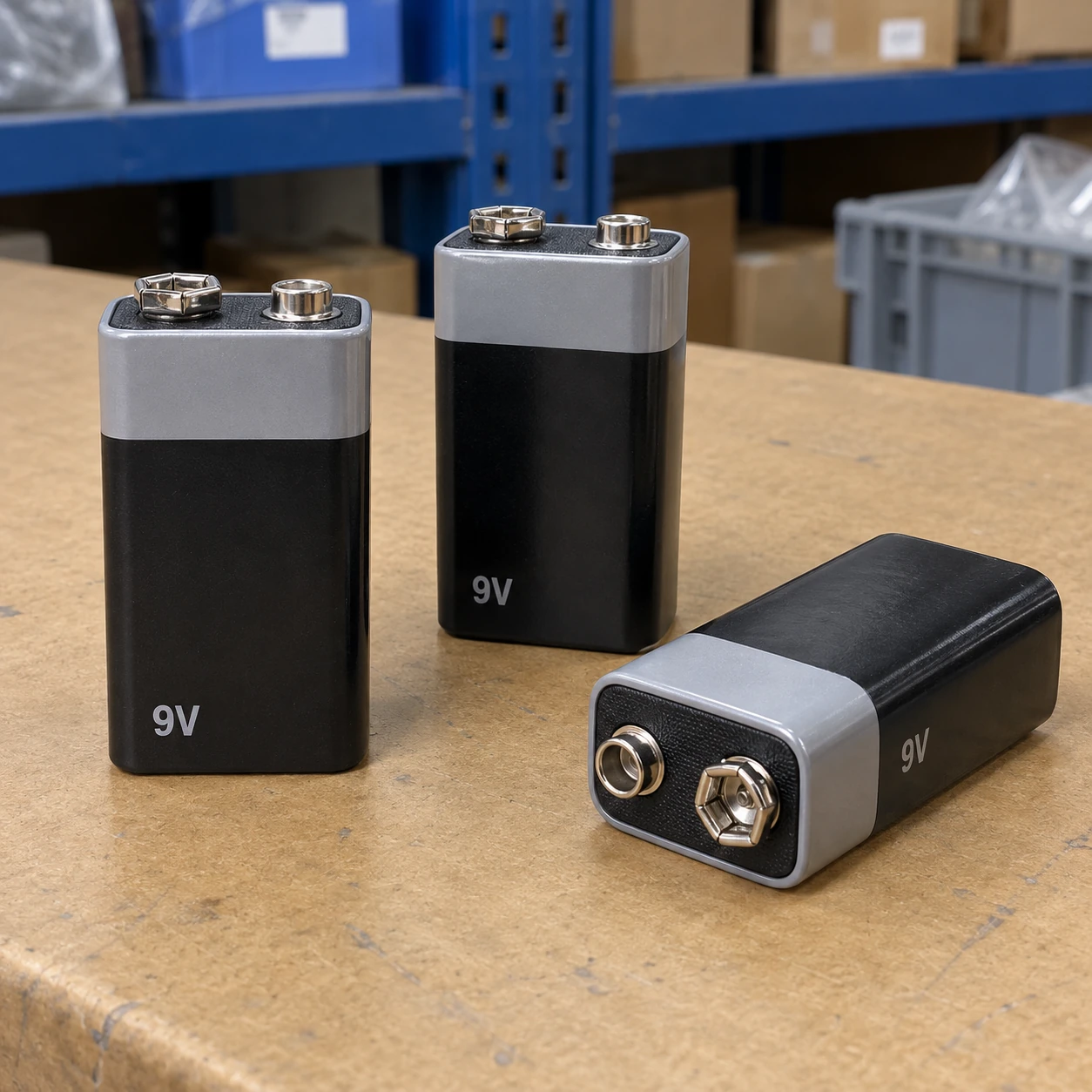
9-volt smoke detector batteries
| Battery format | PP3-style rectangular primary battery; alkaline 6LR61 / 6LF22 families as specified by the alarm |
|---|---|
| Nominal voltage | 9 V |
| Maximum envelope, H × W × T (mm) | 48.5 × 26.5 × 17.5 for the standard alkaline format |
| Dimension meaning | Overall envelope includes the snap-terminal end; check compartment and connector clearance |
| Terminals | Miniature positive and negative snap contacts |
| Chemistry selection | Alkaline; other primary chemistry only where explicitly approved for the exact alarm |
| Supply options | Individually protected cells or facility maintenance quantities with date identification |
| Exclusions | No substitution for sealed battery packs, coin cells, panel backup batteries or unapproved rechargeable cells |
This is a standardized battery format, not a range of larger and smaller interchangeable batteries. Service duration depends on the approved cell, alarm and operating conditions.
Approved battery selection, protected packing and maintenance order quantities can be customized for your installed alarm inventory.
A 9-volt battery for a smoke alarm must match the alarm's approved battery specification. Voltage and a familiar rectangular shape alone do not establish compatibility. For a facility maintenance order, the installed alarm list is the starting point.
Match the approved battery before comparing packs
The alarm label or manual may specify a chemistry and an approved battery list. Follow that requirement. Different cells sold as 9 V can have different discharge behaviour, terminal details and dimensions within the format.
A higher advertised capacity does not by itself make a battery suitable for a life-safety device. Rechargeable batteries can have a different nominal voltage and discharge profile, so they should not be substituted unless the alarm's documentation permits the exact type.
Make sure the compartment closes correctly
The snap connection must seat properly and the battery drawer must close without force. A tight compartment, distorted clip or trapped wire can produce an intermittent connection. Do not bend contacts or modify the case to make an unsuitable battery fit.
The dimensions above describe the standard envelope. The alarm's battery compartment and connector arrangement remain the controlling fit requirements; a rectangular battery shown beside a detector is not proof of compatibility.
Stock for a maintenance programme
Group the installed alarms by their approved battery specification, then plan service quantities against that list. Keep batteries in their protective packaging with date and batch identification, and rotate stock so that old service supplies do not accumulate unnoticed. Loose snap-terminal batteries should not be carried together with metal tools or conductive objects.
Do not translate a battery manufacturer's storage-life statement into a guaranteed installed service life. Alarm operation, testing, temperature and the device's battery monitoring all influence when replacement is required. Follow the alarm instructions and act on a low-battery warning when it occurs.
A battery change has a limited job
It restores the specified power source in an otherwise serviceable device. It cannot repair a failed sounder, clean a contaminated sensing chamber or extend an expired alarm's permitted life. After the authorized replacement procedure, complete the prescribed alarm test and record the work.
A sealed-battery unit needs its designated complete-unit replacement process. A panel-powered commercial smoke detector may not contain a user battery at all. If the service requirement is unclear, use the fault and power information on smoke detector chirping before ordering cells.
Approved battery selection, protected packing and maintenance order quantities can be customized for your installed alarm inventory.