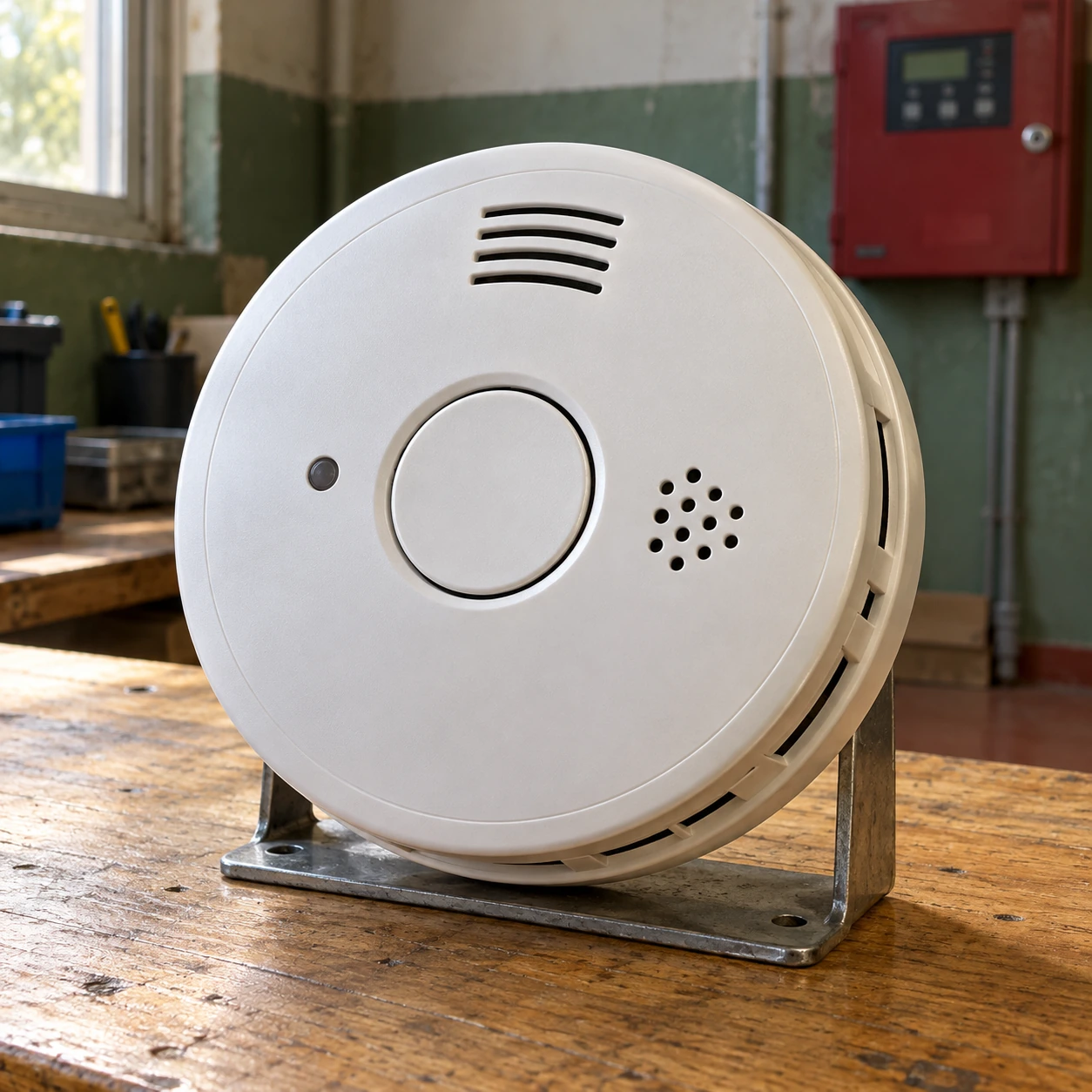
Smoke Detectors & Alarms
smoke detector beeping
| Application | Commercial facility alarm identification and compatible replacement selection |
|---|---|
| Detector arrangements | Local alarm, detector with sounder base, or detector reporting to a separate panel |
| Replacement housing options, diameter × height (mm) | 100 × 50 conventional detector/base; 110 × 70 supervised wireless assembly |
| Power arrangement | Low-voltage panel supply or manufacturer-specified battery system |
| Sound indication | Alarm and service patterns defined by the exact device manual |
| Connection options | Existing conventional zone, supported addressable loop or matched wireless receiver |
| Service identification | Device model, location, panel event and recorded sound pattern |
| Replacement scope | Compatible complete alarm, detector head/base or approved battery as required |
These are replacement configuration choices, not a universal beep-code table. Physical fit does not establish electrical or system compatibility.
A compatible replacement and accessory package can be customized for your site, existing system and service findings.
A beeping smoke detector needs its signal identified before a replacement is chosen. A loud repeating alarm, an occasional short chirp and a control-panel buzzer can represent different conditions and can come from different parts of the installation.
Respond to an alarm before investigating equipment
If there is smoke, heat, a fire indication or an unexplained repeating full alarm, follow the building's evacuation procedure and contact the emergency services from a safe location. Do not delay evacuation to count sounds or remove a battery. A detector that previously produced unwanted alarms can still be reporting a real event.
Find which part of the installation is sounding
After the area has been declared safe, the facilities team can distinguish the source. A point detector may have no sounder at all: the noise could come from a nearby alarm, a sounder base or the control panel. In an interconnected arrangement, several alarms may sound because one device initiated the event.
Record the location, whether the sound is continuous or intermittent, the interval between groups, the accompanying light and any panel message. This makes the maintenance report useful without assuming that every beep means a low battery.
Full alarm pattern
The system is calling attention to a potential hazard. Use the emergency response procedure; fault-finding comes after the safety response.
Periodic service chirp
A short recurring signal can indicate battery, fault or end-of-life conditions on some devices. The exact manual determines which condition applies.
Panel trouble buzzer
The panel may identify a device, circuit or supply problem. Replacing a ceiling head without reading that event can leave the original fault unresolved.
Correct the cause of repeated activation
Process aerosols, refurbishment dust or a changed airflow path can affect a previously stable location. The service contractor should compare event timing with site activity and use the manufacturer's permitted cleaning and testing methods. Do not cover the sensing openings or change alarm sensitivity as an informal cure.
Order the part the diagnosis calls for
An approved replacement battery is useful for a battery warning on a replaceable-battery alarm; it cannot restore an expired sensor or repair a damaged circuit. A failed detector must be matched to its panel and base. For a recurring brief sound, see smoke detector chirping for the maintenance-focused selection steps.
Provide the equipment label and service conclusion with the enquiry. This helps distinguish a head-only order from a complete assembly or a system modification requiring professional commissioning.
A compatible replacement and accessory package can be customized for your site, existing system and service findings.