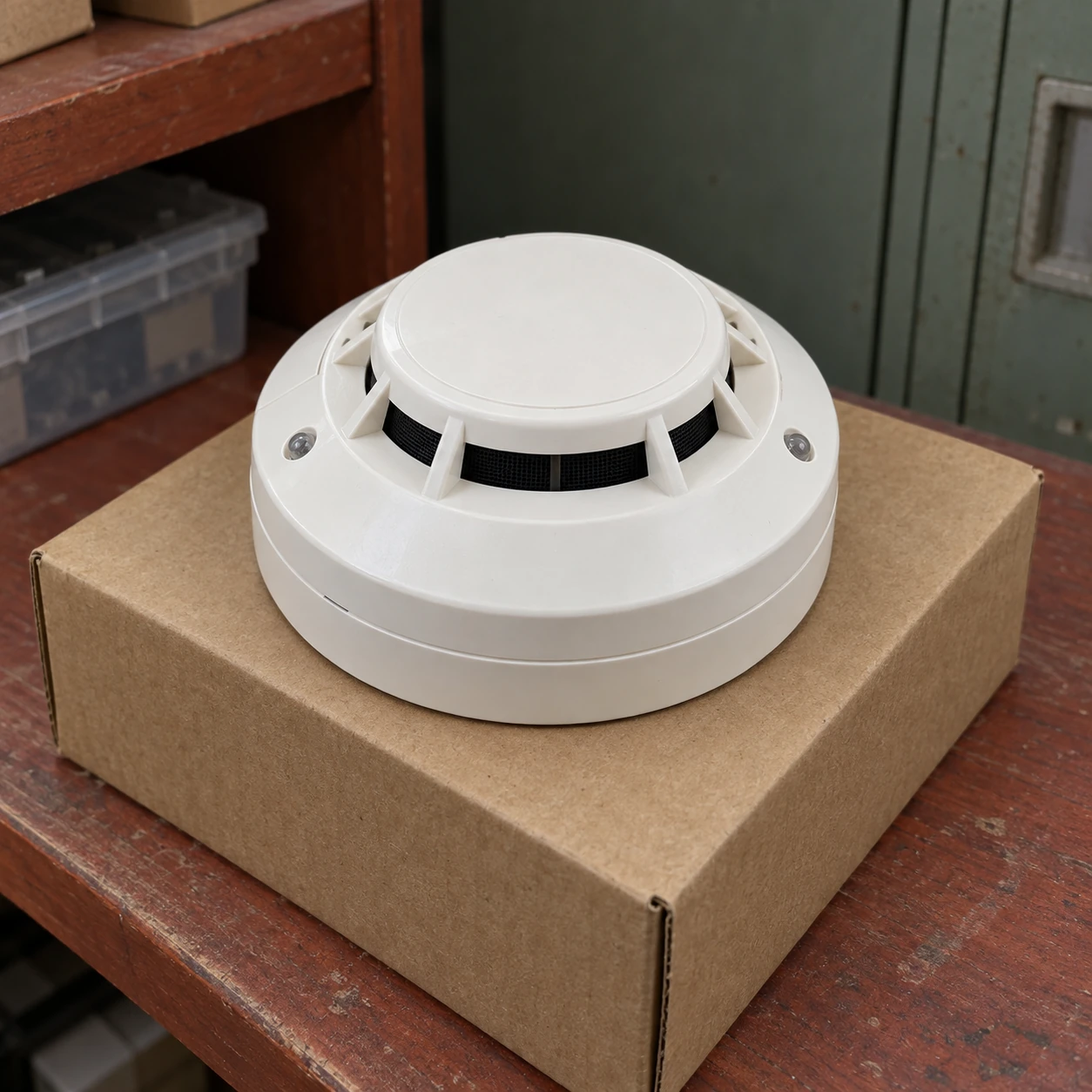
Smoke Detectors & Alarms
ionization smoke detector
| Detection principle | Ionization chamber in a complete sealed detector assembly |
|---|---|
| Conventional body / assembled dimensions (mm) | 100 diameter × 42 head height; 100 diameter × 50 including matching base |
| Addressable body envelope (mm) | Approximately 100 diameter × 42 head height; selected base adds installation depth |
| Power options | Selected conventional 9–33 V DC family or compatible addressable 17–28 V DC family |
| Housing | Moulded polymer enclosure; internal source assembly remains sealed |
| System matching | Exact detector family, panel protocol and approved mounting base |
| Supply conditions | Availability and permitted use established for the destination and specified system |
| End-of-life route | Intact-device return or disposal through the applicable authorized arrangement |
Conventional and addressable values describe different equipment families, not interchangeable variants. No source strength, certification or availability is promised for an unspecified supplied device.
The replacement selection and approved mounting accessories can be customized for your site; the sealed sensing assembly is not modified.
An ionization smoke detector uses a small sealed radioactive source within its sensing assembly. It is a distinct detection technology, often encountered when maintaining an existing system. Selection must address the approved application, compatible control equipment and destination-specific supply and disposal requirements.
What changes inside the chamber
The source ionizes air within the detector. The resulting electrical behaviour changes when smoke enters, and the detector or control system evaluates that change. The source is part of the manufactured sensing assembly, not a maintenance consumable.
Ionization and optical detectors have different responses to fire characteristics. An older system specification may call for one technology, but that does not justify assuming it is the best replacement for every present-day room.
Review the reason for a like-for-like replacement
Begin with the existing fire-system design and approved equipment list. If the original detector is no longer available or permitted, the responsible designer should evaluate a supported alternative and any required change to the base, panel configuration and detection plan.
A photoelectric smoke detector can be an alternative sensing approach in a suitable design. It should not be pushed into an old base or treated as automatically equivalent because the outer dimensions match.
Keep the device intact throughout service
Routine service is limited to the operations permitted by the manufacturer. Do not open the sensing assembly, extract its source or attempt to repair internal chamber parts. Damaged or unidentified units need advice from the responsible supplier or authorized service organization.
Commercial removal, accumulation, transport and disposal requirements can differ by destination and quantity. Establish the accepted return or disposal route before planning a large replacement programme. A household waste statement from another country is not an appropriate rule for an industrial order.
Define the procurement request precisely
Include the installed device and panel identification, number of locations, destination and whether the work is an approved direct replacement or a planned system upgrade. That allows the supply enquiry to address compatibility and lawful availability before a part is selected.
shengtongJH acts as a sourcing coordinator. This page explains the equipment category and replacement decisions; it does not establish that an unspecified ionization product is available, approved or suitable for your building. No custom changes are made to a sealed source or certified sensing design.
The replacement selection and approved mounting accessories can be customized for your site; the sealed sensing assembly is not modified.