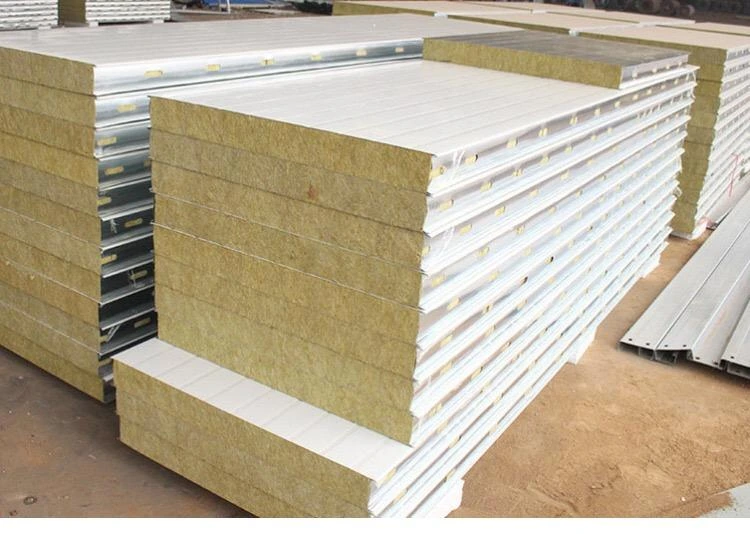
Rock Wool Sandwich Panels
rockwool sandwich wall panel
| Brand | shengtongJH |
|---|---|
| Product use | Metal-faced insulated wall panels |
| Core | Rock wool |
| Width options | 900 / 1150 mm |
| Thickness options | 50 / 75 / 100 / 150 / 200 mm |
| Length range | Project-cut; maximum 11,800 mm where the selected configuration permits |
| Facing choice | PPGI / SS304 stainless steel |
| Edge construction | Interlocking profile with compatible closing trims |
| Surface options | PE / SMP / PVDF / ESD, according to the service requirement |
Panel dimensions, surface finish and connection details can be configured for your application.
Selecting an individual rockwool sandwich wall panel is also a layout decision. The module, length and joint direction need to fit the wall elevation and the sequence in which it will be assembled.
Use the module to reduce unnecessary cutting
Set out the wall from a consistent datum and check where the final panel ends. A very narrow closing piece beside a doorway can be difficult to secure and finish. Adjusting the first panel position or the opening detail during design is usually simpler than discovering the mismatch after most of the wall is fixed.
Confirm whether the quoted width is the usable coverage or an overall dimension including the joint. That distinction affects the number of panels required. Keep the same convention on the elevation, quotation and packing schedule.
Orientation changes more than appearance
Vertical panels can reduce intermediate horizontal joints but require a suitable lifting route and support arrangement. Horizontal panels create a different joint pattern and relationship to columns. Choose the direction using structural, weathering and installation considerations together.
Long pieces can reduce the number of joints, but they can also be harder to transport, turn inside a building or place without damage. The longest producible panel is not automatically the most practical panel for a restricted site.
Face selection
Coated steel offers a finished surface for many industrial walls. Stainless steel can be selected where the expected cleaning or exposure justifies it. Compare the surface with the actual operating environment, including condensation and chemical contact.
Edge selection
Joint geometry must match the adjoining pieces and trims. Changing a panel supplier or profile partway through the wall can leave connections incompatible even where the nominal thickness is identical.
Finish with a usable installation schedule
List each panel length and quantity, identify cut-outs and separate left/right or special pieces where relevant. Add matching flashings and fasteners rather than relying on an approximate area allowance. A clear schedule also makes replacement ordering easier.
For the whole assembly, see rock wool panel wall junctions. shengtongJH can coordinate the selected panels, finishes and accessories around your project dimensions.