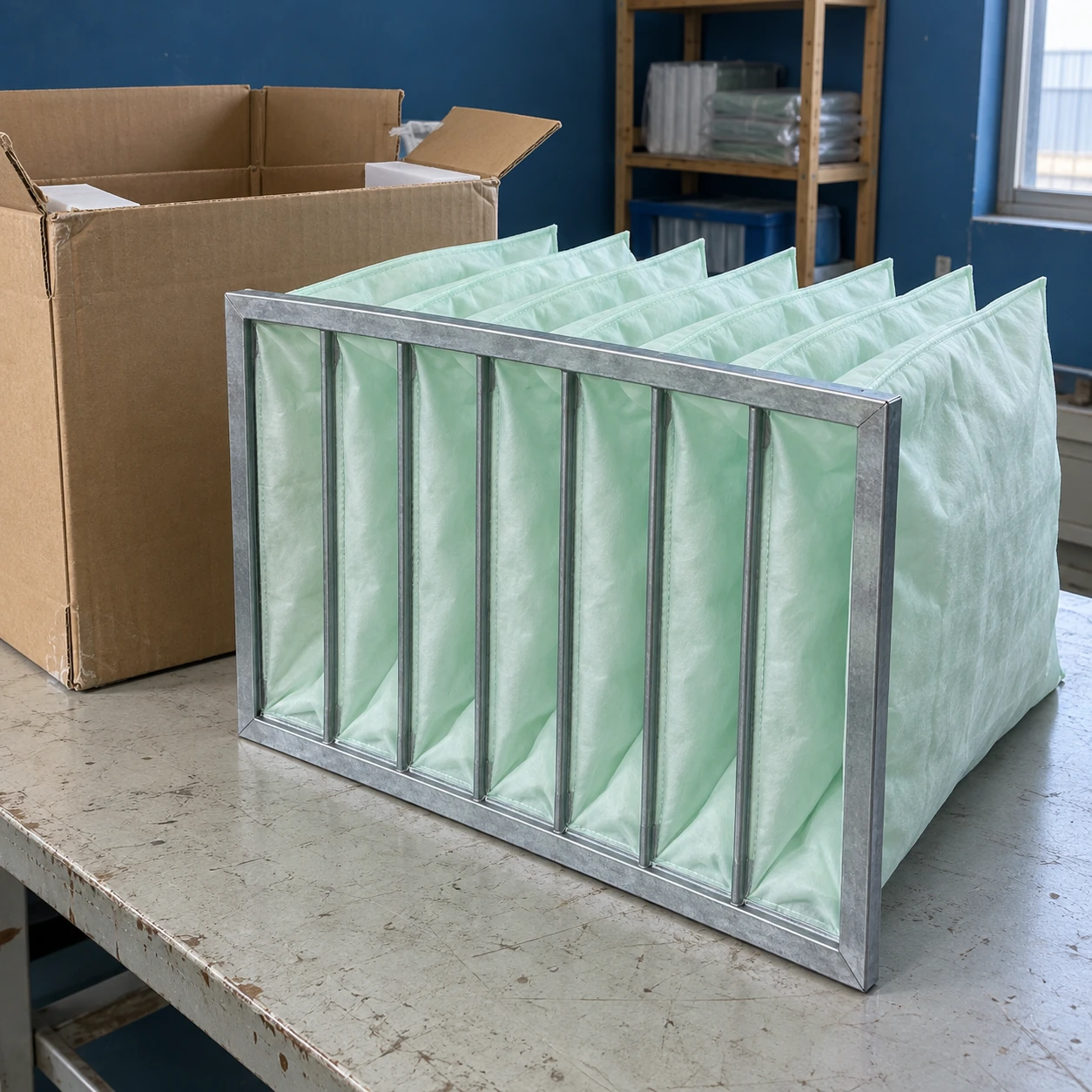
Pocket Filters
pocket filters manufacturer
| Common formats W × H × D (mm) | 592 × 592 × 640; 490 × 592 × 640; 287 × 592 × 640 |
|---|---|
| Depth alternatives (mm) | 370 or 520 where compatible with the selected face format and airflow |
| Construction comparison | Flexible or self-supporting pockets; media, seams, header and gasket identified separately |
| Filtration evidence | ISO 16890 group and percentage with a report identifying the offered construction |
| Airflow evidence | Operating range, resistance curve and loading data at stated test conditions |
| Supply definition | Manufacturer identity, drawing revision, material specification, quantity and agreed documentation |
A manufacturer comparison must use equivalent duty and test conditions. Performance values, certificates and service limits apply only to the products they identify.
Selecting a pocket filter manufacturer is a technical supply decision. Two elements can have matching dimensions and very different media, resistance or service behaviour. shengtongjh acts as an equipment and materials sourcing supplier, helping turn the application requirements into a defined filter proposal and an order that can be repeated consistently.
Give competing proposals the same duty
Start with the required particle class, operating airflow, available space and housing interface. Then compare complete elements against those requirements. If one proposal uses a lower flow or a different filtration class, a lower clean resistance does not establish a better filter. An apparent price advantage can also disappear when more frequent replacement or an unsuitable frame creates extra work.
Keep mandatory requirements separate from preferences. Fit, sealing and the required filtration duty are acceptance conditions; frame material, packing arrangement or an alternative bag depth may be negotiable if the resulting design remains suitable. This prevents a cosmetic match from displacing the requirements that protect the system.
Read each piece of evidence for what it proves
- Particle-efficiency report
- Check the tested element identity, dimensions, media and stated flow. The ISO 16890 group needs its associated percentage. A loose media-sample result does not by itself describe the assembled filter.
- Airflow-resistance data
- Look for the curve or values at relevant operating points. Separate initial resistance from a recommended final resistance and from a structural limit; they answer different questions.
- Dust-loading information
- Check the test method and stopping condition. Laboratory loading helps compare behaviour under defined conditions, but cannot guarantee a calendar service life in a different dust environment.
- Certificate or approval
- Verify the named manufacturer, covered product family, scope and current validity when the project requires it. A general business or management-system certificate does not certify a particular filter's efficiency.
Make repeat supply traceable
Record the accepted drawing, media construction, gasket details and the documents used for approval. Require a proposed material or design substitution to be identified before it is supplied. Keeping only a generic size and colour in the purchase record makes later equivalence difficult to establish.
At receipt, compare identification and construction with the order, then record installation fit and the clean operating condition. Subsequent resistance and replacement records help determine whether the selected element suits the actual site. This practical feedback is more useful than accepting a universal lifetime claim.
Send the existing element details and operating requirement with your sourcing enquiry. If the main uncertainty is the physical interface, first use the custom fit requirements to define it. The resulting proposal should make its scope, supporting evidence and unresolved items clear before purchase.
Pocket filter sourcing and configurations can be customized for the application's technical requirements and repeat-order needs.