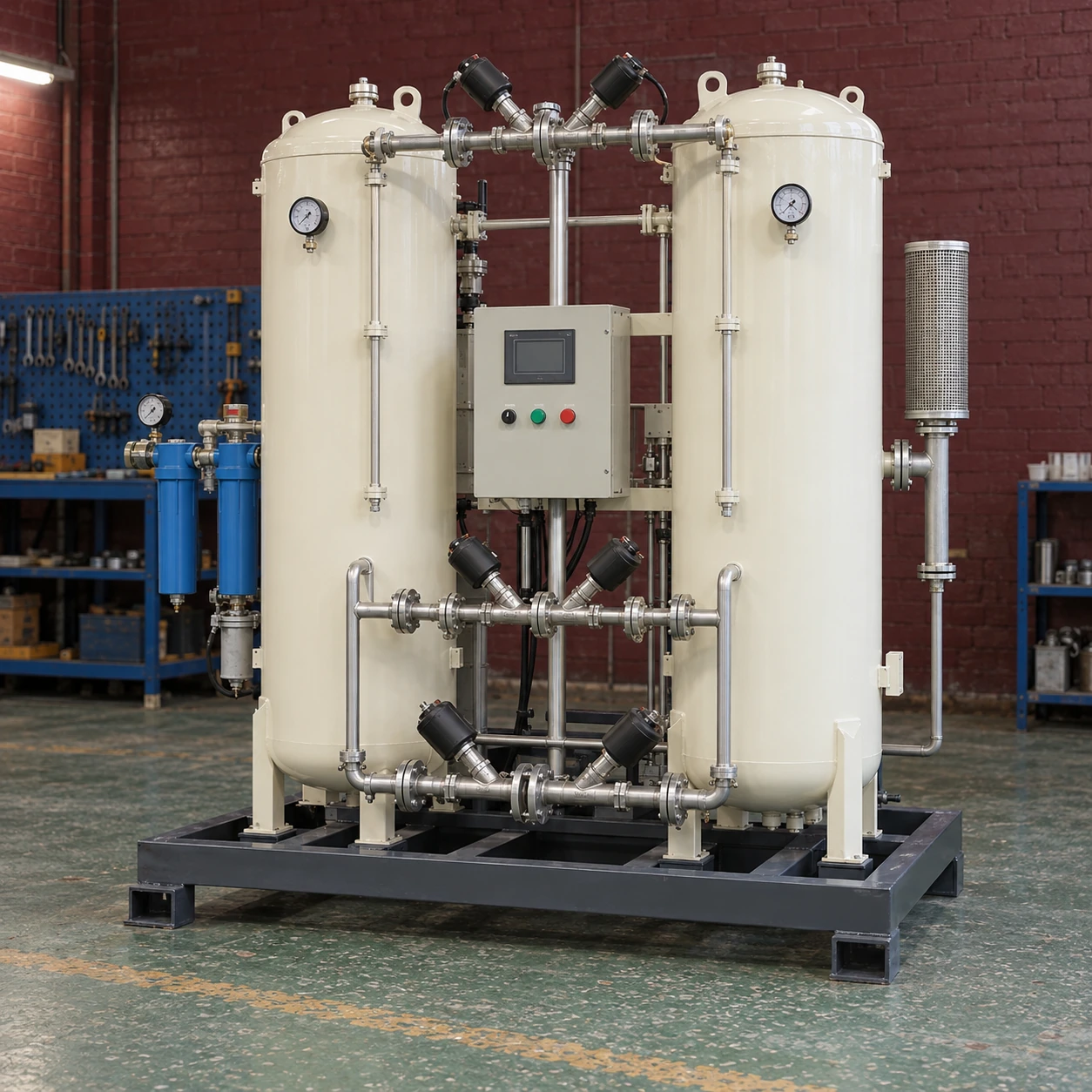
Nitrogen Generators
pressure swing adsorption nitrogen generator
| Separation process | Pressure swing adsorption using carbon molecular sieve |
|---|---|
| External W × D × H (mm) | 775 × 840 × 2015; 1400 × 840 × 2015; 1400 × 970 × 2015; 1421 × 970 × 2015 |
| Gas-quality selection | Configurations for 95% to 99.999% nitrogen by residual-oxygen definition, at corresponding rated flows |
| Capacity selection | Net product flow specified together with purity, inlet pressure and temperature |
| Air preparation | Compressed-air drying and filtration to the selected generator inlet specification |
| Gas storage | Air and nitrogen receiver arrangements matched to the adsorption cycle and demand |
| Control and analysis | Automatic bed sequencing, oxygen analysis and off-specification gas isolation options |
| Installation | Suitable pressure components, exhaust routing, ventilation and destination electrical supply |
| Maintenance access | Access to valves, analyser, filters, drains and pressure-system isolation points |
Purity and flow are linked operating selections; the range does not mean maximum purity at maximum output. Dimensions describe the generator package and exclude separate air preparation and receivers.
The PSA nitrogen package can be customized for the required oxygen limit, operating demand and available compressed-air utilities.
A pressure swing adsorption nitrogen generator separates nitrogen from compressed air using carbon molecular sieve. Alternating adsorption and regeneration allow the unit to produce nitrogen-rich gas while restoring the separation capacity of the other bed. Air quality, cycle control and the required oxygen limit all affect the useful output.
What happens inside the two beds
During the pressurised part of the cycle, the carbon molecular sieve preferentially adsorbs oxygen from the incoming air. Nitrogen-rich gas passes through to the product side. The other bed is depressurised and regenerated so that it can return to production. Valves and control timing coordinate these steps.
The sieve is not a filter cartridge that simply catches all contamination. Liquid water and oil carryover can damage separation performance. The upstream air-treatment equipment therefore has an important role even when the generator already contains inlet filtration.
Specify usable output at the required oxygen limit
A tighter residual-oxygen requirement normally reduces the output available from a given generator under comparable inlet conditions. Request the rated product flow at the process specification, together with the required inlet-air flow and pressure. Comparing the largest flow in one brochure with the highest purity in another produces an unreliable equipment comparison.
Agree how flow is expressed as well. Normalised volume depends on the stated temperature and pressure reference. Product pressure, inlet conditions and the treatment of start-up or purge losses should be clear in the supply scope.
Buffer the cycle and control gas acceptance
Air and product receivers support stable operation, but they perform different jobs. The inlet arrangement supports the generator during the cycle; the nitrogen receiver helps separate the generator's production pattern from the consumer's demand. Their sizing and pressure settings belong to the complete system design.
At start-up or following an abnormal condition, gas may need to be diverted until it meets the agreed requirement. Oxygen analysis, a gas-ready condition and a defined response to an alarm help prevent unsuitable gas from reaching the process. The analyser itself requires appropriate calibration and maintenance.
Keep service work accessible
Valves, drains, filters and analysis components need attention throughout the equipment's service life. Provide safe isolation and access rather than positioning vessels so tightly that routine work requires moving adjacent machinery. Cycle changes and pressure-system servicing should follow the selected manufacturer's procedures.
Regeneration exhaust and possible nitrogen releases require suitable routing and ventilation. Review the installation for oxygen-depletion risk, especially in enclosed rooms. shengtongJH can coordinate the generator, air preparation and receiver scope around the process demand; nitrogen generator system describes their connection responsibilities.
The PSA nitrogen package can be customized for the required oxygen limit, operating demand and available compressed-air utilities.