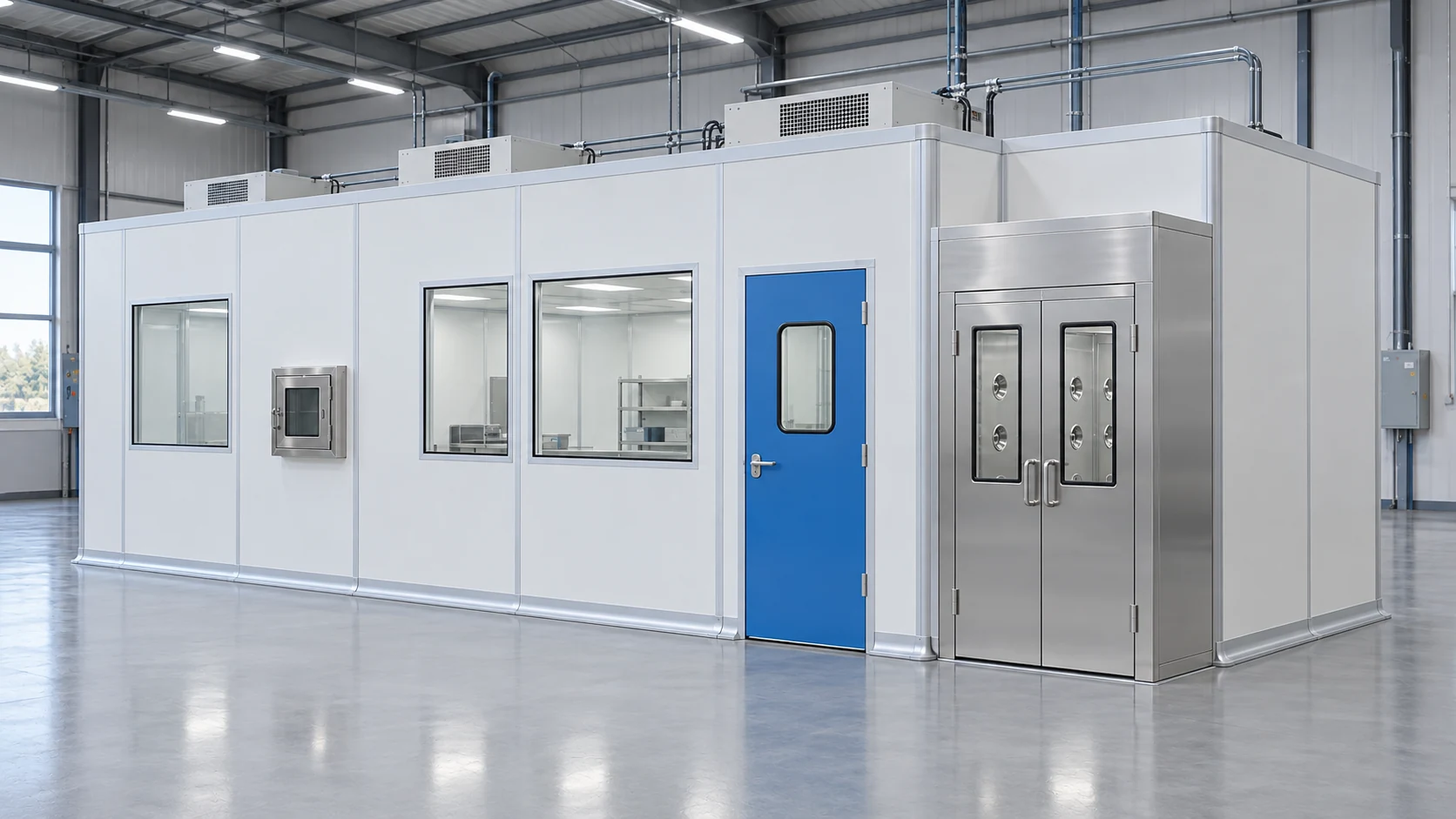
Translate the production problem into a room brief
An inspection station may need clear access to a sensitive work surface. An assembly operation may need several people and repeated material transfers. A laboratory might prioritize changing equipment layouts and service connections. These requirements produce different room boundaries even when the floor areas are similar.
List where the product is exposed, how it arrives and how it leaves. Mark any task that releases particles, heat, moisture or fumes. Then separate room-wide requirements from conditions needed only at a critical workstation.
A useful solution brief explains the trade-offs. More enclosed transfer stages may protect a workflow but add handling steps. Larger service spaces improve access yet consume valuable floor area. Resolve these choices before turning the brief into a bill of materials.
Configuration decisions
| Decision | What to define |
|---|---|
| Product exposure | Identify the process step that needs protection and how long it remains open. |
| Human activity | Describe operator numbers, gowning and entry frequency. |
| Equipment interfaces | Record heat release, exhaust and maintenance access. |
| Room boundary | Choose what belongs inside and what can remain in the surrounding facility. |
Should every process receive the same room configuration?
No. Using a single configuration across unrelated processes can add unnecessary equipment while leaving the critical exposure point poorly addressed. Use the workflow to decide which features contribute to the required environment.