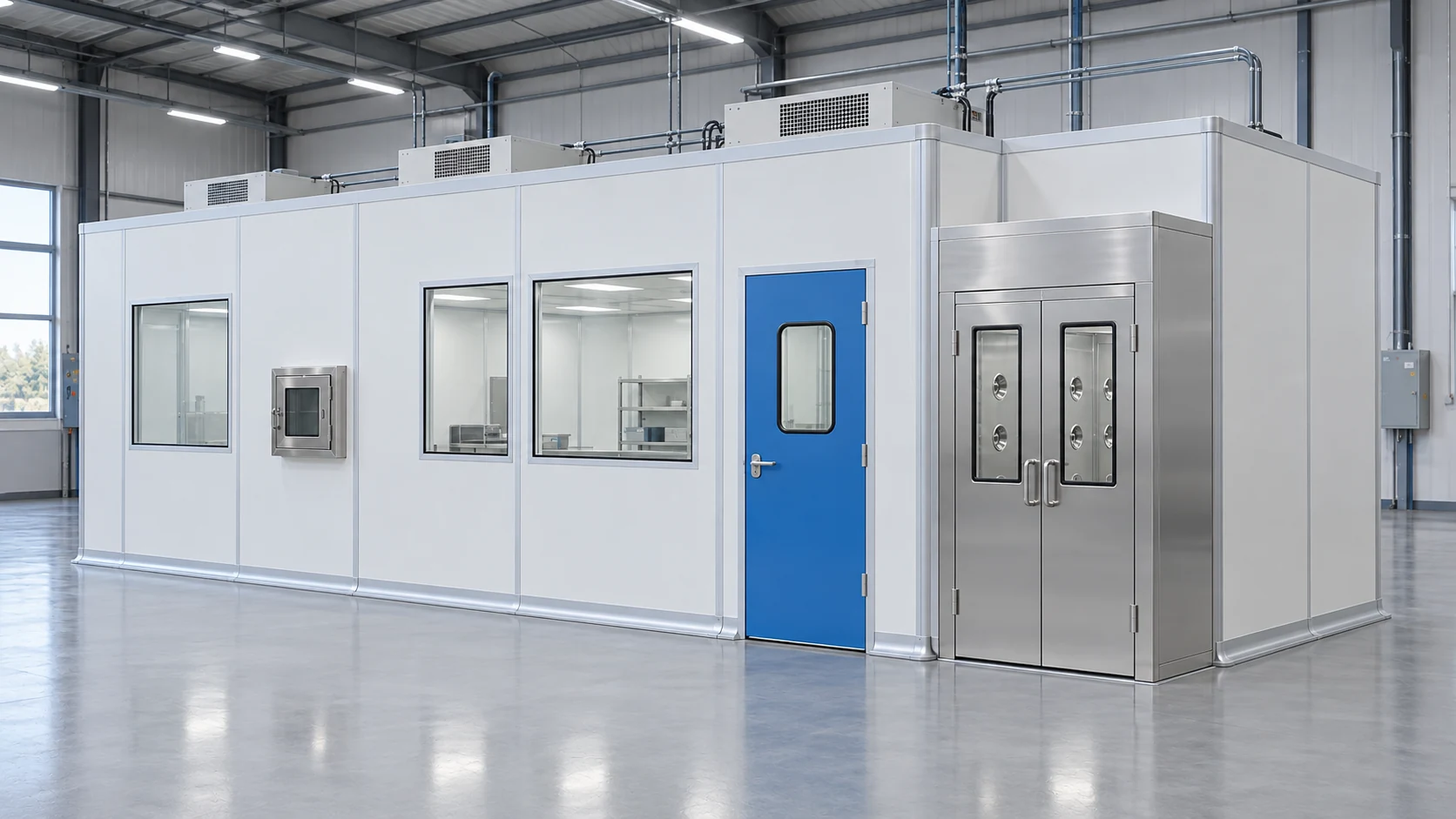
Check the source and destination of the air
If supply air is drawn from a surrounding workshop, the workshop condition matters. Identify heat, moisture and airborne contamination near the intake. Avoid locating intakes where process exhaust or disturbed materials can be drawn into the system.
On the discharge side, define low-level outlets or other engineered discharge routes and keep them clear. The host facility must accommodate that air movement. A room cannot be assessed in isolation from adjacent spaces, particularly where other extraction systems operate.
Single-pass and recirculating configurations have different conditioning and service requirements. Compare them using the actual operating hours, inlet conditions and thermal needs. Do not infer energy use or achieved cleanliness solely from the label attached to the system.
Configuration decisions
| Decision | What to define |
|---|---|
| Intake location | Document surrounding activities and the condition of incoming air. |
| Supply distribution | Coordinate filtered supply with working positions and equipment height. |
| Discharge route | Identify the intended exit path and protect it from obstruction. |
| Host facility | Review nearby extraction and air balance with the mechanical designer. |
Will adding more filter units solve a poor discharge arrangement?
Not necessarily. An obstructed or unsuitable outlet path remains a system constraint. Review supply and discharge together before changing equipment quantities.