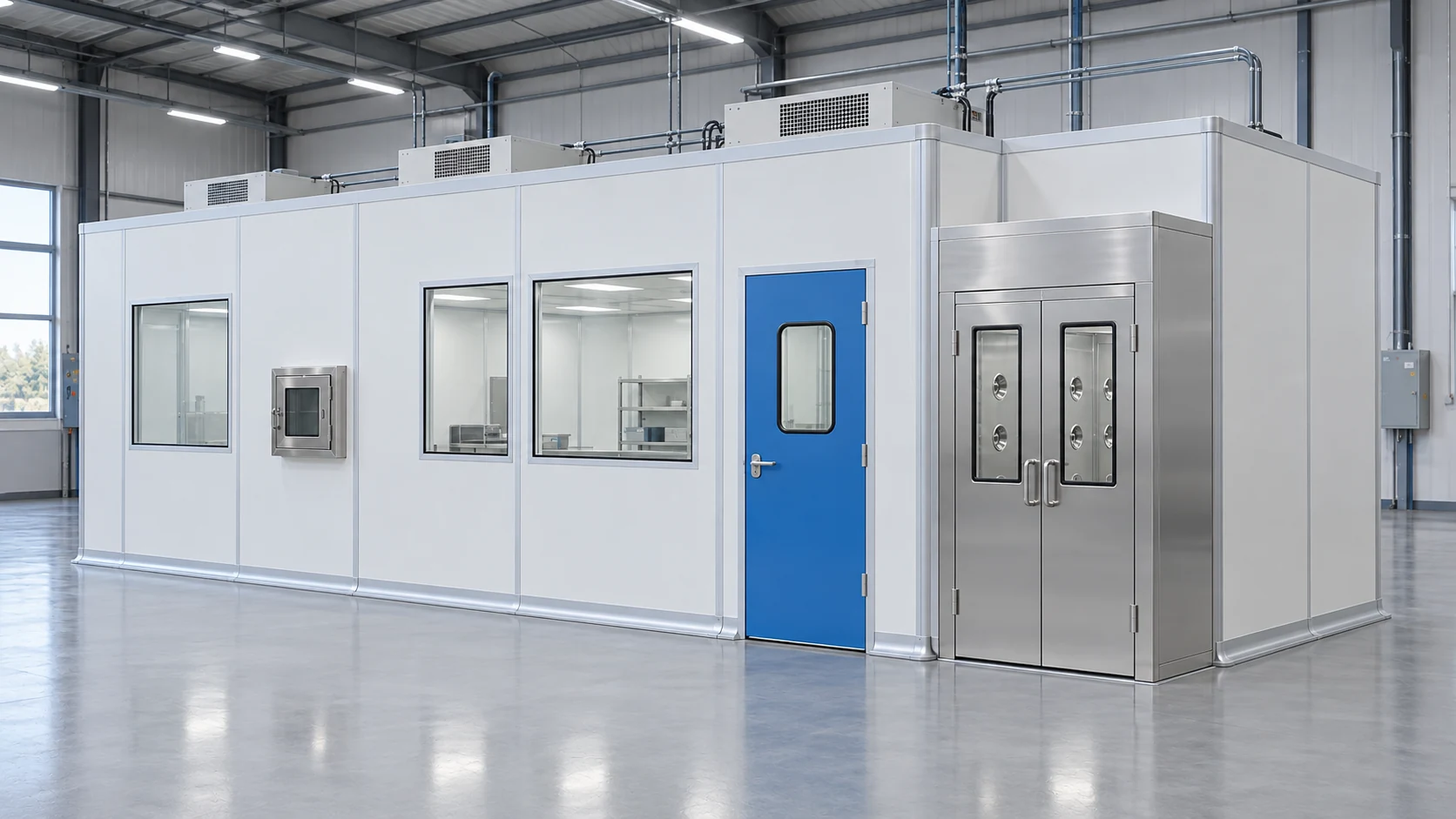
Identify every break in the enclosure
Each opening has a purpose: a person enters, a component passes through, a utility connects or a machine needs servicing. Record that purpose before selecting the opening size. Oversized openings can complicate air management, while undersized ones create unsafe or awkward handling.
Equipment enclosures also need a plan for maintenance. A removable panel may be useful for infrequent machine replacement, but opening it interrupts the controlled boundary. Routine servicing should use an access route that matches the operating schedule.
Check the enclosure against the host room in three dimensions. Columns, roof members and existing services can interfere with panel assembly or overhead equipment even when the floor footprint appears clear.
Configuration decisions
| Decision | What to define |
|---|---|
| Personnel boundary | Locate normal entry and emergency routes with the responsible building designer. |
| Material boundary | Size transfer points from the packaged load and handling method. |
| Utility boundary | Coordinate service penetrations and cleanable sealing details. |
| Maintenance boundary | Distinguish routine access from occasional equipment replacement. |
Can equipment sit partly outside the enclosure?
A through-wall arrangement may be possible, but its machine-to-wall interface needs a deliberate sealing and maintenance detail. Do not treat an equipment opening as an unfinished gap.