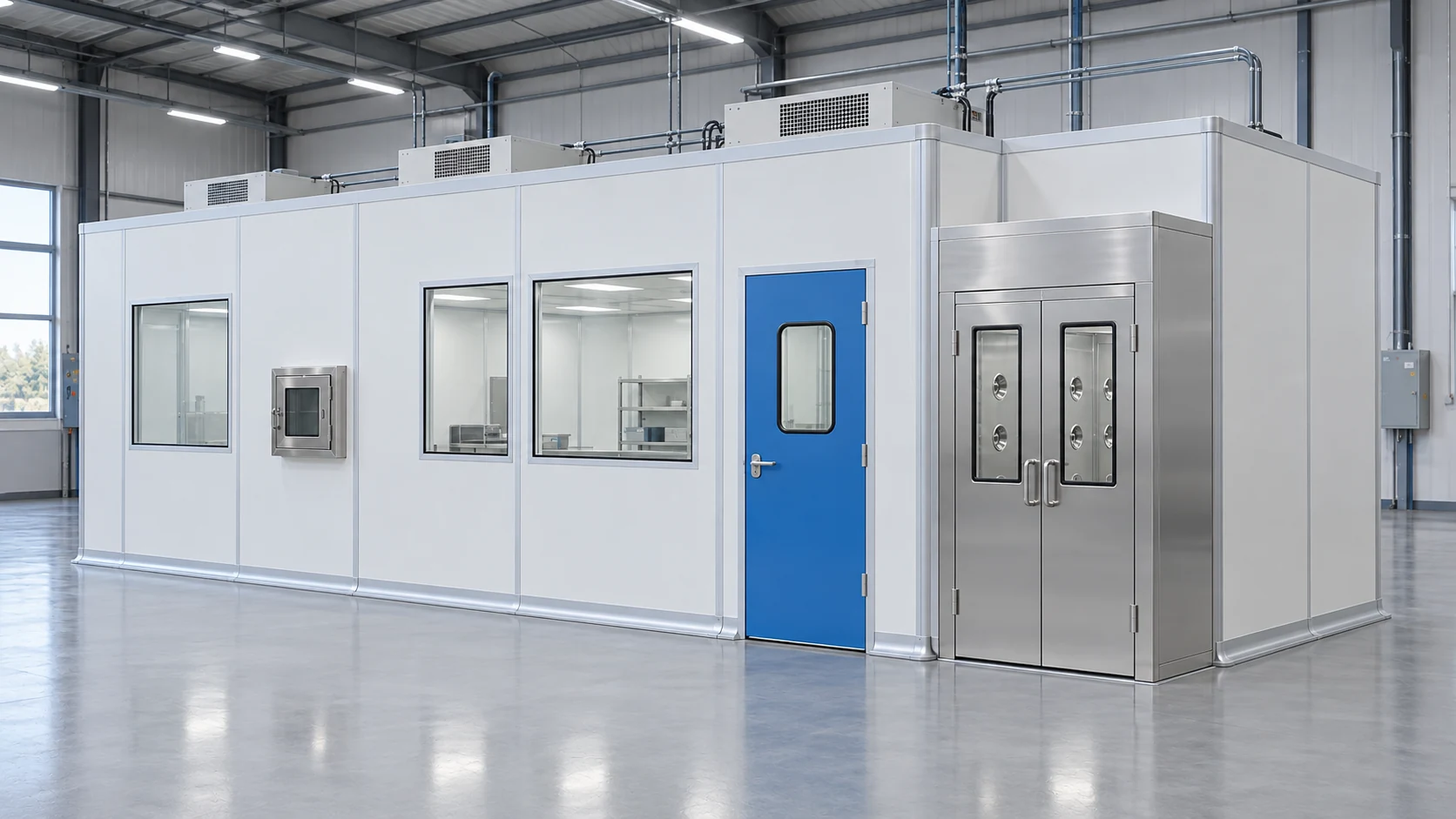
Weigh each advantage against its condition
Prefabricated parts can move work away from the installation area, but only after dimensions and interfaces are settled. Releasing fabrication early with unresolved openings can transfer the problem to the site.
Reconfiguration may be practical when panels and service connections were selected for it. It is less straightforward when equipment, exhaust or the host building fixes the room arrangement. Ask which components can be reused and what must be replaced or retested.
Modular construction also does not eliminate utilities, fire-safety coordination or commissioning. Compare the complete installed scope with the alternative approach. A useful business case includes the cost of interruptions, maintenance access and later changes rather than counting wall panels alone.
Configuration decisions
| Decision | What to define |
|---|---|
| Prefabrication | Benefit depends on stable dimensions and approved interface drawings. |
| Expansion | Reserve space and service capacity before choosing an expansion boundary. |
| Relocation | Assess dismantling, transport, replacement parts and recommissioning. |
| Repeatability | Reuse proven details while reviewing each new process and site. |
Is a modular room always cheaper than conventional construction?
There is no universal result. Scope, local work, environmental requirements and future changes affect the comparison. Compare complete installed and operating costs on the same basis.