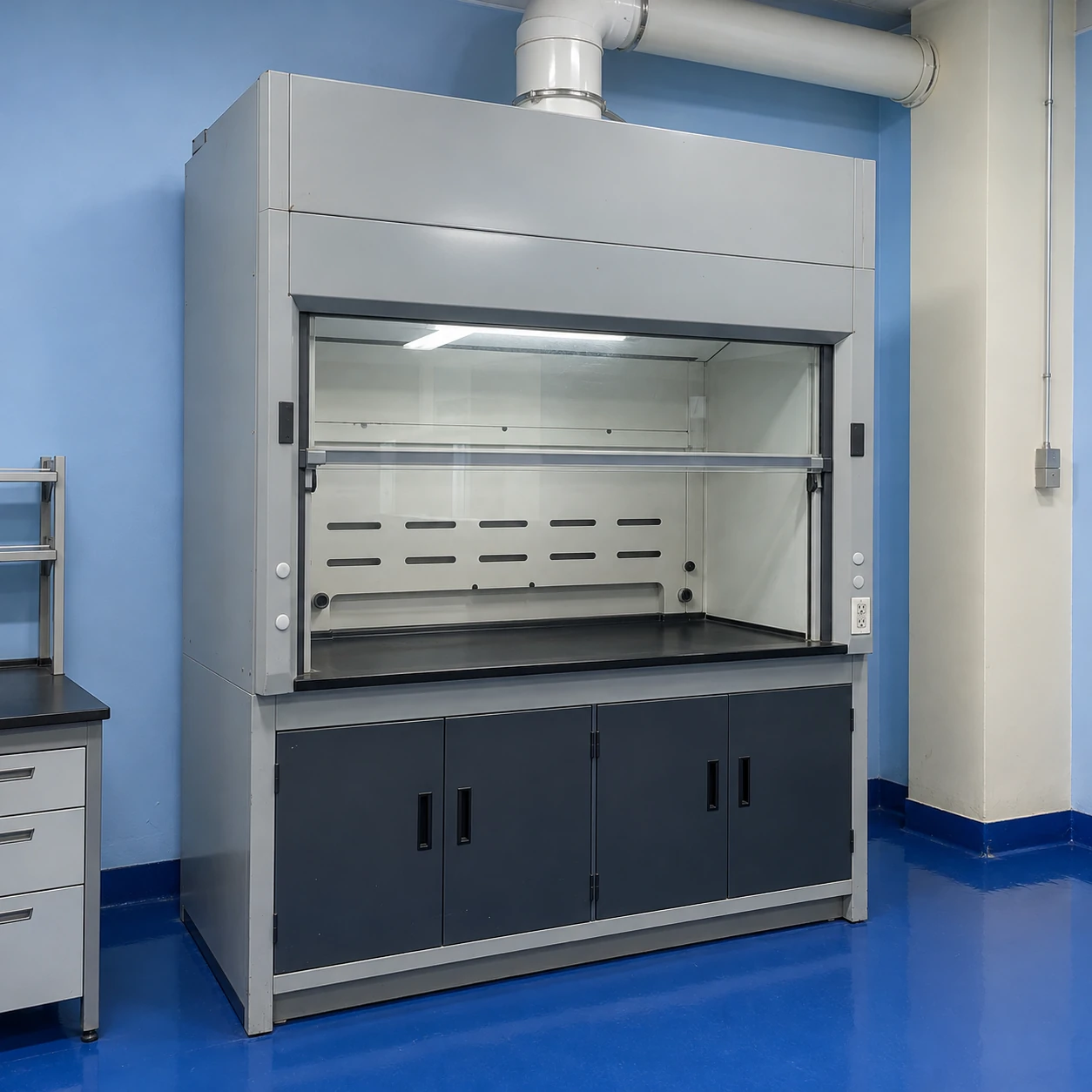
Laboratory Fume Hoods
laboratory fume hood
| Brand | shengtongJH |
|---|---|
| Hood form | Ducted benchtop chemical exhaust enclosure |
| External W × D × H | 1240 × 800 × 2200 / 1540 × 800 × 2200 / 1840 × 800 × 2200 mm |
| Chamber W × D × H | 1020 × 670 × 730 / 1320 × 670 × 730 / 1620 × 670 × 730 mm |
| Enclosure | Powder-coated steel with task-matched liner |
| Worktop | Chemically compatible resin or ceramic option |
| Sash arrangement | Adjustable vertical sash with defined operating position |
| Exhaust duty | Fan airflow and pressure selected for the hood and complete duct route |
| Room-air coordination | Replacement air and pressure balance addressed by the laboratory ventilation design |
| Controls | Local airflow indication; building-system coordination where specified |
| Services | Lighting and task-specific water, gas or electrical outlets |
| Electrical options | 220 V, 50/60 Hz; fan supply matched separately |
| Acceptance scope | Installed airflow, alarm function and containment assessment appropriate to the project |
There is no single exhaust volume or face-velocity setting suitable for every installation. Acceptance conditions must identify the sash position, apparatus and room ventilation state.
The cabinet, service arrangement, controls and exhaust interfaces can be customized to the laboratory system and operating process.
A laboratory fume hood is one part of an installed ventilation system. Its performance depends on how the cabinet, exhaust route, room air supply and controls work together under the intended laboratory conditions.
Follow the complete air route
Air enters through the sash opening, passes through the chamber and baffles, and leaves through the exhaust system. The fan must overcome the resistance of that complete route. A short factory connection and a long building duct are different operating conditions, even when they use the same hood.
Replacement air must enter the laboratory without creating disruptive drafts at the hood opening. An inadequately supplied room can affect doors, pressure relationships and exhaust operation. Adding a stronger fan without reviewing the air balance can create another problem elsewhere in the building.
Assign clear supply responsibilities
Define who provides the hood, fan, ducts, supports, discharge arrangement, electrical connections and commissioning. Use a clear purchasing scope to keep these interfaces visible in each offer. Establish whether the fan is cabinet-mounted or remotely located and how it will be accessed for maintenance. Where exhaust treatment is required, include its resistance and service needs in the selection.
The discharge location must prevent unacceptable exposure and re-entry through nearby openings or air intakes. A cabinet supplier cannot determine that suitability from the hood width alone; the building arrangement and local requirements must be considered.
Factory evidence
Model-specific performance information helps assess the offered design. Check that it applies to the proposed sash, baffles and operating range. A report for another cabinet is not evidence for the supplied configuration.
Installed acceptance
The completed installation should be assessed with the intended room ventilation, operating opening and relevant apparatus in place. Airflow measurements and any specified containment evaluation answer different questions. A single averaged velocity reading is not a complete assessment.
Keep the operating limits usable
Mark the agreed sash position and establish what staff should do when the airflow alarm activates. Record the accepted settings and maintain access to the baffles, services and exhaust components. Reassess after changes that affect ventilation or the approved chemical duty.
The aim is a system that staff can operate and maintain consistently. shengtongJH can source the hood and specified accessories while keeping the installation scope explicit, so missing ductwork or control coordination does not emerge only after the cabinet arrives.
The cabinet, service arrangement, controls and exhaust interfaces can be customized to the laboratory system and operating process.