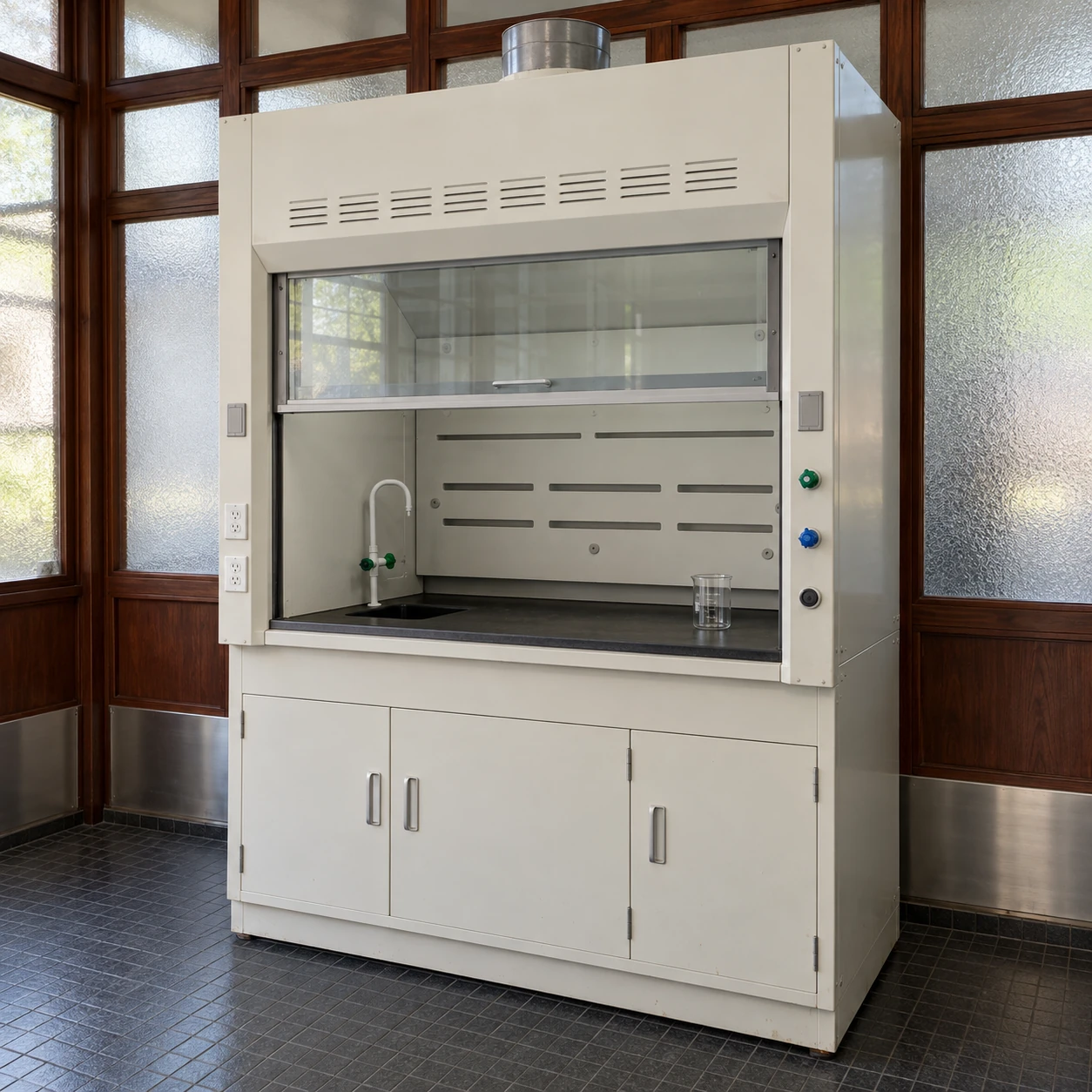
Laboratory Fume Hoods
lab chemical fume hood
| Brand | shengtongJH |
|---|---|
| Cabinet type | Ducted chemical work enclosure with vertical sash |
| Overall W × D × H selections | 1200 × 800 × 2515 / 1500 × 800 × 2515 / 1800 × 800 × 2515 mm |
| Working-zone W × D × H | 990 × 600 × 870 / 1290 × 600 × 870 / 1590 × 600 × 870 mm, matched respectively |
| Outer shell | Powder-coated steel |
| Worktop and liner selection | Chemical identity, concentration, temperature and cleaning method assessed together |
| Service choices | Water, cup sink, gas or electrical provision according to the task schedule |
| Working access | Vertical glass sash; normal opening set for the accepted operating condition |
| Airflow arrangement | Ducted exhaust; rear baffle route kept accessible |
| Monitoring option | Airflow indication and low-flow alarm linked to the selected system |
| Maintenance interface | Accessible service panels and identified replaceable fittings |
Different chemical tasks require compatibility review; shared use does not establish that chemicals can be mixed or used simultaneously. Specialist acid and explosion-risk duties require dedicated assessment.
The work area, services, materials and cabinet dimensions can be customized to the approved chemical methods and changeover requirements.
A lab chemical fume hood may serve several approved methods over time. The cabinet should be selected for those tasks and their changeovers, with enough working space and a practical way to control residues between operations.
Plan the sequence of tasks
One cabinet may accommodate several methods at different times, but that does not make simultaneous work appropriate. Consider chemical compatibility, vapour generation and the space taken by each setup. Separate workstations or dedicated equipment may be necessary where tasks cannot be safely combined.
Keep the approved task schedule with the equipment requirements. A later method using a new reagent or a hotter process should trigger a review of the lining, worktop and exhaust route rather than inherit the previous approval automatically. Review material selection against the revised chemistry.
Organize the workspace without blocking extraction
Assign space for the active apparatus, sample handling and necessary connections. Avoid adding shelves or partitions inside the enclosure without reviewing their effect on airflow. A physical divider can obstruct the air path without providing reliable separation between chemical operations.
Choose service positions so tubing does not cross the operator's handling area or interfere with the sash. Remove equipment that is not needed for the current method instead of using the cabinet as permanent storage.
Control residue carryover
Residual liquid and deposits can affect the next task as well as the cabinet itself. Use a documented cleanup and release procedure suited to the chemicals involved. Accessible joints and removable apparatus make inspection easier; hidden residue should not be treated as removed simply because the visible bench is clear.
Waste containers need a defined handling arrangement. The presence of a sink does not change the laboratory's chemical-waste requirements.
Keep services appropriate to the method
Only specify the utilities that the process needs. Additional valves, sockets and drains consume space and add maintenance points. Where a service is shared between methods, its cleanliness and material compatibility also require consideration.
shengtongJH coordinates the cabinet and fittings against the approved task information. The exhaust system and installed assessment remain essential parts of that arrangement, particularly where apparatus or operating conditions change. General ducted cabinets should not be treated as universal equipment for every corrosive or reactive chemical process.
The work area, services, materials and cabinet dimensions can be customized to the approved chemical methods and changeover requirements.