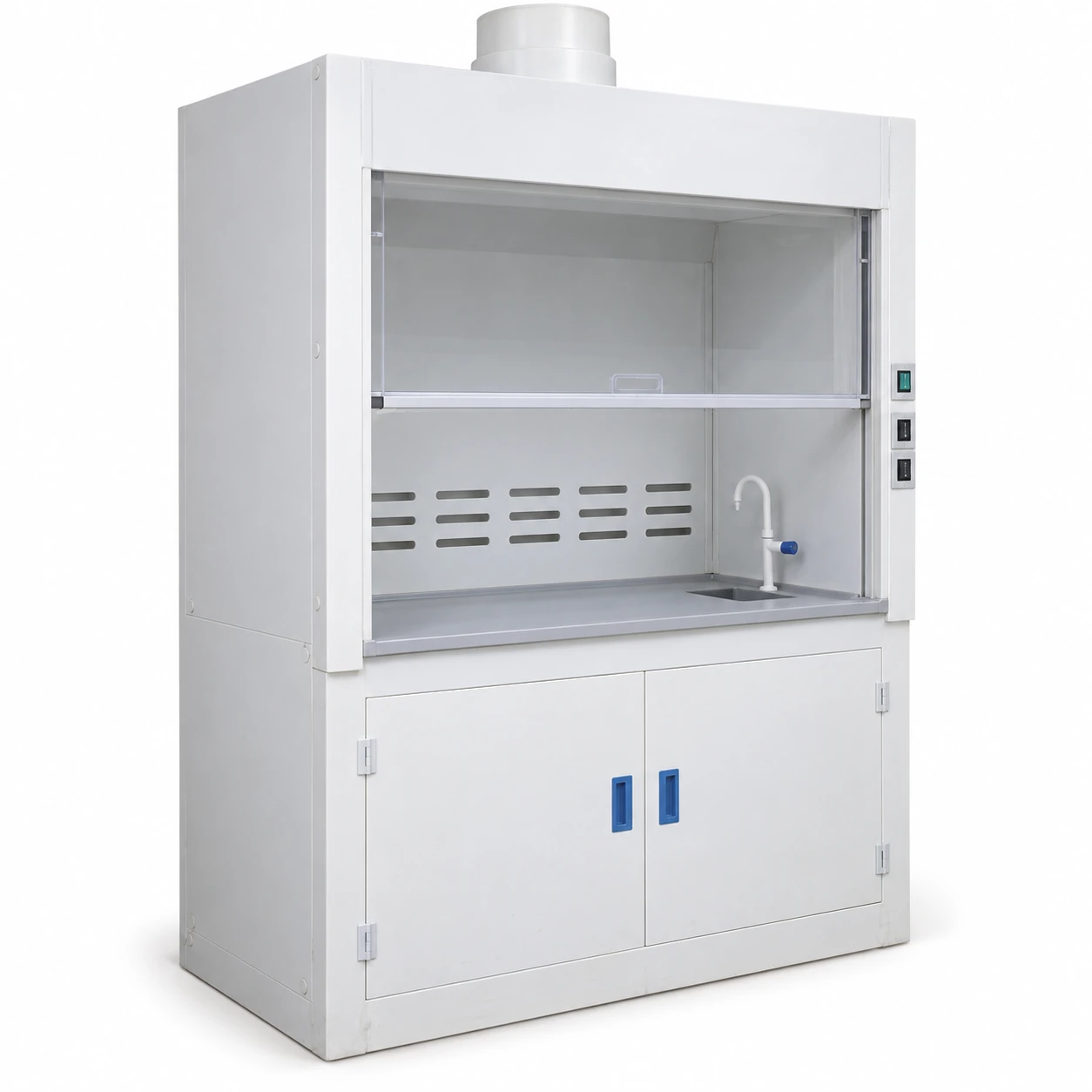
Laboratory Fume Hoods
chemical fume hood
| Brand | shengtongJH |
|---|---|
| Cabinet type | Ducted chemical hood with polypropylene body option |
| External W × D × H options | 1247 × 800 × 2450 / 1547 × 800 × 2450 mm |
| Corresponding chamber W × D × H | 987 × 560 × 700 / 1287 × 560 × 700 mm |
| Body material | Welded polypropylene construction option |
| Working surface height | 820 mm option |
| Worktop choices | PP, phenolic resin, epoxy resin or ceramic, subject to chemical and temperature compatibility |
| Sash | Vertical transparent sash; material selected for the approved chemical duty |
| Exhaust components | Chemically compatible duct and centrifugal fan selection |
| Water services | Compatible tap and sink options |
| Controls | Airflow indication with low-flow alarm; accessible service isolation |
| Electrical supply | 220 V, 50/60 Hz options; other supplies by selected components |
| Duty definition | Chemical identity, concentration, temperature, quantity and release pattern |
Polypropylene construction is not a universal corrosion, heat or fire rating. The offered cabinet, sash, worktop and exhaust path must be matched to the defined chemical use.
Materials, cabinet size, service fittings and exhaust arrangements can be customized to the assessed chemical process and site requirements.
A chemical fume hood must be compatible with the substances it handles throughout the air path. This configuration focuses on a polypropylene cabinet option for suitable corrosive duties, with the working surface and exhaust components selected separately for the actual chemistry.
Start with the chemical list and operating temperature
A material that tolerates a dilute reagent at room temperature may behave differently under concentrated, heated or prolonged exposure. Review the actual process, including cleaning chemicals and likely spills, instead of choosing a liner from a broad description such as acid-resistant.
The chamber, worktop and exhaust path need separate consideration. A suitable work surface does not protect an incompatible fan impeller further downstream. The installed exhaust system must carry the same chemical duty through to discharge. Likewise, moisture resistance does not establish resistance to every solvent or oxidizing agent.
Work surface
Consider direct liquid contact, cleaning, heat from apparatus and the condition of joints. Select a surface that suits those exposures and provides the required support for the equipment.
Liner and baffles
Vapour and splashes can contact surfaces above the bench. Accessible, chemically compatible baffles support cleaning and inspection without improvising modifications to the airflow path.
Duct and fan
Check vapour compatibility and any condensate formation along the exhaust route. Choose suitable joints and service access; material compatibility should continue beyond the hood outlet.
Recognize duties that need a different design
Do not assign perchloric-acid operations, hydrofluoric-acid work, high-temperature digestion or an explosion hazard to a general-purpose cabinet without a dedicated assessment. Each can change the required construction and protection strategy. In particular, ordinary glass should not be assumed compatible with hydrofluoric-acid exposure, and a PP enclosure is not automatically suitable for high heat.
A recirculating filter is also not a universal substitute for ducted exhaust. Chemical capture and breakthrough depend on the substance and conditions. This page concerns ducted equipment; any exhaust treatment must be selected for the identified release.
Reduce accumulated residues
Keep the chamber dedicated to active work rather than long-term chemical storage. Clean spills using the approved chemical procedure and inspect affected surfaces before further use. Residues can create compatibility problems that were absent in the original process.
Make changes deliberate
When a new reagent or heating step is introduced, revisit the hood's material and ventilation scope. A previous satisfactory operation does not approve every later task. shengtongJH can coordinate material choices and supply details around the assessed requirement.
Materials, cabinet size, service fittings and exhaust arrangements can be customized to the assessed chemical process and site requirements.