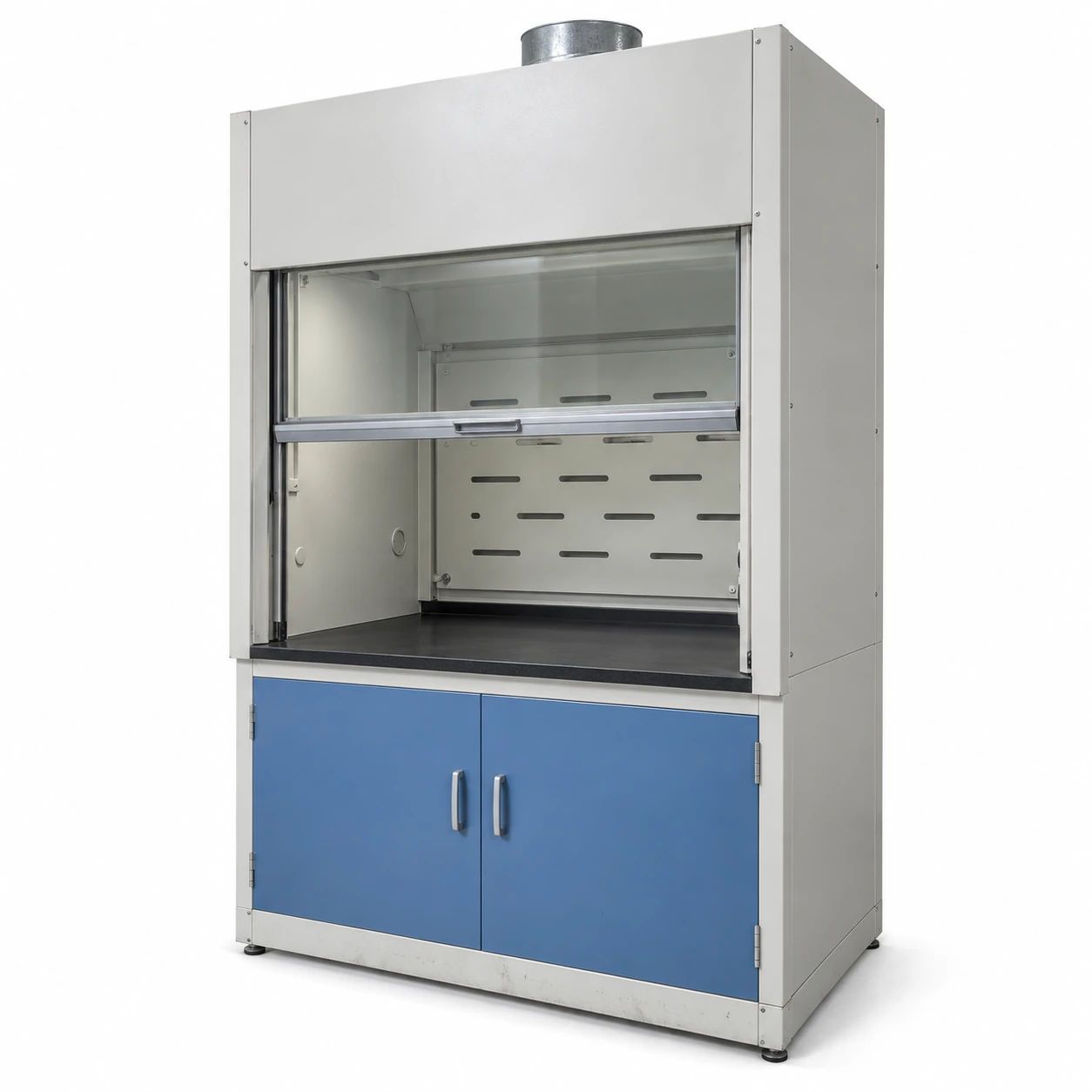
Laboratory Fume Hoods
fume hood
| Brand | shengtongJH |
|---|---|
| Equipment type | Ducted benchtop chemical exhaust cabinet with base |
| External W × D × H options | 1240 × 800 × 2200 / 1540 × 800 × 2200 / 1840 × 800 × 2200 mm |
| Corresponding chamber W × D × H | 1020 × 670 × 730 / 1320 × 670 × 730 / 1620 × 670 × 730 mm |
| Outer construction | Powder-coated steel |
| Liner and worktop | Chemical-resistant laminate and phenolic-resin options; compatibility selected by chemical duty |
| Sash | Vertically adjustable transparent safety-glass sash |
| Worktop height option | 850 mm from floor |
| Exhaust connection | Top outlet; connection size matched to the selected cabinet and duct system |
| Airflow control | Constant-volume or coordinated variable-volume arrangement by project |
| Monitoring | Airflow indication and low-flow alarm specified with the installation |
| Services | Lighting; water, gas and electrical outlets as required |
| Electrical configuration | 220 V, 50/60 Hz options; fan and accessory loads specified separately |
Overall dimensions include the base arrangement; chamber dimensions are not the sash opening. Operating sash height, exhaust duty and acceptance conditions are established for the selected hood and laboratory.
Cabinet dimensions, surfaces, services and exhaust interfaces can be customized to the laboratory task and installation conditions.
A ducted fume hood draws room air inward through its working opening and carries airborne chemical contaminants into an exhaust system. It helps control exposure at the task when the cabinet, ventilation and operating method are correctly matched.
Choose the equipment for the exposure problem
Solvent handling, sample preparation and some analytical operations can release vapours near the operator. A chemical fume hood provides a partially enclosed work area with inward airflow, reducing the opportunity for those releases to enter the room. Its usefulness depends on the substance, quantity, temperature and way the work is performed.
A clean bench has a different purpose: it supplies filtered air to protect work from particles and may direct that air towards the operator. A biological safety cabinet addresses specified biological risks with a different airflow and filtration design. Neither should be substituted for a chemical hood simply because it has a similar window and work surface.
Buy the exhaust duty, not just the cabinet
The hood needs an appropriate fan, compatible ductwork, a suitable discharge location and sufficient replacement air in the room. The laboratory system configuration explains how those parts are coordinated. A fan included with a cabinet may not overcome the resistance of a long installed duct run. Assess the complete route, including bends and any required treatment equipment, before selecting the operating duty.
Keep the working opening controlled
The sash defines the opening through which room air enters. Work at the designated operating height and use the installed airflow indication. A face-velocity value alone does not demonstrate containment: cross-drafts, apparatus and the hood's aerodynamic design influence the result.
Match surfaces to the actual chemicals
The worktop, liner, sash, seals, fan and duct all encounter different parts of the exposure. A durable-looking steel cabinet does not establish resistance to every reagent. Hot processes, hydrofluoric acid, perchloric acid and explosion hazards need separate specialist assessment; ordinary configurations should not be assumed suitable.
Make the purchase usable from day one
Specify how the hood will be installed, commissioned and maintained. Keep service controls accessible and plan the apparatus position without blocking rear airflow passages. Agree the operating opening, alarm response and required acceptance tests before work begins.
shengtongJH sources equipment and coordinated supply options for industrial laboratories. The scope can include the cabinet and selected accessories, with the site ventilation and installation responsibilities clearly defined.
Cabinet dimensions, surfaces, services and exhaust interfaces can be customized to the laboratory task and installation conditions.