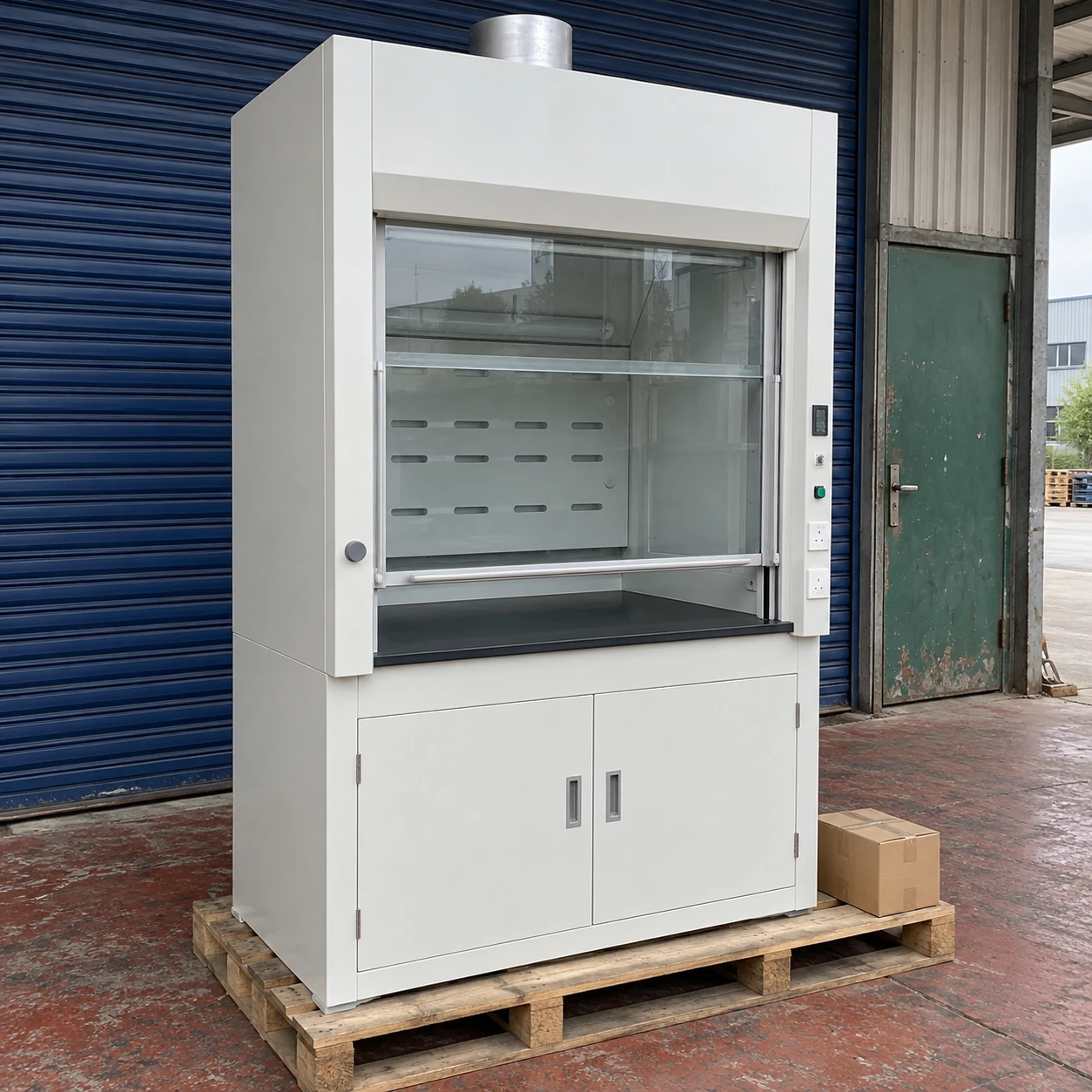
Laboratory Fume Hoods
fume hood supplier
| Brand | shengtongJH |
|---|---|
| Supply role | Industrial laboratory equipment sourcing and package coordination |
| Overall cabinet W × D × H options | 1200 × 800 × 2515 / 1500 × 800 × 2515 / 1800 × 800 × 2515 mm |
| Corresponding internal work area W × D × H | 990 × 600 × 870 / 1290 × 600 × 870 / 1590 × 600 × 870 mm |
| Construction choices | Powder-coated steel shell; task-compatible worktop and liner |
| Exhaust coordination | Fan, duct connection and treatment interfaces included to agreed scope |
| Utility selection | Water, drainage, gas and electrical interfaces identified per order |
| Operational indication | Selected airflow monitor and alarm |
| Replacement schedule | Sash components, glazing, lighting, service valves and controls identified |
| Handover information | Approved drawing, connection details, operating information and supplied records |
| Delivery scope | Packing, shipping sections and site responsibilities agreed in quotation |
The selected configuration and its documents define the supply. Installation clearances and shipping dimensions are confirmed separately from the cabinet working envelope.
Equipment dimensions, utility interfaces, supply scope and replacement-part package can be customized to the laboratory and maintenance needs.
A fume hood supplier should connect the equipment specification with delivery, installation information and later replacement parts. shengtongJH provides a procurement interface for coordinating those requirements across the selected cabinet and accessories.
Keep the interfaces in one order schedule
The cabinet, exhaust fan, duct connection and controls can come from different manufacturing sources. A coordinated purchase records how those components connect and which party provides each item. This reduces the risk of discovering an unmatched connection or missing control function during installation.
The schedule should include the chemical duty, cabinet drawing and relevant exhaust assumptions. Use model-specific construction and performance evidence to identify the offered configuration. If site conditions change, the effect can then be reviewed against an identifiable configuration.
Give the installer usable information
Provide the location of services, electrical requirements and the intended exhaust connection before the cabinet arrives. Confirm the support arrangement and access needed for assembly. Installation instructions should refer to the equipment actually supplied, particularly where accessories or controls differ between orders.
Agree the records required at handover. Installed airflow assessment and control settings should be retained by the laboratory so the operating condition is not lost after the project team leaves.
Identify service parts before they are needed
Keep the sash mechanism, glazing, service fittings and control identities with the cabinet record. A replacement selected only by appearance may have the wrong travel, material or signal connection. This matters even where the cabinet itself remains in good condition.
For a proposed replacement, check mechanical fit and operating compatibility. A changed blower or control can affect the exhaust arrangement and may require reassessment after installation.
Make support enquiries specific
Report the cabinet identity, observed fault and any recent changes to the room or process. A sash problem, an airflow alarm and corrosion at a service fitting call for different responses. Clear information helps distinguish an equipment issue from a change in the building's ventilation.
shengtongJH acts as an industrial trading and sourcing supplier, coordinating equipment and document requirements through one purchasing interface. The accepted order should identify the agreed support scope and responsibility for site work. This provides a practical basis for maintaining the cabinet without implying that every future component or service is automatically included.
Equipment dimensions, utility interfaces, supply scope and replacement-part package can be customized to the laboratory and maintenance needs.