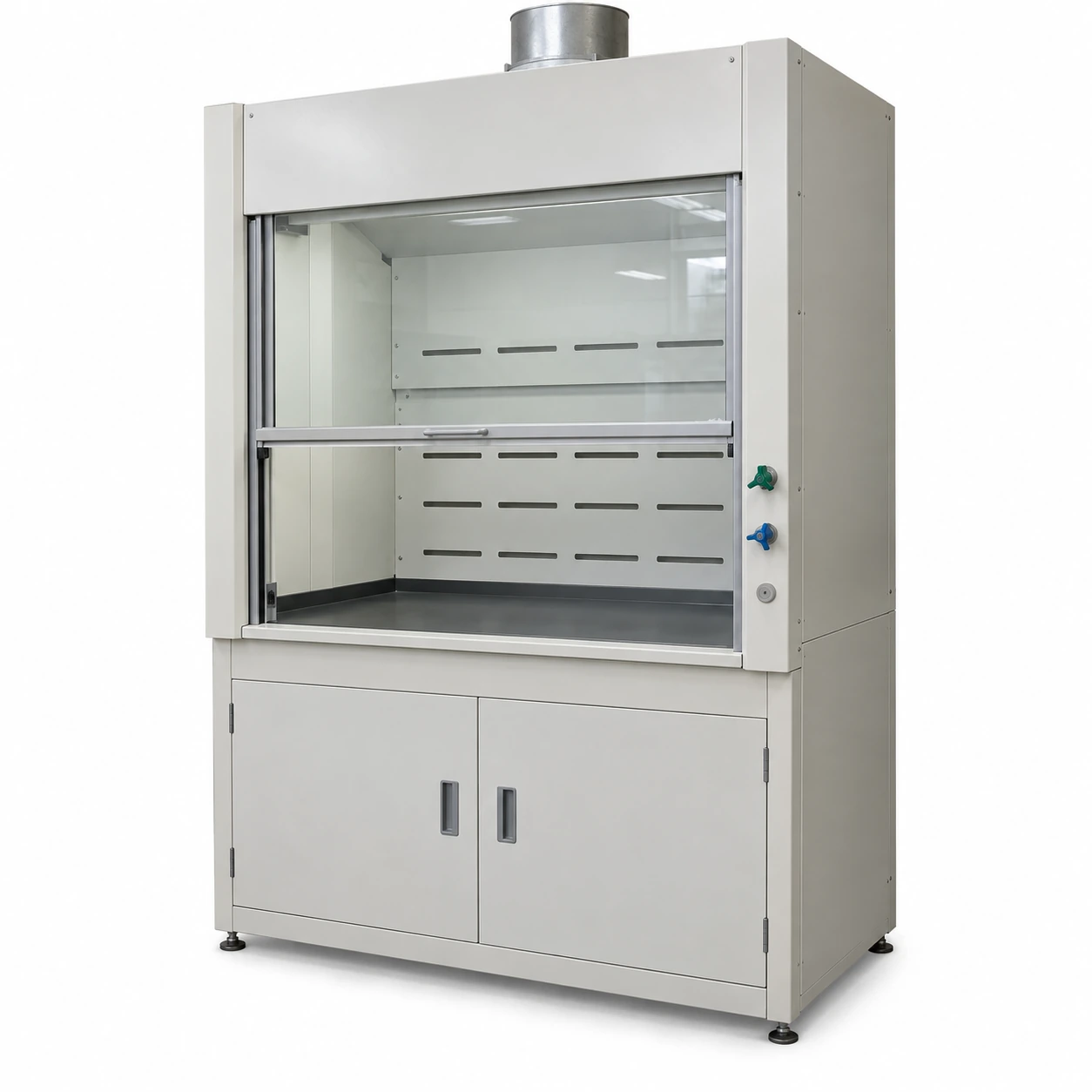
Laboratory Fume Hoods
fume hood manufacturers
| Brand | shengtongJH |
|---|---|
| Procurement scope | Ducted fume hood assemblies and matched project accessories |
| Overall W × D × H options | 1200 × 800 × 2515 / 1500 × 800 × 2515 / 1800 × 800 × 2515 mm |
| Corresponding internal W × D × H | 990 × 600 × 870 / 1290 × 600 × 870 / 1590 × 600 × 870 mm |
| Outer construction | Powder-coated steel; material and finish specified in offer |
| Worktop and liner | Identified materials with chemical and temperature suitability reviewed |
| Sash assembly | Vertical glass sash with defined travel, operating position and service access |
| Exhaust duty information | Required volume and pressure at the selected operating opening |
| Controls and indication | Airflow monitor, alarm and fan/control interface as specified |
| Evidence requested | Configuration drawing and applicable model-specific performance documents |
| Replacement information | Sash mechanism, glazing, service fittings and control identities |
Compare offers at the same sash opening and exhaust conditions. Cabinet dimensions and reported test performance must refer to the configuration actually offered.
The procurement specification can be customized around the chemical schedule, room interface and maintenance requirements.
Comparing fume hood manufacturers is most useful when every offer addresses the same chemical tasks and installation conditions. shengtongJH coordinates sourcing so cabinet construction, evidence and site interfaces can be assessed together.
Look inside the construction
External appearance does not establish whether a cabinet suits the process. Compare the lining, worktop joints, rear baffle arrangement and access to service components. Keep the quoted equipment scope alongside that technical comparison. A supplier should identify the materials being offered rather than describe the complete cabinet only as corrosion-resistant.
Ask how the sash is supported and serviced. Confirm that replacement glazing and operating components can be identified without treating the whole cabinet as a disposable assembly.
Read performance evidence with its conditions
A report should identify the tested configuration, operating opening, exhaust condition and method. Results for a different width, sash arrangement or air system cannot automatically establish the performance of the offered unit.
Face velocity is useful operating information, but a single value does not fully describe containment. Installation effects and the intended working arrangement still require assessment at the site.
Compare like-for-like exhaust requirements
The exhaust fan has to overcome the complete system resistance, including ductwork, fittings and any required treatment. Cabinet data and fan free-air capacity are different quantities. An offer that includes a fan should state the duty for which it has been selected and the assumed discharge route.
Check which party provides the room make-up air and which party adjusts the installed system. A cabinet selection should not quietly shift an unresolved ventilation requirement to the installer after delivery.
Keep the chosen configuration traceable
Record the approved drawing and component schedule in the purchase documents. If a liner, fan or control is substituted, review its effect on the agreed duty instead of carrying over the original description unchanged. Identify any requested factory checks and the separate requirements for installed acceptance.
As a trading and equipment-sourcing business, shengtongJH coordinates manufacturing offers and project supply. Clear manufacturer documentation and agreed responsibilities make the purchase easier to evaluate and help the laboratory maintain the selected equipment over time.
The procurement specification can be customized around the chemical schedule, room interface and maintenance requirements.