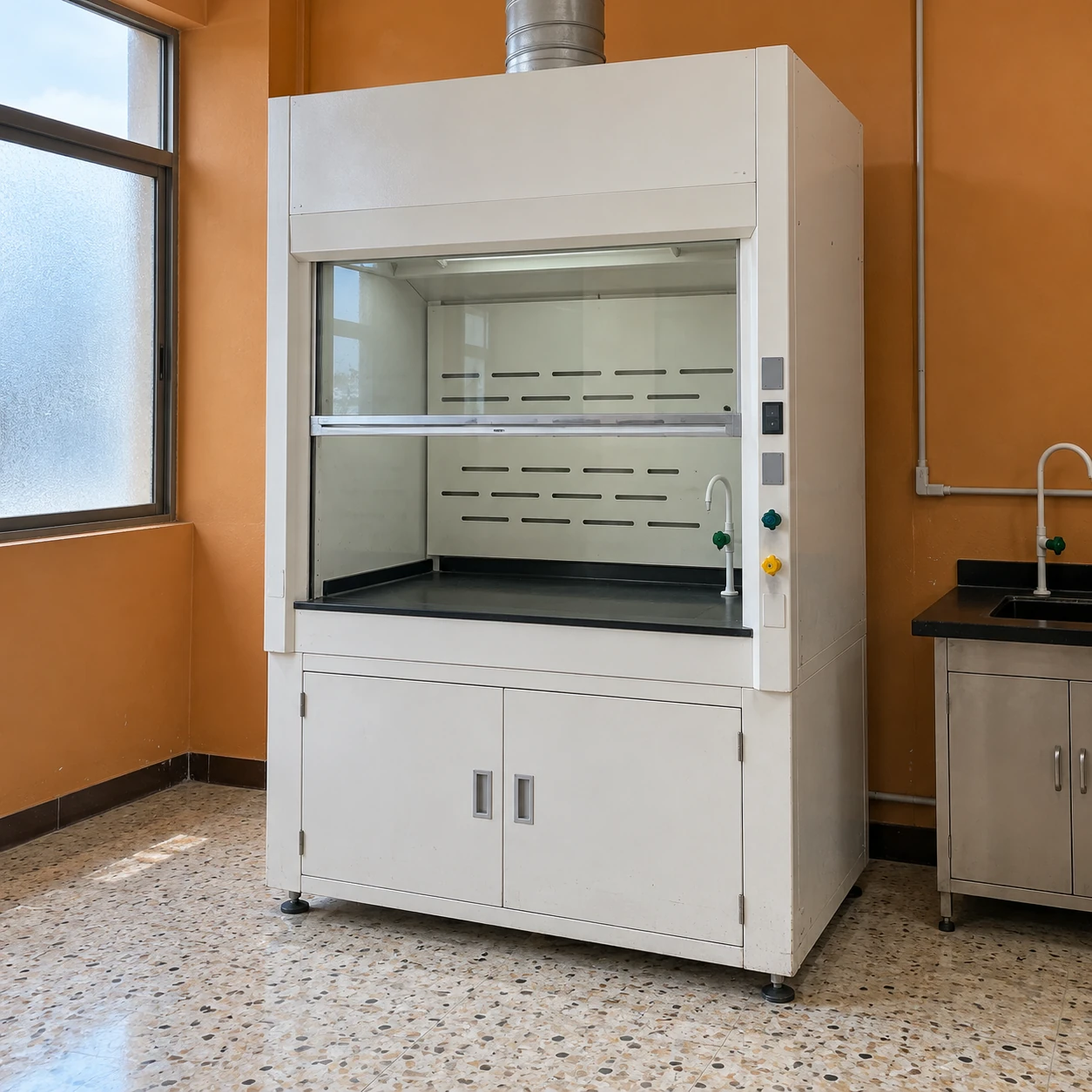
Laboratory Fume Hoods
fume hood science lab
| Brand | shengtongJH |
|---|---|
| Application | Industrial testing, research and supervised technical laboratory work |
| Overall cabinet W × D × H | 1200 × 800 × 2515 / 1500 × 800 × 2515 / 1800 × 800 × 2515 mm |
| Matching workspace W × D × H | 990 × 600 × 870 / 1290 × 600 × 870 / 1590 × 600 × 870 mm |
| Work-surface height option | 900 mm; accessibility needs reviewed separately |
| Cabinet and lining | Powder-coated steel exterior; chemical-compatible inner surfaces |
| Viewing access | Vertical transparent sash with defined normal operating opening |
| Lighting | Enclosed work-area light selected for the cabinet construction |
| Utility options | Clearly identified water, gas and electrical services as required |
| Airflow status | Visible monitor and alarm selected with the exhaust system |
| Ventilation interface | Ducted exhaust with room make-up air and discharge route coordinated |
Cabinet working height and viewing access must suit the intended users and task. The hood requires installed ventilation acceptance and is not a clean bench or biological safety cabinet.
Cabinet dimensions, viewing access, utility layout and controls can be customized to the industrial laboratory and training requirements.
An industrial science laboratory needs chemical containment suited to its testing, research and technical training tasks. Clear viewing and accessible controls help staff observe the work without crowding the cabinet opening.
Make the task visible without gathering at the opening
Observation is useful during training and method development, but several people standing tightly around the sash can interfere with the operator and disturb the local airflow. Arrange the laboratory so a supervisor can observe without blocking the working position or the route out of the area.
A clear sash and effective work-area lighting support visibility. Choose apparatus positions that can be seen through the sash at its normal operating height, rather than depending on a fully raised window.
Recognizable services
Label utility controls according to the connected service and provide accessible isolation. A similar-looking valve should not leave a new user guessing whether it supplies water, vacuum or gas.
Understandable airflow status
A visible monitor helps staff recognize an abnormal condition. Training should explain what the indication means and the approved response to an alarm; a running light is not a substitute for verified airflow.
Orderly apparatus
Keep the arrangement appropriate to the procedure. Spare containers, demonstration materials and unrelated instruments should not accumulate against the rear extraction path.
Select protection for the actual experiment
A chemical fume hood draws laboratory air into the work zone and exhausts it. It does not provide the filtered product protection of a clean bench or the specified biological protection of a suitable biological safety cabinet. Select the equipment from the process risk, not from the shared appearance of a glass-fronted enclosure. The ducted fume hood overview explains the cabinet and exhaust relationship.
Work involving unusual chemistry, substantial heat or potentially explosive conditions needs a separate suitability assessment. An ordinary cabinet should not acquire specialist capabilities simply because it is installed in a science laboratory.
Keep training and maintenance connected
New users should receive instruction on the permitted work, normal sash position and service isolation. Changes to the experiment or installed apparatus may require another review of the ventilation arrangement. shengtongJH coordinates cabinet and accessory procurement around those requirements, including the operating information needed for an effective handover.
Cabinet dimensions, viewing access, utility layout and controls can be customized to the industrial laboratory and training requirements.