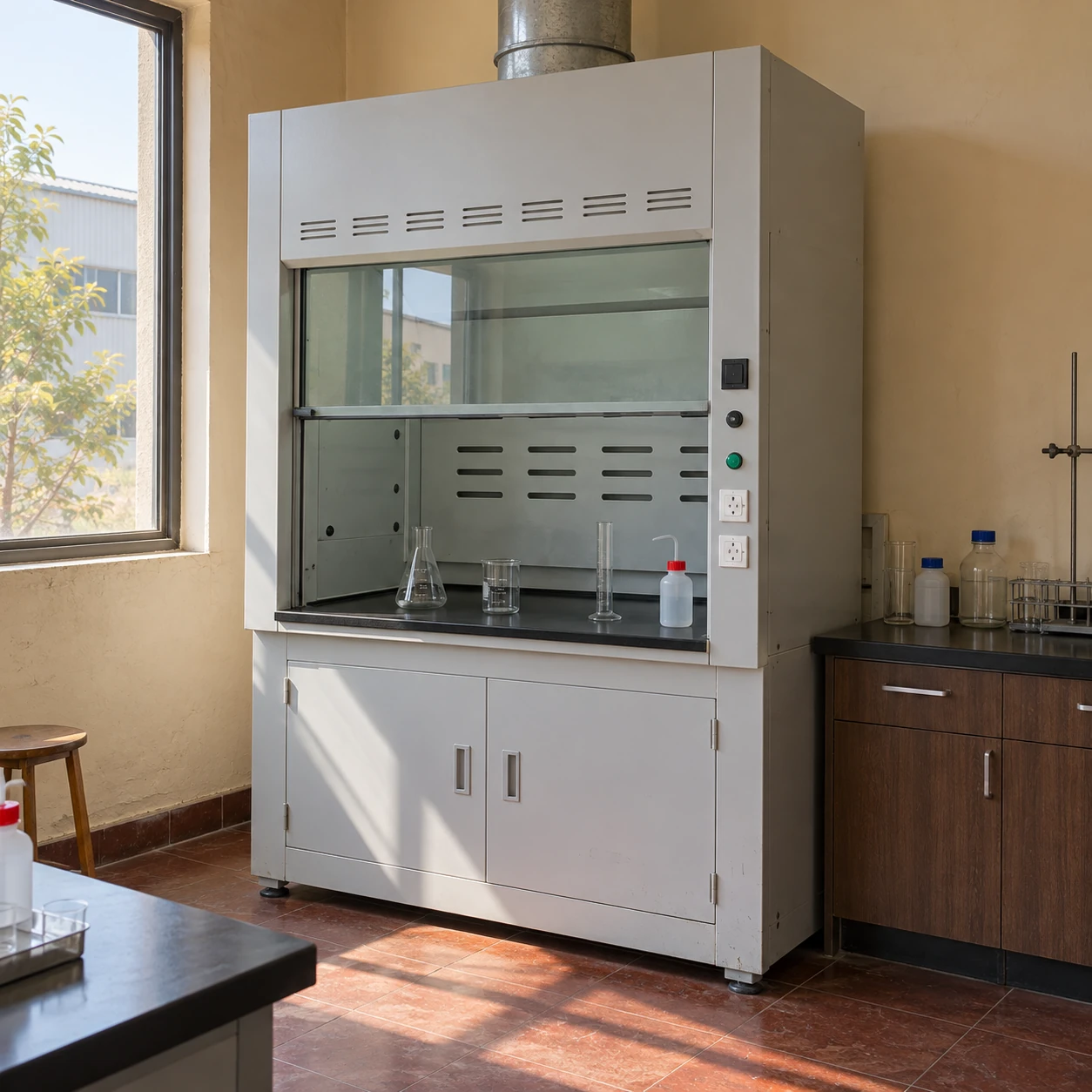
Laboratory Fume Hoods
fume hood laboratory
| Brand | shengtongJH |
|---|---|
| Equipment type | Ducted bench-height chemical fume hood with base cabinet |
| Overall W × D × H options | 1200 × 800 × 2515 / 1500 × 800 × 2515 / 1800 × 800 × 2515 mm |
| Corresponding workspace W × D × H | 990 × 600 × 870 / 1290 × 600 × 870 / 1590 × 600 × 870 mm |
| Work-surface height option | 900 mm |
| Outer cabinet | Powder-coated steel |
| Inner surfaces | Liner and worktop selected against chemicals, temperature and cleaning method |
| Front access | Counterbalanced vertical glass sash; operating position set during commissioning |
| Exhaust arrangement | External discharge system; fan and duct scope agreed for the installation |
| Services | Lighting, electrical outlets and water/gas fittings selected for the tasks |
| Airflow indication | Monitor and low-flow alarm selected with the exhaust controls |
Overall dimensions describe the cabinet assembly. Duct routing, top clearance and access for maintenance are additional installation requirements; working sash position is distinct from maximum opening.
Cabinet dimensions, utility positions and working access can be customized to the laboratory workflow and equipment arrangement.
A shared laboratory needs a fume hood that accommodates its daily tasks and apparatus. Usable chamber space, clear sash access and accessible services help successive users work without leaving obstructions for the next operation.
Size the working arrangement, not just the bench
List the apparatus that needs to remain inside during an operation, including stands, tubing and the space required to handle samples. A wide cabinet can still become difficult to use if a large instrument blocks the rear air path or forces routine work towards the opening.
Keep the working zone distinct from storage. Materials not needed for the current task occupy useful space and complicate cleanup. In a shared laboratory, a defined setup and removal routine can be more useful than simply purchasing a larger hood.
Give each user a clear operating position
The sash should move freely and allow the task to be performed at the commissioned operating position. Loading tall equipment may require a wider opening temporarily, but that loading position is not automatically an acceptable position for an active chemical operation.
Arrange benches and traffic so people do not repeatedly pass immediately behind the operator. Door movement and supply-air drafts can disturb the opening; these room effects need to be assessed with the installed exhaust system.
Leave room to maintain the cabinet
Service fittings, lighting and sash components need accessible maintenance routes. A cabinet pushed tightly against another bench may hide a service panel that will be needed later. Confirm the side and top access requirements before adjoining furniture is installed.
Keep the sash mechanism and airflow indication in the laboratory's maintenance plan. A fan running somewhere in the building is not proof that the hood is operating at its intended condition.
Make handovers between tasks straightforward
Shared use works best when the permitted tasks, normal sash position and required response to an airflow alarm are clear. Equipment left by one user should not obstruct the next operation. Identify who removes residues and how the work area is released for the next task. Review chemical-task changeover when several methods use the same cabinet.
shengtongJH coordinates cabinet and accessory sourcing around that workflow. Final acceptance should include the actual apparatus arrangement and the laboratory's normal ventilation conditions, rather than judging suitability from an empty cabinet alone.
Cabinet dimensions, utility positions and working access can be customized to the laboratory workflow and equipment arrangement.