Laboratory Fume Hoods
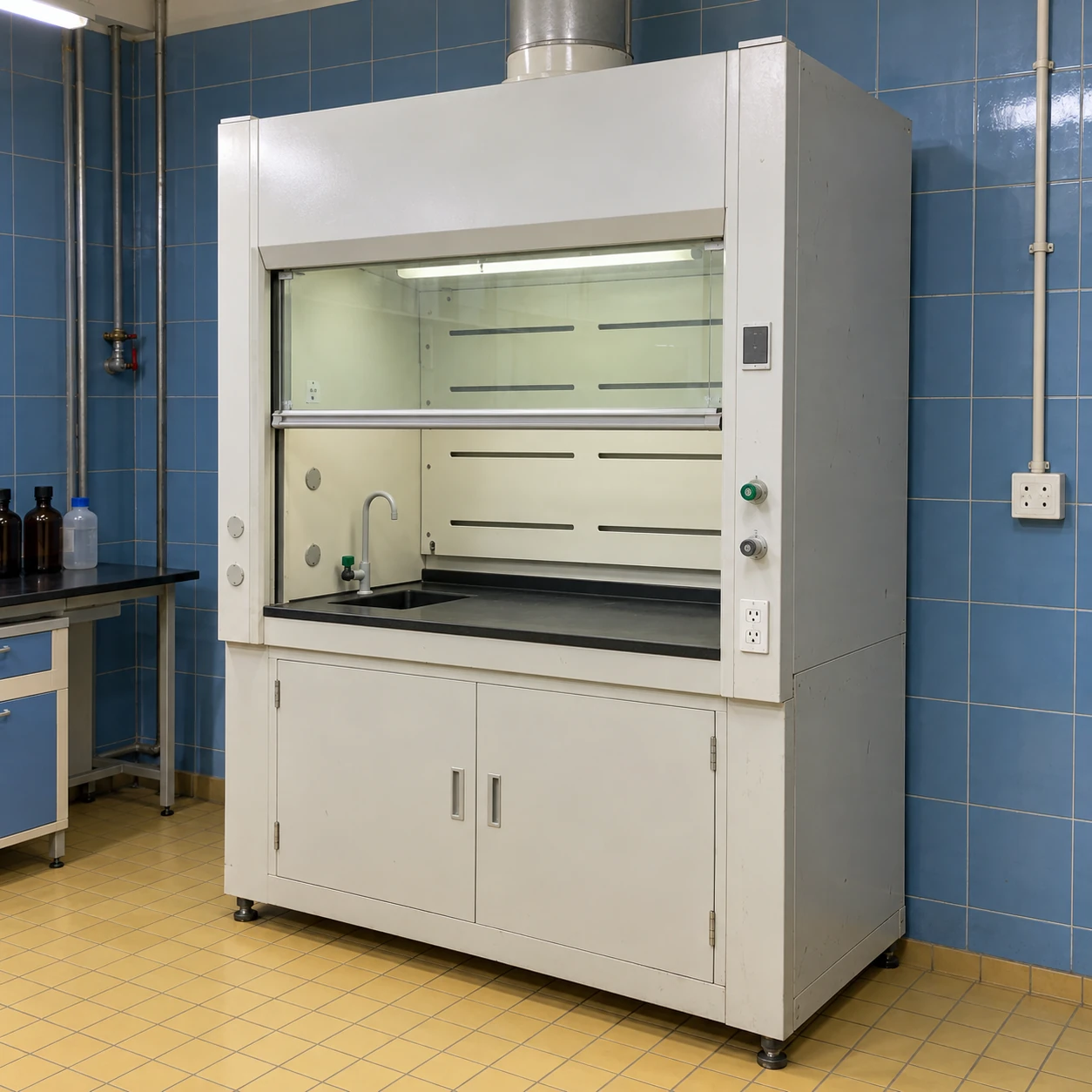
chemical lab fume hood
| Brand | shengtongJH |
|---|---|
| Cabinet format | Ducted steel fume hood with bench-height work area |
| Overall W × D × H options | 1200 × 800 × 2515 / 1500 × 800 × 2515 / 1800 × 800 × 2515 mm |
| Workspace W × D × H options | 990 × 600 × 870 / 1290 × 600 × 870 / 1590 × 600 × 870 mm, respectively |
| Worktop options | Chemical-resistant phenolic or epoxy resin, selected for exposure and heat limits |
| Liner options | Chemical-resistant laminate or other task-compatible lining |
| External finish | Powder-coated steel |
| Wet services | Small cup sink and water fitting where required; waste connection by process |
| Sash | Vertical glass sash; specialist glazing assessed where needed |
| Electrical configuration | Destination-matched supply and selected equipment load; outlets outside likely splash paths |
| Exhaust selection | Fan, duct and any treatment stage selected for the chemical duty |
Material selection depends on the chemical identity, concentration, temperature and exposure time. Ordinary configurations are not specified for heated perchloric acid, hydrofluoric acid or explosive atmospheres.
Worktop, liner, service fittings, cabinet size and exhaust interfaces can be customized to the assessed chemical tasks.
A chemical lab fume hood supports wet-analysis tasks by drawing room air into an enclosed work zone and exhausting it through a connected system. Materials and utility fittings must suit the actual liquids, vapours, temperatures and cleaning routine.
A chemical-resistant surface still has limits
Resistance depends on what contacts the surface and under which conditions. A liner suitable for occasional dilute splashes may not suit repeated hot concentrated exposure. Identify the reagents, cleaning products and expected temperatures before choosing the worktop and lining. Compare the polypropylene construction option where its chemical and temperature limits suit the duty.
Consider the whole wetted or exposed route: worktop, sink, tap, seals, duct and fan. Selecting a suitable work surface does not make every downstream component compatible with the same vapour or liquid.
Allow for heat from the process
Heated apparatus changes the air movement inside the cabinet and can stress nearby surfaces. Establish the equipment footprint and heat release when selecting the hood. Keep the arrangement within the material and apparatus requirements rather than assuming a fume hood permits any heating task.
Hot plates, cables and supporting stands should fit without obstructing the extraction path or preventing normal sash use. Review significant apparatus changes before returning the hood to operation.
Make wet services useful without adding clutter
A small sink can support an approved procedure, but it reduces clear bench area and introduces drainage interfaces. Place it where tubing and glassware do not cross the main handling zone. Choose the drain route against the waste stream and facility requirements; a sink does not authorize chemical disposal.
Service controls should be accessible without awkward reaching. Agree where utility isolation can be reached during maintenance.
Design cleanup into the daily task
Accessible corners and removable equipment make residue easier to identify. Use the laboratory's approved cleanup method for the substances involved, and avoid leaving incompatible residues from successive tasks on the work surface. A spill should be handled under the established response procedure, not improvised by running the fan faster.
Some chemistries require a dedicated construction. Heated perchloric acid needs a specifically engineered system, while hydrofluoric acid changes material and glazing choices. General steel cabinets should not be presented as universal substitutes.
shengtongJH coordinates the offered cabinet, fittings and exhaust interfaces from the task information. The installation requires an appropriate ventilation assessment and acceptance before chemical use.
Worktop, liner, service fittings, cabinet size and exhaust interfaces can be customized to the assessed chemical tasks.