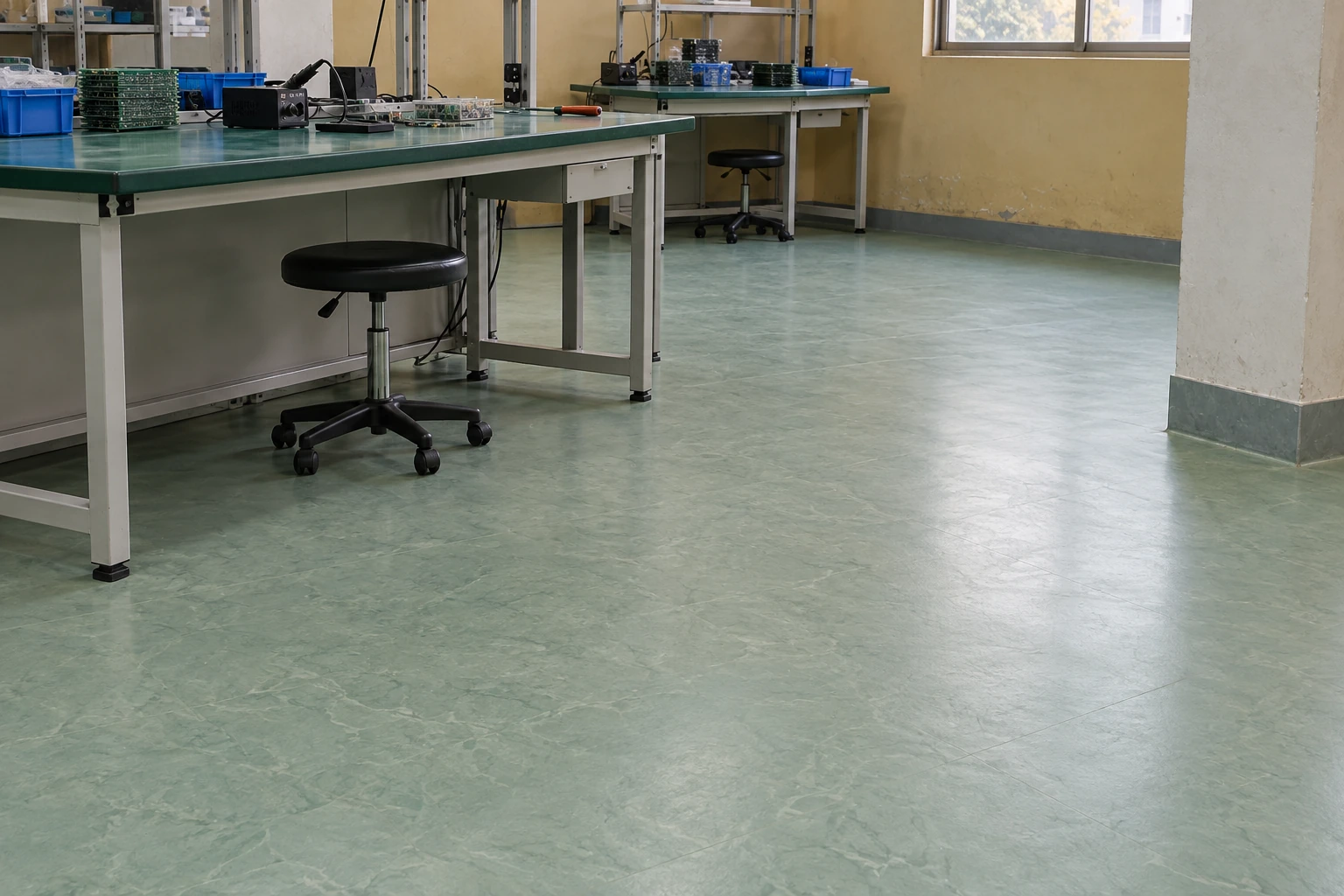
ESD Vinyl Flooring
esd vinyl flooring
| Electrical construction | Conductive or static-dissipative PVC, according to the ESD control program |
|---|---|
| Bonded sheet, W × L | 2 × 20 m; 2.0 mm overall thickness |
| Bonded tile, W × L | 608 × 608 or 615 × 615 mm; 2.0 mm overall thickness |
| System components | Compatible conductive adhesive, specified grounding components and approved footwear |
| Joints and perimeter | Close-laid or welded joints and compatible wall details, according to the selected system |
| Acceptance | Installed electrical measurements and person–footwear–floor evaluation under the agreed procedure |
The two tile formats are separate system choices and are not interchangeable. Electrical limits, test conditions and grounding details belong to the selected floor assembly and ESD control plan.
ESD vinyl flooring forms part of a controlled path for dissipating electrostatic charge in a work area. The floor must work with the footwear, contact points and grounding arrangement used in that area; appearance or the word antistatic alone does not establish that performance.
Follow the charge path through the working system
For a person standing in an ESD protected area, the relevant path includes the person, the footwear, contact with the floor, the floor construction and its connection to ground. A poor interface anywhere along that path can undermine the intended control. The electrical behavior of a loose floor sample therefore answers a different question from the behavior of a person walking on the finished installation.
This also explains why a floor and a shoe that each meet their own component specification still need evaluation together. Sole material, floor surface and operating conditions interact. The ESD program should establish both resistance-related acceptance and the walking-voltage assessment appropriate to the application.
Choose the electrical construction
Conductive and dissipative floors occupy different electrical ranges. Selection starts with the sensitive process and the site's control plan, not an assumption that the lowest resistance is always the best choice. General antistatic flooring terminology can refer to charging behavior without defining a complete route to ground.
Where the floor also handles carts, look beyond the castor label. Wheels, bearings, frames and their connections need to provide the required continuity. A conductive wheel cannot bypass an insulating component elsewhere in the trolley.
Choose the physical floor
Sheet flooring reduces the number of field joints across an open area. Tiles make it easier to organize local replacement around workstations. Neither format eliminates the need for a sound substrate, compatible adhesive and a documented grounding layout.
Cleaning and traffic requirements may decide between otherwise suitable electrical options. A floor beside a wet-cleaned process needs suitable seam and perimeter details; a floor under small loaded castors needs a realistic assessment of concentrated contact and turning forces.
Commission after the installation is ready
Electrical verification should follow the selected system's conditioning and curing requirements. Record test locations so that results can be related to grounding points, seams, repaired patches and heavily used routes. A commissioning record is more useful when it identifies the installed material and test conditions, rather than presenting an unexplained pass mark.
Ground connections should be completed and checked by appropriately qualified personnel. ESD charge control must not be confused with electrical insulation for protection against energized equipment; the two duties require different assessments.
Preserve performance during use
Dust, process residue and unsuitable surface treatments can change the contact between footwear and floor. Use the cleaning products and coatings approved for the selected system, then include periodic verification and checks after repairs in the maintenance plan. For a small damaged area, replacement tile compatibility includes electrical continuity as well as color and dimensions.
The sheet or tile layout, grounding package and associated accessories can be customized to the process and working area.