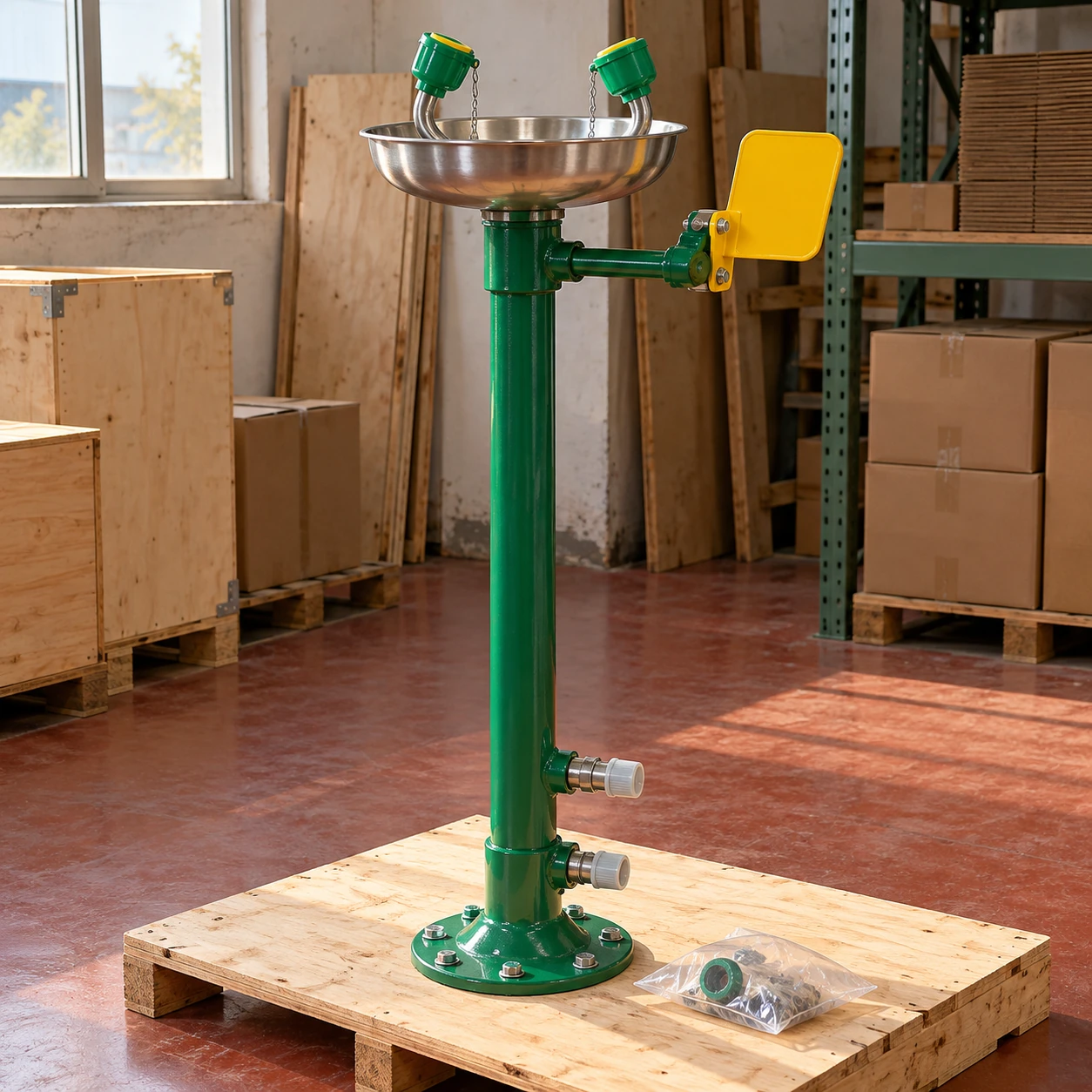
Emergency Eyewash Stations
emergency eyewash station factory
| Equipment formats | Wall-mounted, floor pedestal and gravity-fed reservoir assemblies |
|---|---|
| Fixed bowl sizes | 280 mm diameter ABS or approximately 283 mm diameter stainless steel |
| Reservoir size options | 34.1 L, 35 L and 60.6 L; choose a documented complete flushing assembly |
| Construction schedule | 304 stainless bowl; coated steel or stainless support; valve and outlet materials identified separately |
| Fixed supply connections | 1/2-inch NPT or Rp 1/2, matched to the selected water valve |
| Fixed waste connections | 1-1/4-inch threaded connection or tailpiece, identified in the supply drawing |
| Operation | Stay-open hand paddle; compatible foot actuator or gravity-unit pull-down tray |
| Order documentation | Assembly drawing, component schedule, operating instructions, applicable performance evidence and service-parts list |
The order should identify one complete configuration and its required performance evidence. Material options do not establish certification, and components from different assemblies are not automatically interchangeable.
Equipment format, materials, service connections and accessory packages can be selected for the factory process and purchasing specification.
Factory procurement of an emergency eyewash should result in equipment that is installable, maintainable and suitable for the identified exposure. shengtongJH supplies as an equipment sourcing and integration partner, helping align the selected manufacturer's assembly with the purchaser's site requirements and installation scope.
Turn the enquiry into a defined equipment package
Two offers can show a similar stainless bowl while including different valves, support materials, waste fittings and documentation. A low equipment price may omit the mounting bracket, tempering arrangement or parts needed for installation. Compare the delivered assembly and its interfaces before comparing the purchase total.
State which work area needs protection and what the site hazard assessment requires: eyewash, eye/face wash, a body shower or a combination. A station beside a battery maintenance operation may face different corrosion, access and drainage conditions from one in a packaging inspection room. The purchasing specification should follow those conditions rather than the general word factory.
Construction
Identify the bowl, pipework, valve, bracket and fasteners separately. A stainless bowl does not make the entire assembly stainless. Consider the substances and cleaning products around the station when choosing the material schedule and external finish.
Performance evidence
Ask for evidence that identifies the supplied assembly, the relevant standard and the tested operating conditions. A logo on a catalogue page or a certificate for another model does not establish the selected station's performance. Confirm that a change of nozzle, valve or reservoir does not invalidate the evidence being relied upon.
Replacement parts
List the cover, flushing head, strainer and valve service parts by the manufacturer's identification. A generic replacement that fits the thread may alter the water pattern. An order that includes a clear parts route is easier to maintain than one with an unidentified assembly.
Separate supply checks from installed acceptance
Before dispatch, compare the physical assembly and supplied documentation with the agreed drawing and packing list. On site, inspect for transport damage and verify the support, water and waste connections before commissioning. Factory paperwork does not demonstrate that the building's water service can sustain delivery.
Installed acceptance should include actual operation, flushing pattern and the supply conditions required by the selected standard. Record which party installs, commissions and maintains each item. This division of responsibility avoids a gap where the equipment supplier expects the installer to provide temperature control and the installer assumes it was included.
Place equipment where production activity will not hide it
Production layouts change with pallets, fixtures and temporary stock. Locate emergency equipment around the assessed exposure and practical access route, then protect that space from storage. In the United States, OSHA 1910.151(c) requires suitable immediate-use flushing facilities where workers may be exposed to injurious corrosive materials. Other locations require their own regulatory assessment.
For the equipment choice, compare the main station formats. A purchasing enquiry is most useful when it includes the process hazard assessment, quantity, installation drawing, required documents and service conditions. That allows the quotation to define the complete supply scope rather than an unqualified fixture alone.
Equipment format, materials, service connections and accessory packages can be selected for the factory process and purchasing specification.