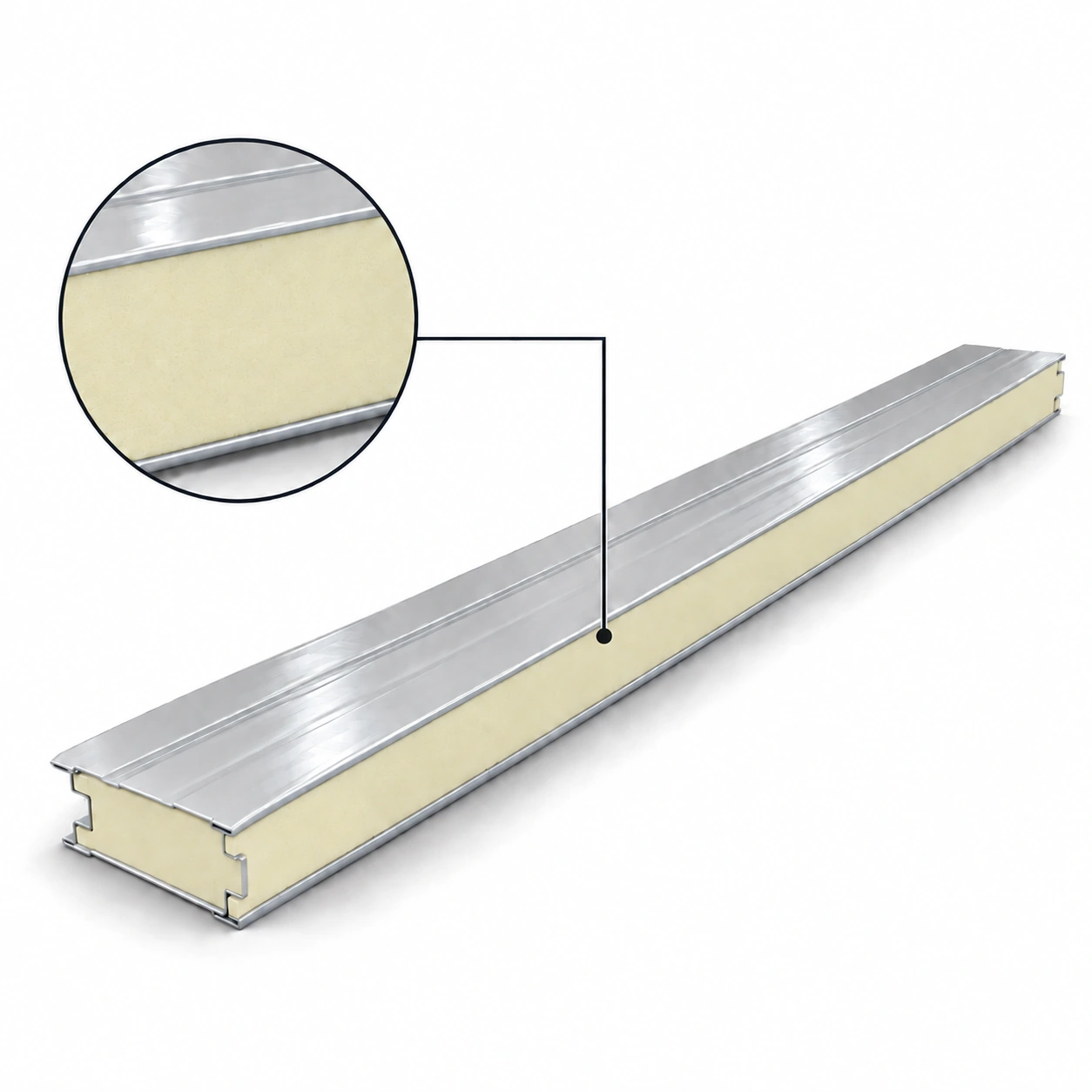
Cold Room Panels
cold storage insulation panels
| Brand | shengtongJH |
|---|---|
| Core options | PUR or PIR rigid foam |
| Panel width | 1140 mm |
| Thickness options | 75 / 100 / 150 / 200 / 250 mm |
| Facings | PPGI or SS304 stainless steel |
| Joint | Interlocking profile with specified sealing system |
| Panel length | Cut to layout; up to 11,800 mm subject to handling constraints |
| Application | Refrigerated enclosure walls and engineered ceilings |
Panel dimensions, surface finish and connection details can be configured for your application.
Cold storage insulation panels limit heat flow through the enclosure, but reliable temperature control also depends on the joints, floor junction and everyday door use. A complete panel specification connects these details to the room's operating conditions.
Control the heat paths that the insulation cannot hide
A continuous insulated wall reduces transmission through the room boundary. Metal supports, unsealed panel ends and a door frame that bypasses the insulation can still create local cold surfaces. Those areas deserve attention before increasing the thickness of every panel.
Start with the required internal temperature, surrounding temperature and humidity, operating hours and door traffic. Product entering warm, people and machinery add loads that a panel specification alone cannot remove. The refrigeration design should account for those loads separately.
Panel selection
Choose the core and thickness against the required thermal performance of the actual assembly. A foam name is not a complete thermal declaration: product data, ageing basis and joint construction also matter. Keep that information attached to the selected configuration.
Envelope continuity
Carry the sealing line around corners and across the wall-to-ceiling and wall-to-floor connections. Where warm, humid air can enter a colder enclosure, it can create condensation or frost. Concealed gaps are harder to repair after trims and equipment have been installed.
Allow for daily operation
Panel surfaces should tolerate the site's cleaning method and likely mechanical contact. Select impact protection independently where pallets or trolleys pass; the insulation panel is not a vehicle barrier. Detail service penetrations so maintenance can replace pipes or cables without repeatedly opening the room boundary.
Before cooling begins, inspect panel joints, door interfaces and penetration seals as one connected enclosure. A temperature problem beside a doorway may be caused by traffic or a damaged gasket rather than insufficient insulation across the wall.
For sub-zero operation, review the additional interface issues described under freezer panel walls. shengtongJH can coordinate panel dimensions, surfaces and junction accessories for the intended cold-storage layout.