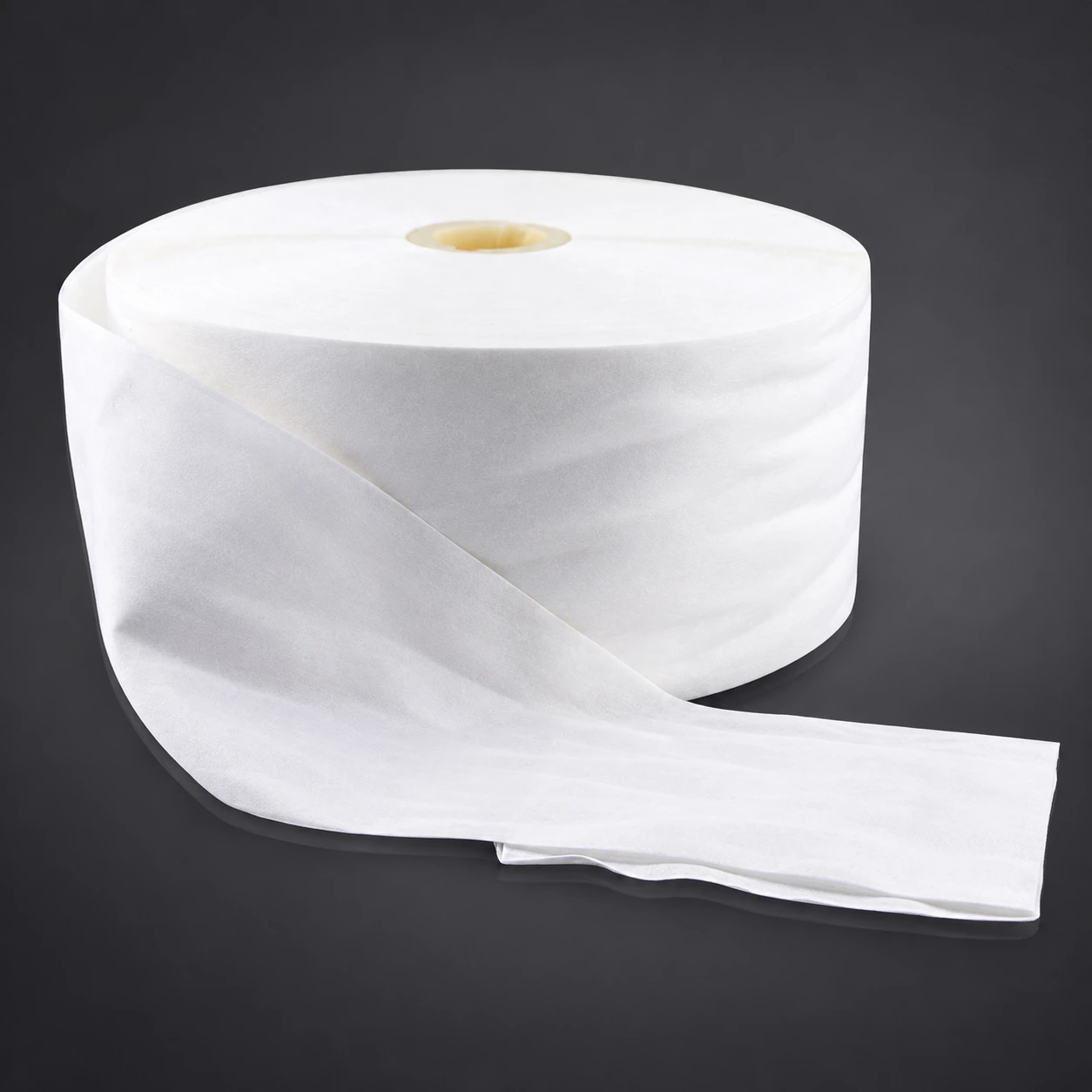
Roll presentation for S309A
Photos show product, fabric and converting views from this roll range. Final roll size and core follow the approved order.
Cleanroom Wiper Rolls
S309A Plain-Woven Microfiber Wiper Roll
| Product code | S309A |
|---|---|
| Fabric / surface | Woven microfiber; Plain weave |
| Fabric weight | 100 g/m² |
| Cloth thickness | 0.20 mm |
| Edge finish | Ultrasonic or heat-cut |
| Custom roll sizes | Width 8–250 mm; length 10–200 m, subject to fabric and machine fit |
| Core interface | 25.2 mm bore shown; core sizes 25–76 mm listed. Confirm bore and core length by drawing. |
| Clean-processing options | Class 100 / 1000; agree supply protocol |
| Water absorption (listed) | ≥230 — unit and test method require confirmation |
| Packaging | 1 roll/bag; box and carton quantity by order. Range packing: 10 rolls/box, 8 boxes/carton. |
| Documentation | Request current RoHS report for the selected supply |
| Applications | LCD panels; optical products |
Clean-processing labels describe supply options, not an ISO class or sterility claim. Confirm the absorption test and the selected roll specification before order.
S309A is a thin plain-woven microfiber choice for optical and panel-cleaning equipment. Start with surface compatibility, then match the finished roll to the guide path and spindle.
Plain-woven microfiber for narrow cleaning paths
S309A is a plain-woven microfiber roll with a relatively thin fabric specification. It is a candidate for optical and panel-cleaning equipment where the strip must pass through a compact guide path. The finished width should match the useful wiping zone, with enough clearance to prevent the sealed edges rubbing against the guide shoulders.
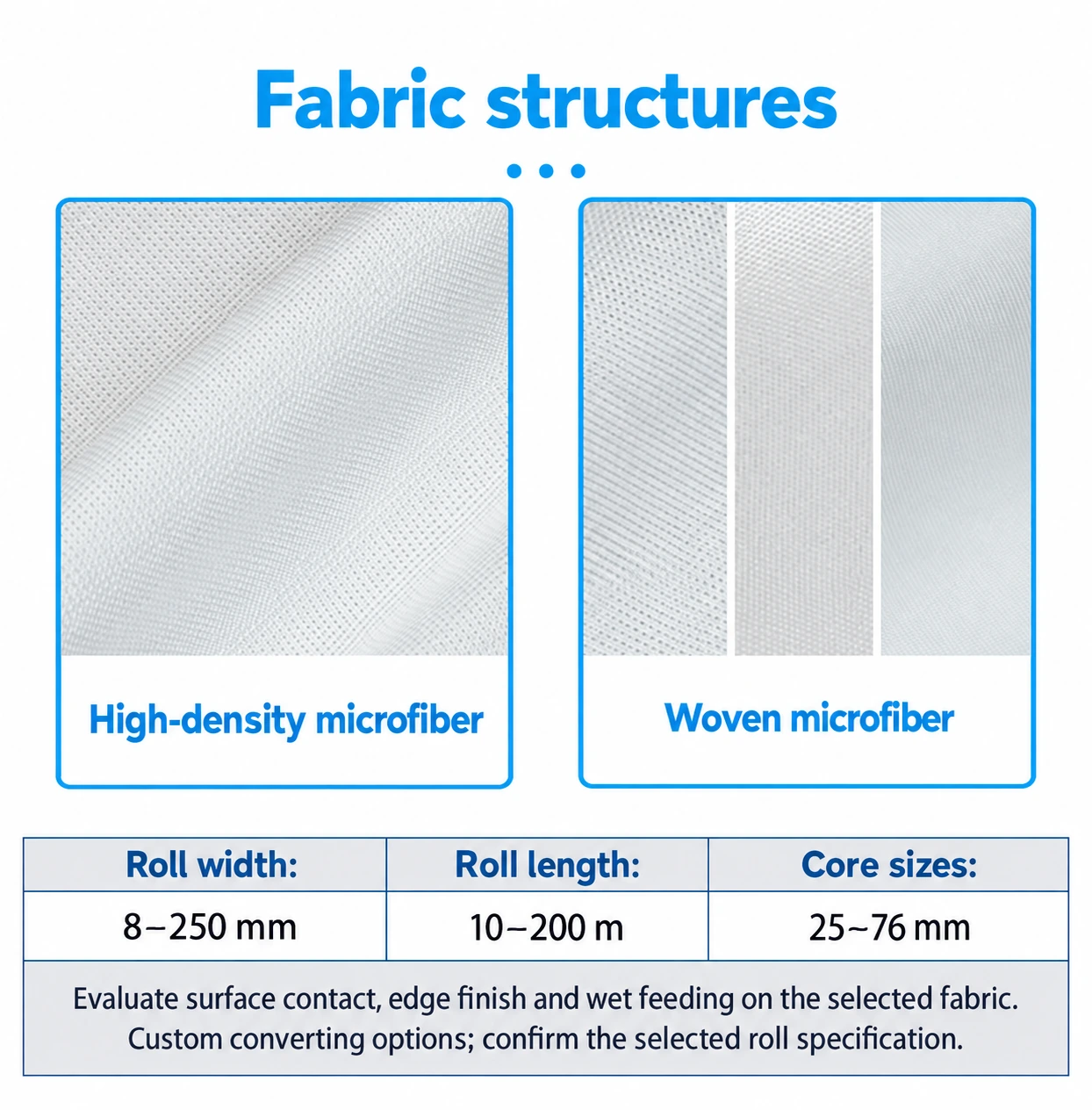
Work outward from the contact surface
First identify the surface and residue, then choose the cleaning liquid and fabric through a trial. Next check the head pressure and the distance of fresh cloth presented on each cycle. Finally set the roll dimensions to suit the machine. This sequence prevents an easily available roll size from determining a poor material choice.
For coated optical parts, inspect for changes in appearance after the surface has dried. Also examine the used cloth for captured particles or folds. If a defect appears intermittently, follow the web path rather than changing several settings at once.
Cutting option
Ultrasonic and heat-cut edges are listed. Approve the actual finish with the cloth sample, including the way the edge passes the contact head.
Machine option
Agree core fit and winding orientation. A familiar fabric code does not define the spindle interface or the take-up arrangement.
For another plain-woven choice, S309N has a different listed fabric weight; its selected thickness must be confirmed separately before machine setup.
S309A dimensions, winding presentation and bagging can be customized for the equipment and application.