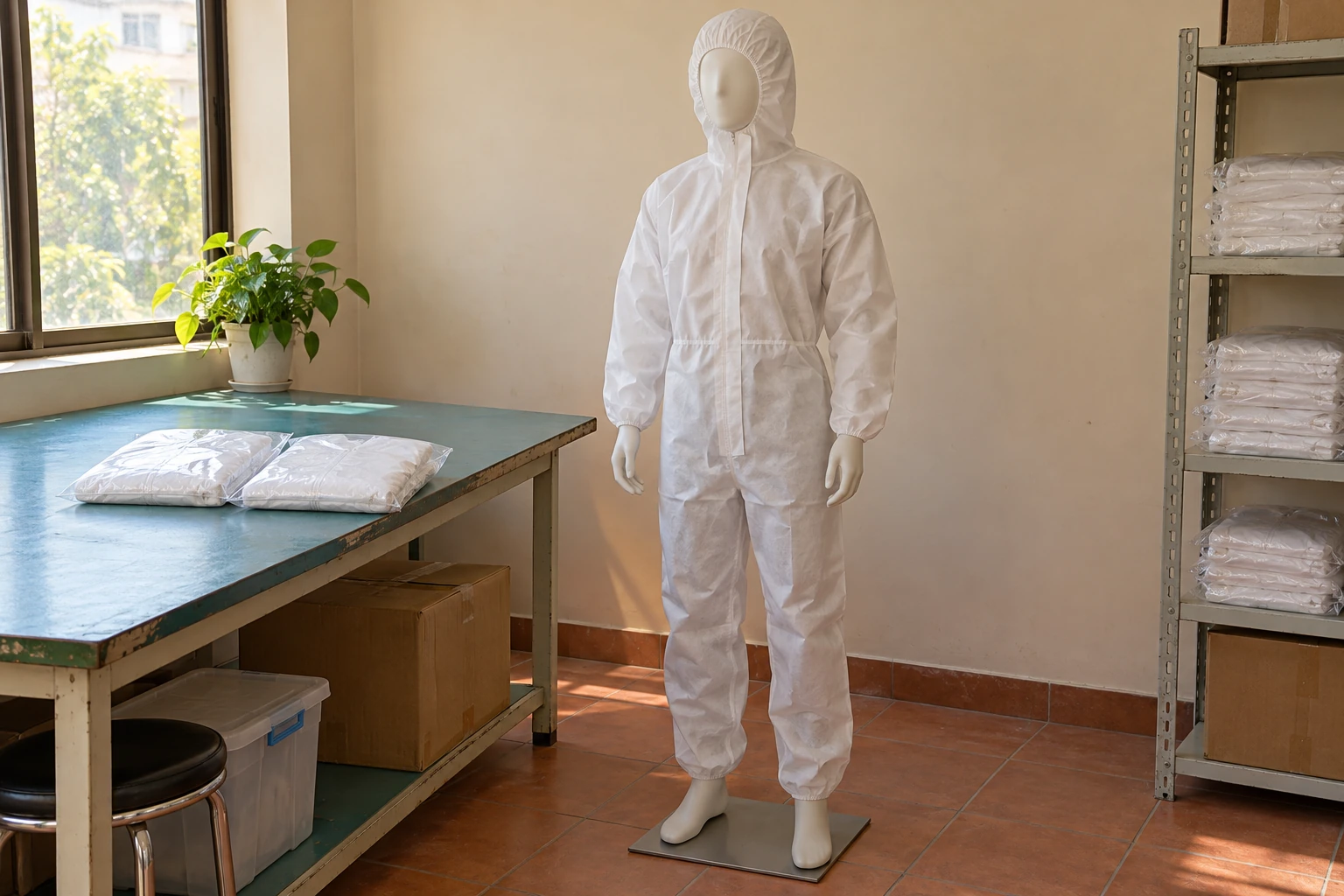
Cleanroom Suits
disposable cleanroom suit
| Format | Single-use coverall with hood or collar; separate footwear or integrated feet by style |
|---|---|
| Material route | Low-lint nonwoven or film-laminated nonwoven selected for the process |
| Body fit: S / M | Height 164–170 / 170–176 cm; chest circumference 84–92 / 92–100 cm |
| Body fit: L / XL | Height 176–182 / 182–188 cm; chest circumference 100–108 / 108–116 cm |
| Additional sizes | XS, 2XL and 3XL; confirm the chosen style's complete size chart |
| Seams and openings | Bound or covered seams; covered zipper; elastic wrists and ankles |
| Packing condition | Individually packed; clean processed; sterile option only with applicable lot evidence |
| Use condition | Single-use supply; disposal route determined by actual contamination |
The fit bands describe wearer body measurements, not the coverall's length or flat width. Confirm the selected style and trial the garment with all required accessories.
Garment style, size assortment, seam construction and pack presentation can be selected for your application.
A disposable cleanroom suit is issued for a defined period of use and removed from service according to the facility's procedure. It can reduce dependence on a reusable-garment return cycle, particularly for visitors, short campaigns and irregular access. Selection still depends on the process: an inexpensive dust coverall and a clean-processed garment are not interchangeable.
Specify more than “disposable”
The word describes a use model. It does not establish particle cleanliness, a sterile state, chemical resistance or a level of respiratory protection. State which of these properties your operation actually requires and obtain evidence for the exact garment and supply condition.
A sealed pack protects its contents after packing, but it does not by itself demonstrate that the garment was clean processed. Likewise, a sterile version needs the relevant release documentation and intact packaging. A nonsterile version should not be introduced into a process that requires sterile clothing simply because the material looks the same.
Match the construction to movement and handling
Fabric
Nonwoven structures offer different combinations of flexibility, air movement and resistance to penetration. A film layer changes those properties. Assess comfort during the expected work period along with the contamination and hazard requirements; a heavier or less breathable material is not automatically the better choice.
Seams
A fabric barrier is interrupted where the garment is assembled. Bound, covered and other seam constructions have different exposed edges and joining details. Evaluate the finished suit, especially at the crotch, shoulders and hood, where bending can load the seams.
Openings
Wrists, ankles and the face opening must work with gloves, footwear and head protection. Thumb loops, if specified, can help retain a sleeve during gowning but must not pull painfully when the wearer extends an arm. An integrated foot does not replace the need for suitable footwear and floor grip.
Plan the pack-to-wear sequence
Bring the required quantity and size mix to the gowning area without exposing all garments at once. The pack should be easy to open in the approved gowning sequence, and the folded garment should be manageable without letting the outer surface contact the floor.
Visitor stock needs a usable size assortment. A small selection of oversized suits can leave some people with dragging legs while others cannot reach comfortably. Confirm fit with the intended underclothing, gloves and footwear before establishing the repeat order.
Define what happens when a suit tears, becomes contaminated or leaves the designated area. A generic “one shift” rule is not a universal replacement interval. The facility's procedure should decide when continued use is acceptable and when a fresh garment is required.
Control the used-garment route
Removal should keep the soiled outer surface away from clean clothing and clean supplies. Collect used garments in the designated route. Waste classification depends on what the garment contacted; cleanroom clothing is not automatically general waste or automatically hazardous waste.
Do not assume a single-use garment can be laundered, disinfected or sterilized for reuse. Those treatments can alter the textile, closures and fit. Where repeated use is the operating model, compare a qualified reusable cleanroom suit and its processing service instead.
For purchasing, define the use area, clean or sterile supply condition, exposure hazards, expected wearer distribution and pack-opening method. shengtongJH can then coordinate a garment and packing configuration without transferring another manufacturer's certification to an unverified substitute.
Garment style, size assortment, seam construction and pack presentation can be selected for your application.