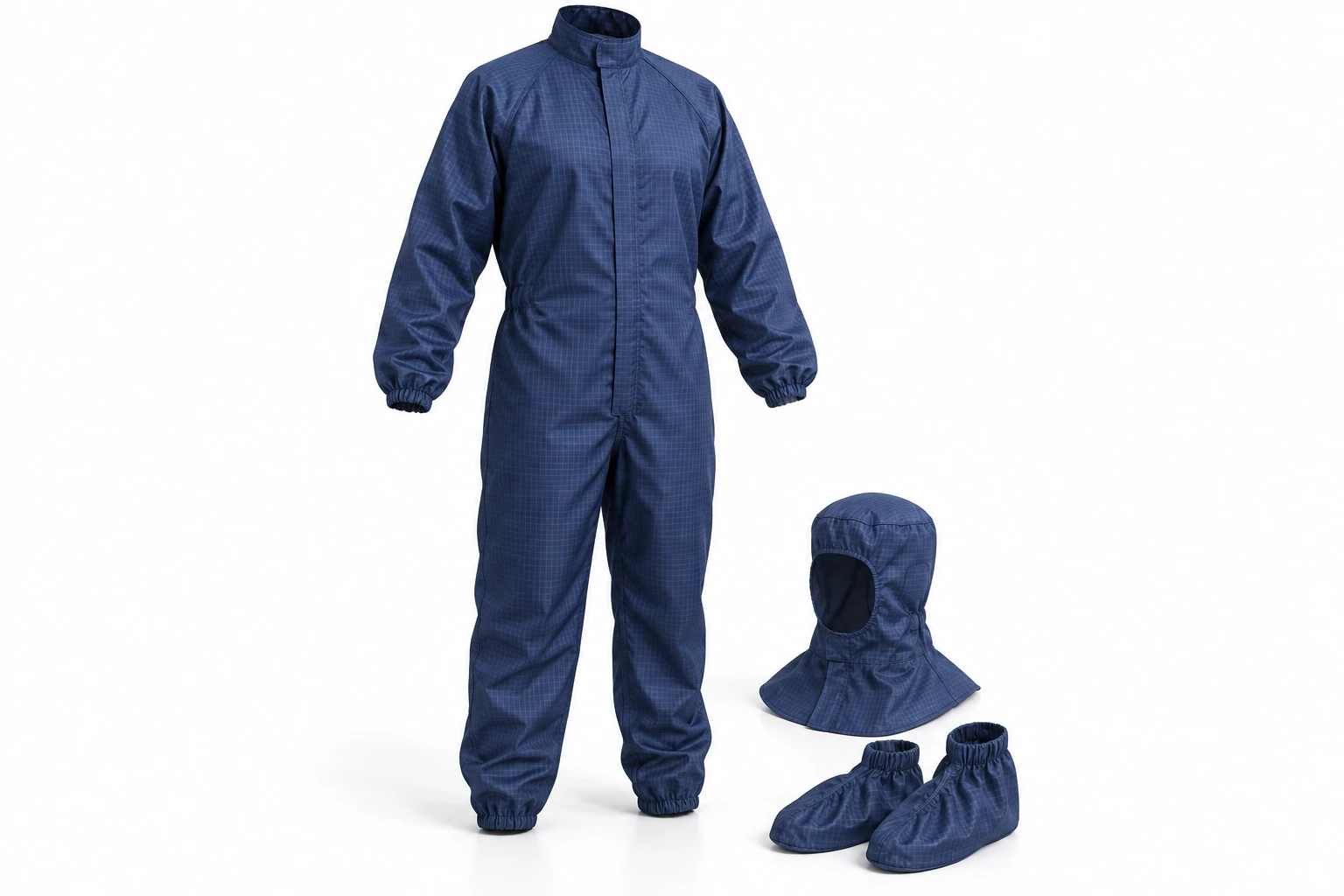
Cleanroom Suits
cleanroom suit
| Construction | Reusable woven coverall; separate or integral hood; single-use construction by application |
|---|---|
| Reusable fabric | Polyester filament fabric with conductive yarn; 98/2 and 99/1 composition options |
| Size range | XS, S, M, L, XL, 2XL and 3XL; other sizes by agreed pattern |
| Fit measurements | Wearer height, chest, hip and inside leg in cm; finished garment measurements on the selected size chart |
| Length options | Short, regular and tall cuts for reusable styles |
| Closures | Covered front zipper; elastic or adjustable wrist and ankle closures |
| Accessories | Matched hood and boot covers; gloves selected separately for the task |
| Supply condition | Clean processed and packed; sterile supply only when separately specified and documented |
Size labels are not interchangeable between garment patterns. Approve the actual size chart and garment condition before ordering.
The garment cut, fabric, closures and packing can be tailored to your application and gowning procedure.
A cleanroom suit covers ordinary clothing and helps contain particles released by the wearer. Its value depends on the whole clothing arrangement: fabric, openings, gloves, head covering, footwear and the way garments are issued and cleaned. shengtongJH coordinates garment sourcing for industrial cleanrooms, laboratories and controlled assembly areas.
Contain the wearer without restricting the work
Clothing moves whenever an operator bends, walks or reaches. A coverall limits exposed clothing and reduces the number of openings through which wearer-generated contamination can escape. A fabric with suitable particle retention still needs well-finished seams and a closure that remains covered during movement.
Loose excess cloth can brush a bench or exposed product. A suit that is too short can pull at the shoulders, open the wrist overlap or make an operator avoid necessary movements. Fit trials should include the actual job: sitting at a microscope, lifting a tray, reaching into equipment and crossing the gowning bench.
Choose the complete clothing arrangement around what is exposed. A general assembly operation, a wafer process and an aseptic filling operation do not have interchangeable acceptance requirements. A cleanroom classification alone does not establish that a particular suit is suitable for every process inside that room.
Reusable and single-use arrangements solve different supply problems
Repeated use
A woven garment is useful when the facility can support controlled collection, laundering, inspection, repair and clean return. The purchasing decision includes the wash process and the number of garments circulating between the user, laundry and clean store. A low unit price loses its advantage if staff run short while garments are away for processing.
Single use
A disposable cleanroom suit can simplify visitor supply, temporary work and operations without a suitable reusable-garment service. It creates a regular demand for packaged replacements and a waste stream. Select the actual processing and packaging condition; disposable does not automatically mean sterile.
The openings need as much attention as the fabric
Check the hood-to-neck, glove-to-sleeve and boot-to-leg interfaces together. The overlaps should remain in place when the person works, without pulling a glove cuff or obstructing normal vision. A sealed bag of separately selected accessories is not proof that those accessories form a suitable clothing system.
An integrated hooded suit removes one separate item from the gowning sequence. A separate hood offers more freedom to match head fit and replace components. Either choice needs to work with the facility's face covering and footwear.
Specify the condition at point of use
Agree how clean garments arrive, where they are stored, how packs are opened and how used garments leave. Protecting a garment during delivery is ineffective if its outer surface touches the floor during dressing or if clean and used items share the same container.
For repeat supply, retain an approved construction and size record. Changes to a zipper, cuff, fabric finish or laundry process can change use conditions even when the product looks similar. Request the relevant garment and processing evidence for the selected configuration. Chemical splash, flame, biological exposure and electrical hazards require a separate protective-clothing assessment; ordinary cleanroom clothing does not establish those protections.
Send the work activity, clothing interfaces, wearer size distribution and preferred care arrangement with your enquiry. This gives a practical basis for choosing the suit and its replacement cycle.
The garment cut, fabric, closures and packing can be tailored to your application and gowning procedure.