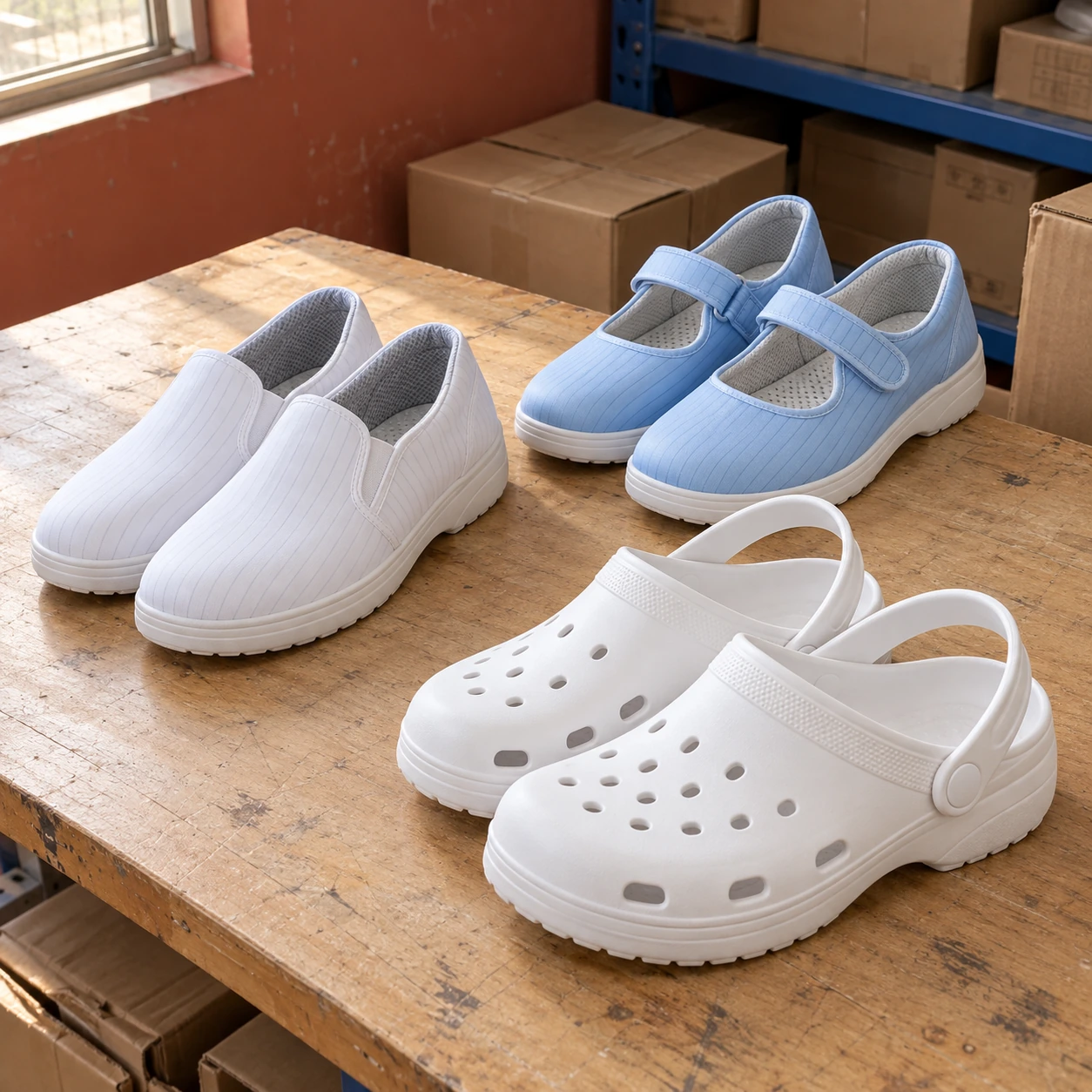
Cleanroom Shoes
cleanroom shoes suppliers
| Product selection | Closed cleanroom shoes, retained-heel clogs, documented ESD versions and autoclavable options |
|---|---|
| Closed-shoe size range | Selectable EU 35–48 by construction; individual size quantities agreed in the order |
| Moulded-clog sizing | Paired EU 35/36 through 45/46 options; use the selected product's actual fit chart |
| Construction scope | Upper, outsole, footbed, closure and colour identified together for sample approval |
| Performance documents | Required cleanroom, electrical, slip or reprocessing evidence linked to the selected supplied construction |
| Supply unit | Pairs; size/colour assortment, inner packing and carton quantities agreed per order |
| Repeat-order controls | Approved specification, sample reference, component changes and replacement-part identity recorded |
Quoted quantities, documentation, packaging and any customization are agreed for the selected supply. Published configurations do not imply stock, certification or a fixed delivery period.
shengtongJH coordinates cleanroom footwear sourcing around the required construction, fit and operating conditions. A defined specification helps keep sample approval, bulk supply and later replacement orders aligned.
Make different quotations describe the same purchase
Two suppliers can quote “cleanroom shoes” while proposing different upper materials, sole constructions and cleaning limits. A low pair price is difficult to compare if the footbed, heel retention or required evidence is missing. Define the working conditions before comparing the commercial offer.
- Product identity
Identify the closed shoe or clog form, material combination, fastening and permitted colour. A photograph helps with shape, but it cannot establish electrical performance, particle behaviour or steam compatibility.
- Use and care
State where operators walk, how they change footwear, whether an overboot is worn and how shoes are cleaned. If steam processing is required, include the intended process rather than requesting a generic washable product.
- Acceptance evidence
List the documents and checks needed for the selected construction. Reports should identify what was tested and under which conditions. A document for a similar-looking shoe or a raw material does not automatically cover the completed pair.
Approve fit before fixing the size mix
Use representative wearers and the intended socks or overboots when reviewing samples. Include the smaller and larger ends of the required range, not just one middle size. Record any fit limitations that affect the order.
A paired-size clog does not provide the same adjustment as a closed shoe with a fastening. Converting the entire staff list through a generic international chart can create avoidable returns. Keep the supplier-specific size format and an agreed wearer trial as the basis for allocation.
Control the repeat purchase
Record the approved material, sole, footbed and closure together. A different insert or compound may change cleaning, fit or electrical behaviour while leaving the overall appearance almost unchanged.
Agree how proposed changes will be communicated and evaluated. A repeat order should reference the approved specification and size distribution; it should not rely only on the colour or a shortened product name.
Include issue and replacement in the supply scope
Decide whether pairs are individually packed, grouped by size or prepared for an established issue system. Labels should make selection practical without introducing unsuitable loose materials into the controlled area. Sterile presentation, where required, needs its own agreed processing and packaging basis.
Plan replacement quantities around the wearer population and processing turnaround. Ask which straps or footbeds are replaceable and how compatible parts are identified. Do not assume that a generic accessory preserves the performance of the originally approved footwear.
Give the sourcing request a usable starting point
Send the intended applications, preferred construction, size quantities, cleaning method and required documents through the quotation request. shengtongJH can organize the proposed footwear and packing scope around these requirements as a trade supply integrator.
For a steam-processing purchase, first review the autoclavable construction and handling requirements. For an electronics work area, identify the actual floor and electrical acceptance plan before approving a sample.
Size distribution, colour selection, pair identification and packing can be customized for your issue system, with approved construction and documentation retained for repeat orders.