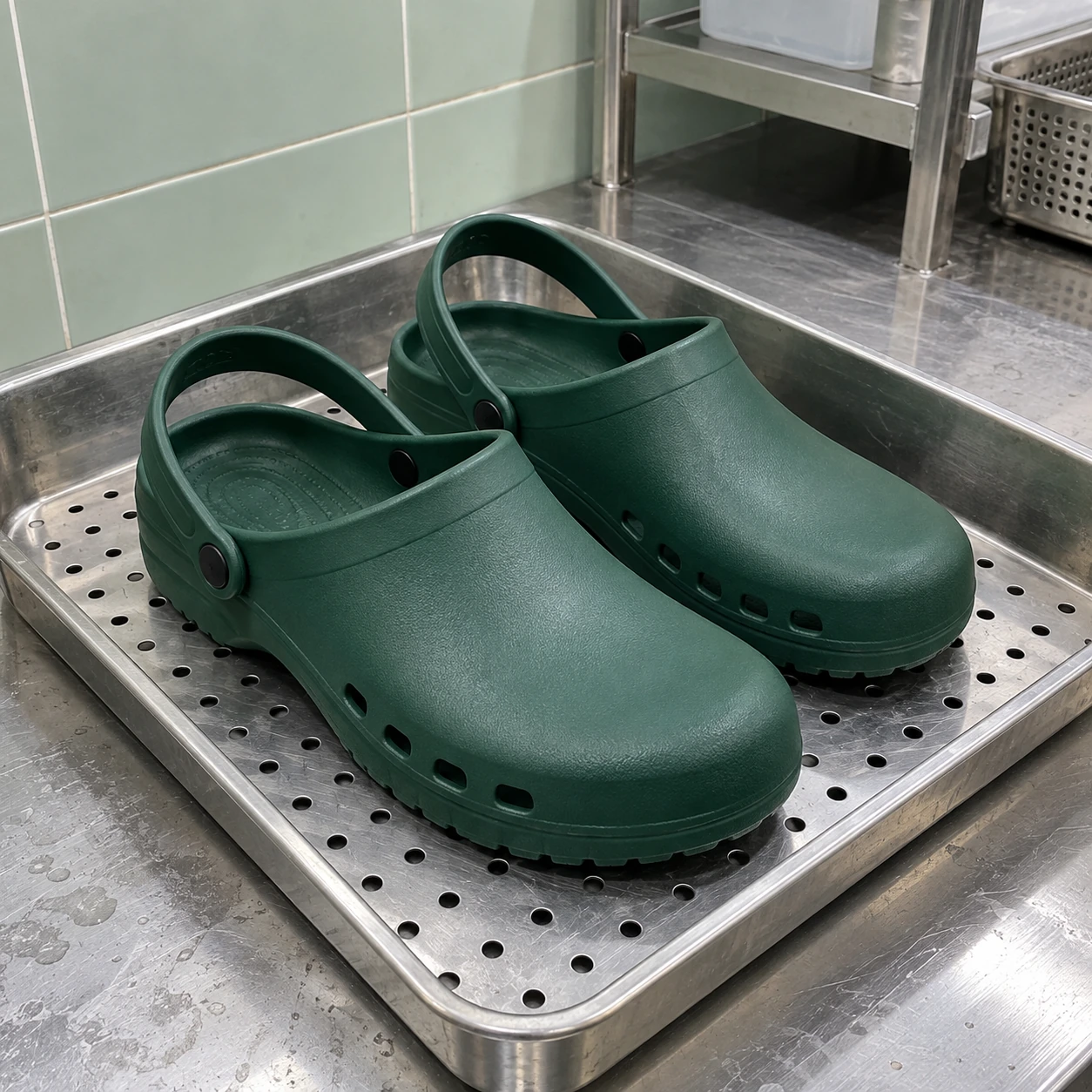
Cleanroom Shoes
autoclavable cleanroom shoes
| Footwear form | Moulded closed-toe clog with retaining heel strap; openings selected for the gowning procedure |
|---|---|
| Paired EU sizes | 35/36, 37/38, 39/40, 41/42, 43/44 and 45/46, subject to the selected mould and fit chart |
| Material selection | Special steam-compatible polymer or elastomer construction; all fitted components included in the approval |
| Temperature options | Documented 121°C-compatible or 134°C-compatible designs; each used only with its approved exposure and drying conditions |
| Retention and footbed | Adjustable or pivoting heel strap; integral or separately approved removable footbed |
| Electrical option | Antistatic or ESD version where documented; electrical checks included after processing when required |
| Handling and identification | Pair/size identification and clean packaging selected for the facility's issue and reprocessing routine |
Temperature compatibility is not proof of sterilization or a transferable cycle recipe. The supplied footwear and the facility's load, exposure, drying and release process require their own approval.
Autoclavable cleanroom shoes are selected for a defined steam-processing route as well as everyday wear. The complete shoe, including its strap, inserts and connections, must be compatible with the approved process.
Steam compatibility applies to the assembly
A sole that tolerates brief contact with a hot surface is not evidence that the entire shoe can withstand a steam cycle. Moist heat acts on the upper, strap, fasteners, footbed and their connections together. Distortion, joint failure or a changed fit can make a processed shoe unsuitable even when the main body still looks intact.
Select a construction with documented processing instructions. Ordinary washable shoes and special autoclavable footwear are different purchases. A polymer family name alone does not establish the permitted cycle, because formulations and component combinations differ.
Plan the route from return to reissue
Receive and separate
Keep returned footwear apart from pairs released for use. Retain size and pair identification through processing so operators receive the intended fit rather than a visually similar replacement.
Clean and inspect
Remove contamination using the approved method before the subsequent processing stage. Inspect straps, fasteners, sole joints and difficult-to-reach recesses. A damaged component should not enter the routine simply because the shoe has not reached a calendar replacement date.
Process the approved load
Follow the footwear instructions and the facility's qualified loading and exposure arrangement. Avoid improvising with tightly stacked pairs or accessories that have not been assessed. Material heat tolerance and successful sterilization of the actual load are separate requirements.
Dry, release and protect
Complete the specified drying and release checks before reissue. Keep released footwear protected during storage and transfer. If sterile presentation is required, the packaging and handling route must preserve it; an autoclavable label does not mean the pair arrives sterile.
Evaluate what repeated processing changes
Fit, flexibility and retention can change over repeated use. Compare toe room, heel security, strap movement and sole condition with the approved pair. Cracking, permanent deformation, separation or a surface that can no longer be cleaned are useful reasons for a documented review.
There is no universal number of safe cycles for every clog. Wear between cycles, cleaning chemicals, loading and the actual processing conditions all contribute. Establish the retirement criteria for the supplied construction rather than borrowing a lifetime quoted for another product.
Keep electrical requirements in the same review
Where footwear is part of personnel grounding, processing must not be treated as unrelated to electrical performance. Specify the relevant checks after the planned cleaning and steam exposure, together with the approved footbed and accessories.
Some autoclavable versions are sold as antistatic and others have additional ESD documentation. Select the evidence needed by the workplace rather than assuming every heat-compatible clog qualifies for the same ESD footwear-and-floor arrangement.
Allow enough pairs for the full turnaround
Purchasing only the number of pairs worn at one time can create pressure to reissue footwear before cleaning, drying or release is complete. Include the normal processing turnaround, size distribution and replacement provision in the order. Identify which components can be replaced without changing the approved construction.
For a supply proposal, describe the processing equipment, intended cycle documentation, relevant cleaning agents and the clean-side handling method. This connects the footwear selection to an operable routine rather than a temperature number alone.
Colour, paired-size assortment, retention style and packaging can be customized for your reprocessing workflow, with compatibility confirmed for the complete selected footwear.