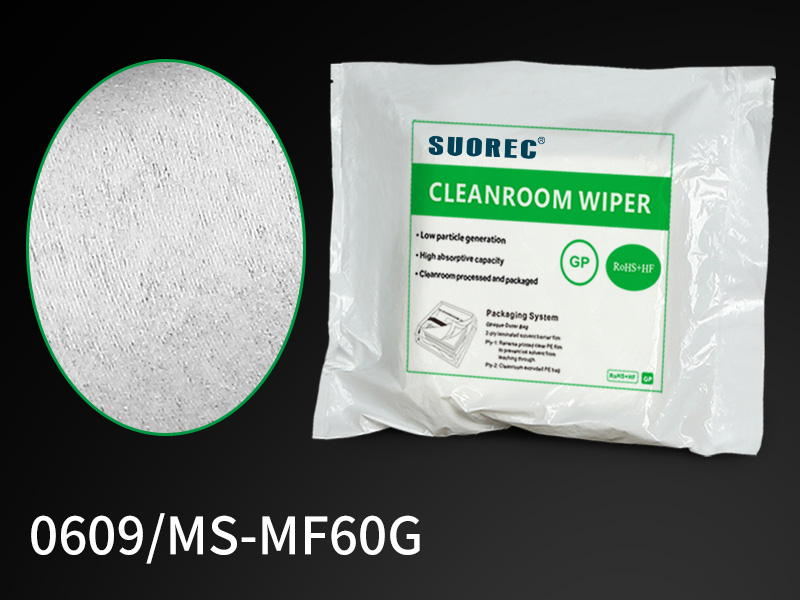
MF60G pack and material texture
Cleanroom Paper Wipes
Cleanroom Paper Wipes MF60G
| Model | MF60G |
|---|---|
| Material / construction | Wood-pulp-based material |
| Edge treatment | Cold cut |
| Basis weight | 60 g/m² |
| Water absorption index | ≥230 — unit and test method not stated |
| Cleaning designation | Class 1,000 processing |
| Sheet size | Nominal 4, 6, 9 or 12 in; custom sizes |
| Packaging | 150 sheets/inner pack; 10 packs/carton; custom packing |
| Application sectors | medical inspection; food processing; chemical production; assembly; glass products; pharmaceutical production; biomedical production; new energy; automotive production |
| Product reports | Specify required test reports with your enquiry |
The absorption index has no stated unit or test method; it is not a percentage. The cleaning designation describes processing and is not a sterility claim.
Sheet dimensions and packaging can be customized to suit the application.
MF60G is a wood-pulp-based consumable for residue collection and surface wiping in industrial production. The sheet can be assessed for equipment faces, assembly work and glass-related operations where the final surface condition matters as much as the visible dirt removed.
Why a surface can still look smeared
A wiping sheet may pick up part of a liquid deposit while leaving a thinner layer behind. The result depends on the liquid, the contact area and how much residue the sheet already holds. Refolding exposes a fresh face; replacement removes the collected contamination from the operation altogether.
For glass or polished surfaces, check the result after the cleaning liquid has evaporated. A surface that looks clear while wet can reveal streaks under inspection lighting.
A controlled comparison
- Use equivalent surface areas and the same amount of contamination.
- Keep the cleaning solution and application method consistent.
- Record the number of sheets and passes needed.
- Inspect the dry surface for residue and loose fibers.
Handle the sheet without adding contamination
Take only the material required for the operation from the opened pack. Avoid placing unused sheets on a bench that is still awaiting cleaning. Where the local procedure requires gloves, keep handling consistent so differences in the trial come from the wiping system rather than from bare-hand contamination.
Cold cutting and laundering are different aspects of manufacture. A cleaning-process designation does not turn a cut edge into a sealed edge or establish the cleanliness of an opened pack. For a sensitive operation, evaluate the sheet as it is actually folded, wetted and used.
From a trial to a purchasing specification
Once a method is accepted, retain the material identification, sheet format, packaging and approved liquid as part of the order. A similar-looking white wipe may use a different fiber composition or finish. Keeping the accepted configuration explicit helps avoid substitutions based only on appearance.
Let us know whether the priority is liquid pickup, a clear inspection surface or frequent disposable wiping. We can discuss the sheet and packaging options around that task.
Sheet dimensions and packaging can be customized to suit the application.