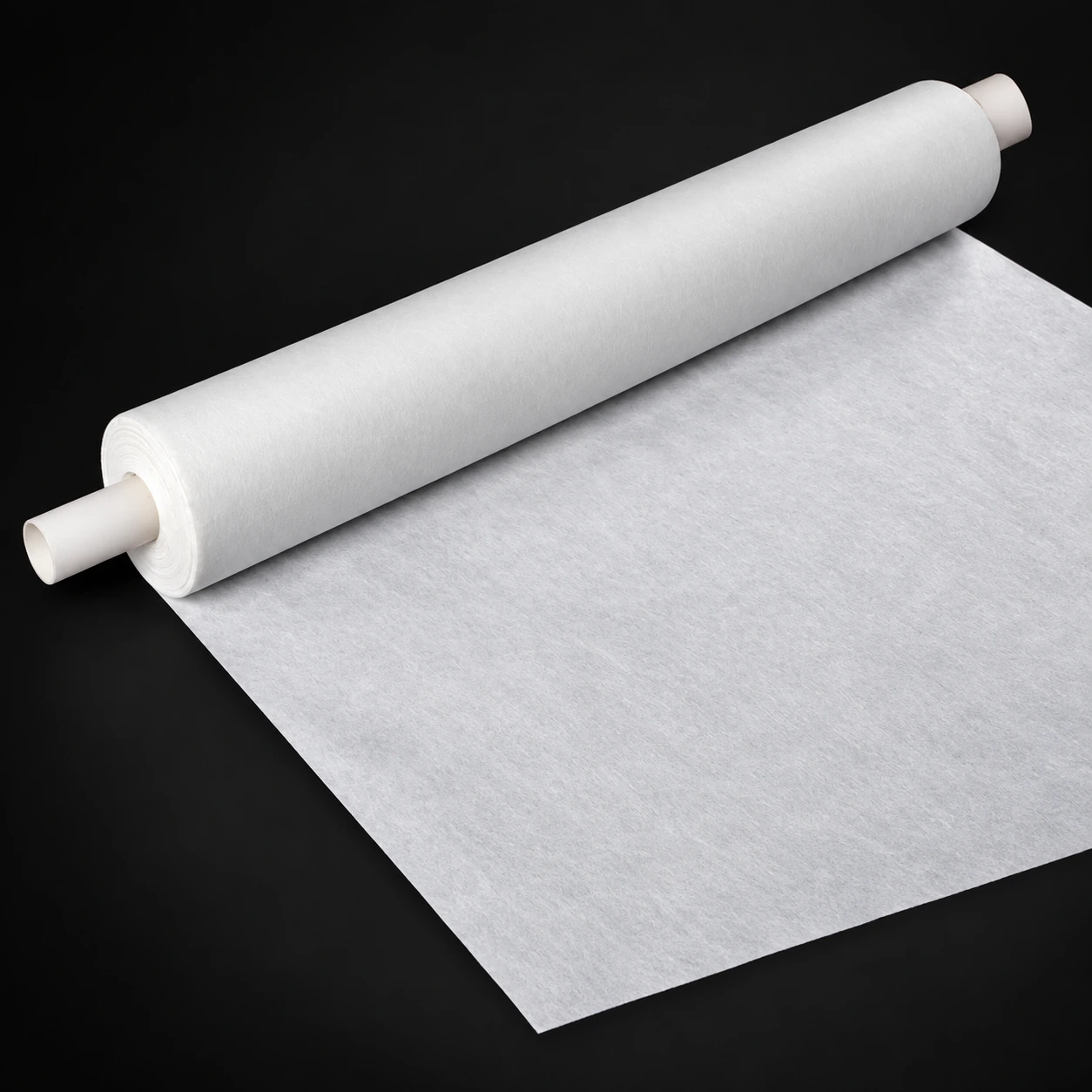

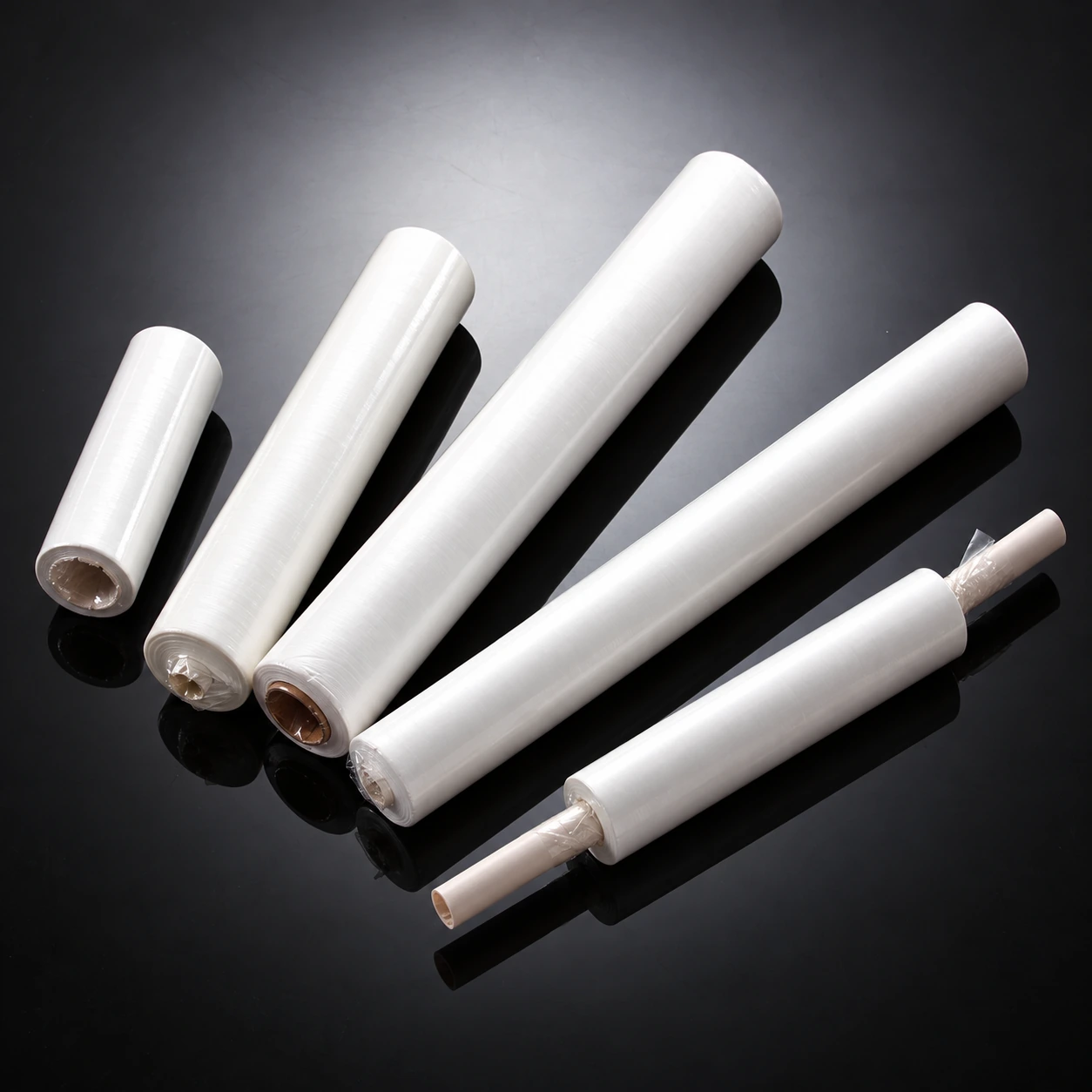
Open a product image to view its full detail. Range photographs show different converted formats.
Cleanroom Paper Rolls
Cleanroom Paper Roll NB-MF60G
| Material | 50% wood pulp / 50% polyester |
|---|---|
| Basis weight | 60 g/m² |
| Roll width × length | 400 mm × 10 m |
| Core type; Ø × length | Plain paper core; Ø19.4 × 400 mm |
| Water absorption* | ≥230 |
| Packing | 25 rolls / carton |
Listed configuration; custom sizes available. *Absorption unit and test method are not specified, so the figure is not a verified comparison value. Confirm the core bore and end profile against the machine drawing.
Roll dimensions, core configuration and packaging can be customized to the application and approved machine interface.
NB-MF60G supplies a 60 g/m² pulp/polyester web for automatic stencil cleaning. Specify the material grade, roll dimensions and core construction separately to keep repeat orders consistent.
Keeping the next wiping section clean
NB-MF60G provides a continuous pulp/polyester web for an automatic stencil cleaning assembly. The working section receives liquid and loosened residue, while the roll feed advances unused material into position. A predictable separation between the clean and used sections is central to repeatable operation.
Check the path through the machine when residue begins to return after apparently successful cleaning. Used material should not touch the fresh web or other surfaces that can transfer contamination back to it. A roll replacement should include checking the holders and take-up area, not just threading in new material.
From receiving to the first production cycle
- Receive the specified assembly. Match the material code, core construction and ordered dimensions. Inspect the wrapping and exposed tube ends for damage.
- Load with the machine stopped as instructed. Confirm free seating, straight material travel and enough clearance around the wound roll.
- Run the established cleaning recipe. Observe tracking and take-up, then assess the stencil and following print before releasing the configuration for routine use.
- Retain the approved settings. Record the configuration and any agreed trial changes so that the next roll can be evaluated against the same conditions.
Paper-core handling
The listed assembly uses a paper core. Keep it dry during storage and avoid placing heavy objects on the tube ends. If a core is distorted, replacing the roll is preferable to forcing it onto the support and creating a feeding fault.
Material selection
The wood-pulp/polyester blend is a material description, not an assurance of chemical compatibility with every cleaner. A sample trial should use the actual fluid, concentration and contact conditions intended for production.
Order the grade and the interface separately
Two NB grades may share a nominal roll format while behaving differently in a cleaning cycle. Conversely, the same NB-MF60G material may be converted around different tubes. Keep the grade, web dimensions, core drawing and packing quantity as separate order fields so a change to one does not silently change the others.
Core profiles and converted roll details
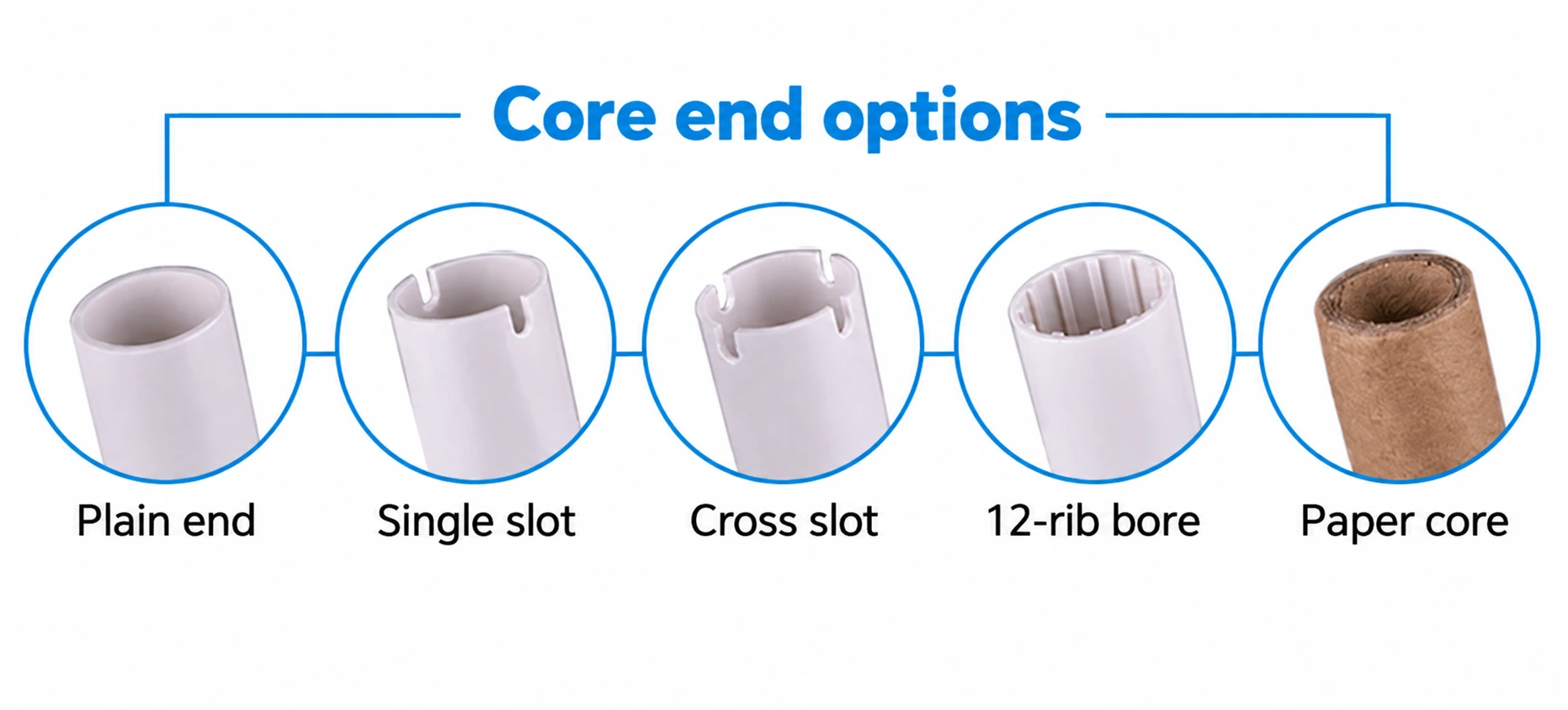
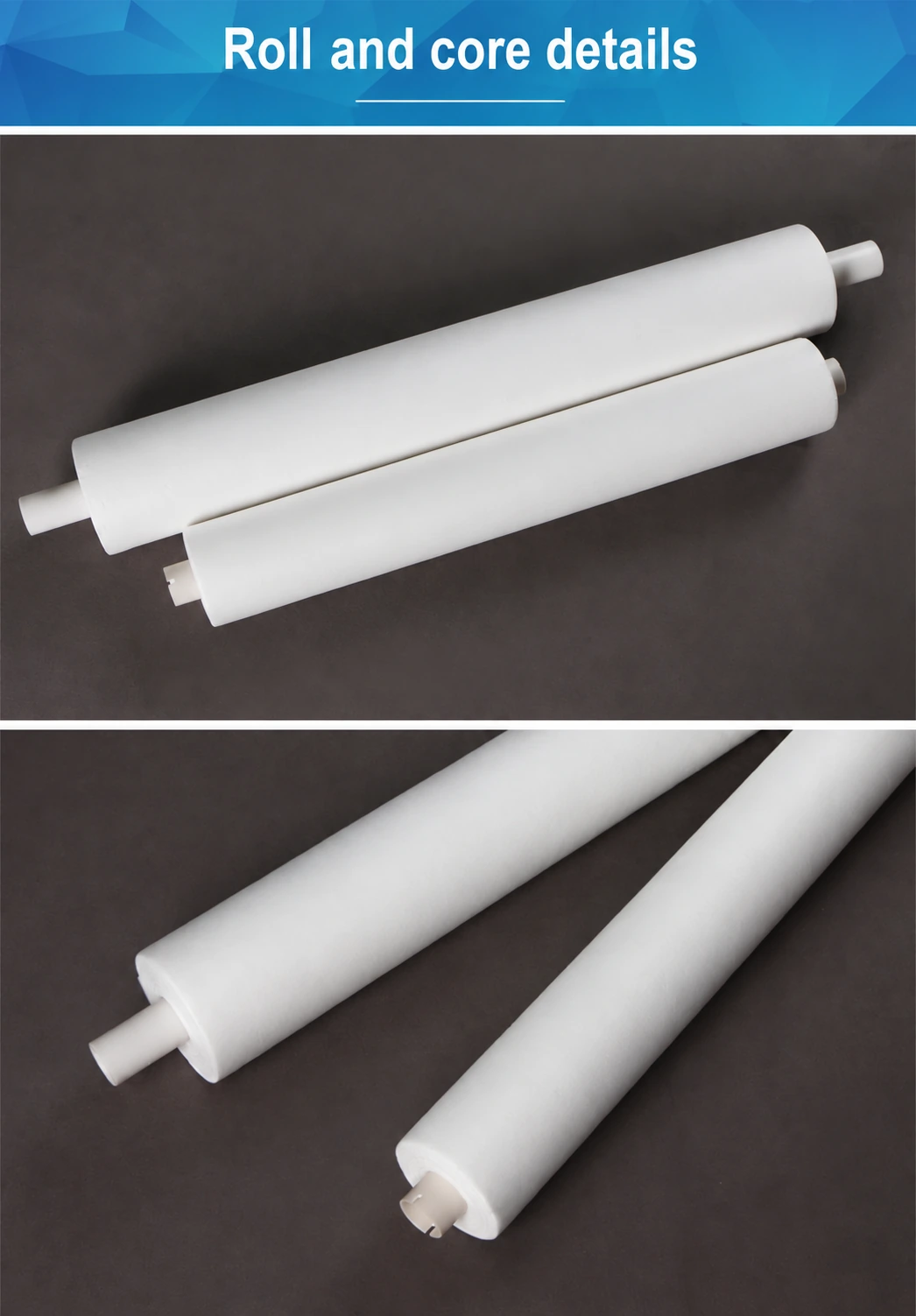
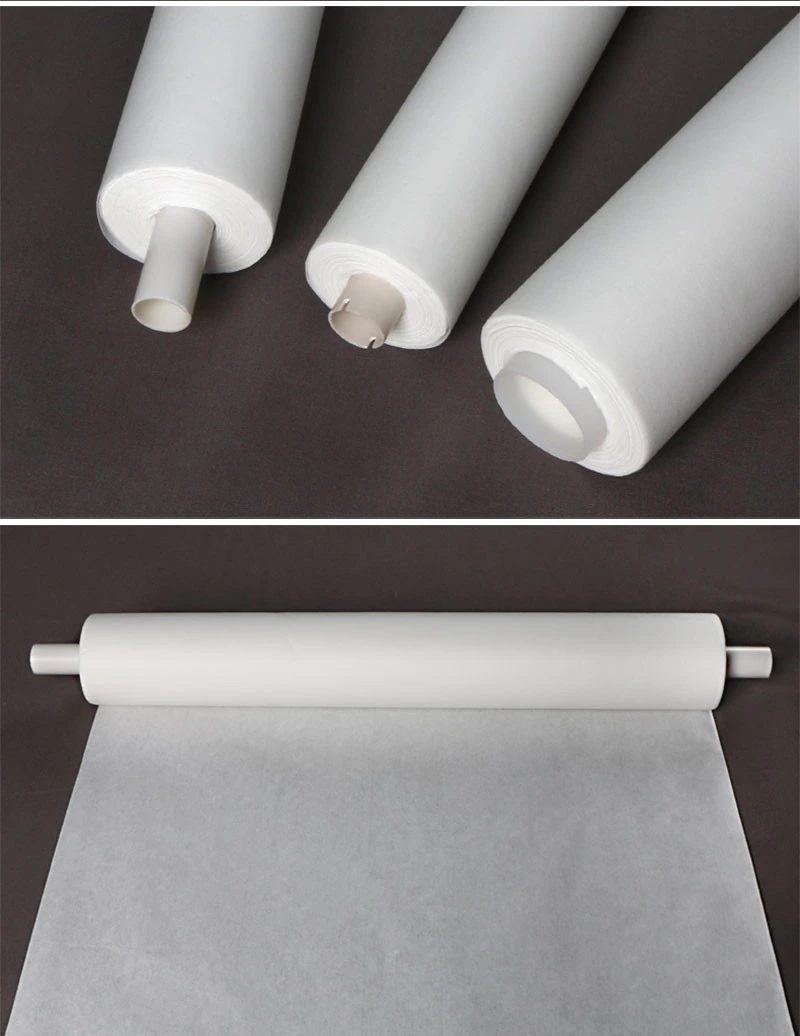
Plain, single-slot, cross-slot and ribbed cores use different mounting arrangements. The photographs show available format types across the roll range. Confirm the selected construction, bore, end dimensions and winding position for the individual order.
Printer-family format guide
These format combinations are provided for checking conversion requirements. A printer brand can use several cleaning assemblies: verify the exact model and installed cassette before selecting a row. Dimensions are core length, core inner diameter, paper width and wound paper length; they do not specify the complete slot geometry or guarantee fit.
| Printer family | Core length (mm) | Core ID (mm) | Paper width (mm) | Paper length (m) | Core / end |
|---|---|---|---|---|---|
| MPM | 455 | 19.5 | 250 | 10 | 12-rib bore / plain end |
| MPM | 455 | 19.5 | 280 | 10 | 12-rib bore / plain end |
| MPM | 455 | 19.5 | 200 | 10 | 12-rib bore / plain end |
| MPM | 455 | 19.5 | 350 | 10 | 12-rib bore / plain end |
| JUKI | 270 | 38 | 200 | 10 | Plastic / plain end |
| JUKI | 408 | 38 | 250 | 10 | Plastic / plain end |
| YAMAHA | 535 | 26 | 500 | 13 | Paper / plain end |
| YAMAHA | 360 | 25.5 | 350 | 10 | Paper / plain end |
| YAMAHA | 420 | 25.5 | 400 | 10 | Paper / plain end |
| DEK | 530 | 19.6 | 250 | 10 | Plastic / single slot |
| DEK | 530 | 19.6 | 300 | 10 | Plastic / single slot |
| DEK | 530 | 19.6 | 400 | 10 | Plastic / single slot |
| DEK | 530 | 19.6 | 490 | 10 | Plastic / single slot |
| DEK | 530 | 19.6 | 510 | 10 | Plastic / single slot |
| SONY | 280 | 19.6 | 260 | 20 | Plastic / single slot |
| MINAMI | 290 | 8 | 270 | 15 | Plastic / single slot |
| MINAMI | 410 | 8 | 350 | 10 | Plastic / single slot |
| FUJI | 500 | 26 | 500 | 10 | Plastic / single slot |
| GKG | 410 | 19.6 | 400 | 10 | Plastic / plain end |
| KME | 480 | 38 | 480 | 20 | Plastic / cross slot |
Roll dimensions, core configuration and packaging can be customized to the application and approved machine interface.