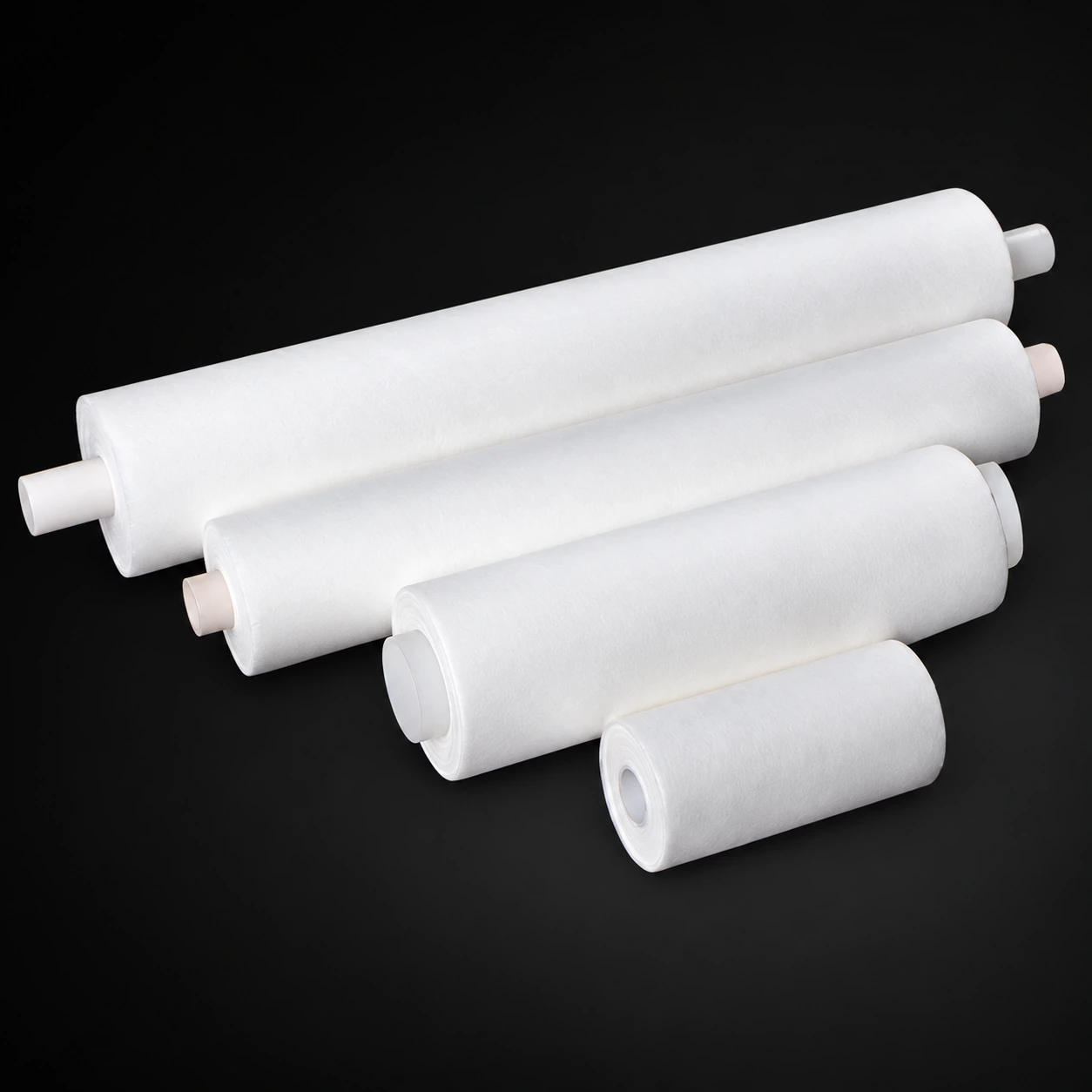

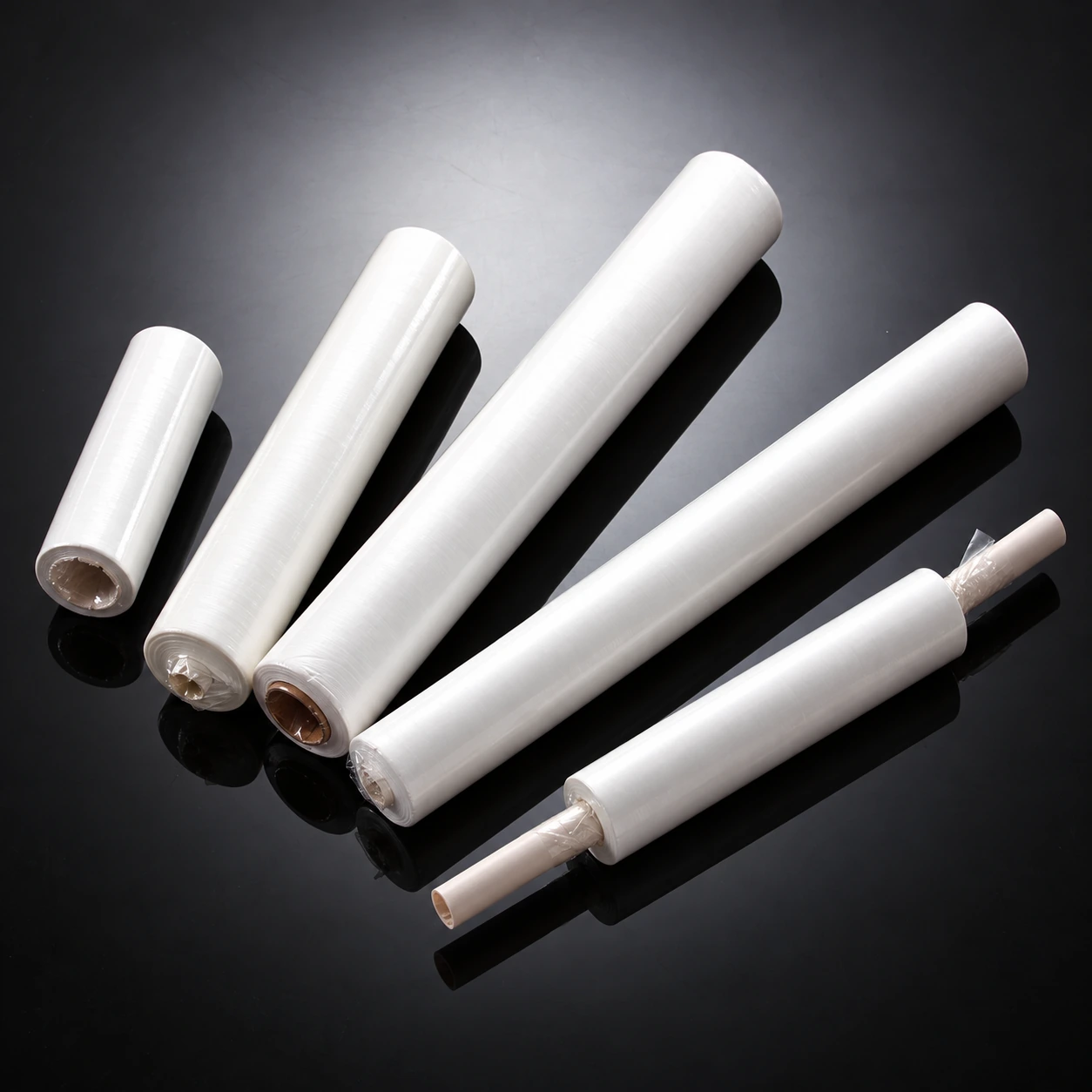
Open a product image to view its full detail. Range photographs show different converted formats.
Cleanroom Paper Rolls
Cleanroom Paper Roll MS-MF68G
| Material | 50% wood pulp / 50% polyester |
|---|---|
| Basis weight | 68 g/m² |
| Roll width × length | 400 mm × 10 m |
| Core type; Ø × length | Plain paper core; Ø19.4 × 400 mm |
| Water absorption* | ≥230 |
| Packing | 25 rolls / carton |
Listed configuration; custom sizes available. *Absorption unit and test method are not specified, so the figure is not a verified comparison value. Confirm the core bore and end profile against the machine drawing.
Roll dimensions, core configuration and packaging can be customized to the application and approved machine interface.
MS-MF68G combines a 68 g/m² wiping web with a paper-core configuration. Review the material and mounting requirements together when selecting a replacement for an SMT printer cleaning system.
Wiping material and a paper-core configuration
MS-MF68G is a pulp/polyester grade offered here with a paper-core configuration for automated SMT stencil cleaning. It provides a consumable surface that moves across the underside cleaning head and takes collected residue out of the contact zone.
The material weight helps distinguish it from other MS-MF grades. It does not establish a universal upgrade path: winding bulk, stiffness, fluid loading and feed behaviour also need to suit the machine.
Protect the core as well as the web
A crushed or moisture-damaged paper tube can interfere with mounting before any wiping takes place. Inspect the core ends when receiving rolls, keep cartons away from water and avoid stacking loose rolls where pressure can deform the tube.
When loading, use the printer's intended support and drive arrangement. Do not force an incompatible spindle into the core or modify the end on the production floor to make a mismatched roll fit.
Assess contact, fluid and advancement together
The stencil should meet a fresh, evenly supported section of wiping material. If the web is already loaded with residue, another pass over the same section may move that residue instead of removing it. Check the advancement setting and the condition of the used roll when cleaning performance changes over a shift.
Fluid should wet the intended contact area according to the approved cleaning recipe. Uneven distribution can leave dry strips beside heavily wetted areas. Check fluid delivery and head condition before changing the material grade or assuming that a larger dose will solve the problem.
Define an acceptance trial for a new batch
- Confirm that the core seats correctly and the material unwinds without side contact.
- Observe web tracking through several normal cleaning cycles.
- Inspect the stencil underside and subsequent print quality under the established production criteria.
- Record abnormal shedding, torn edges or fluid carryover as reasons to investigate the configuration.
Keep the unopened balance of the batch sealed and traceable while the trial is assessed. A change in core material or end profile should be treated as a configuration change, even when the wiping material code remains the same.
Core profiles and converted roll details
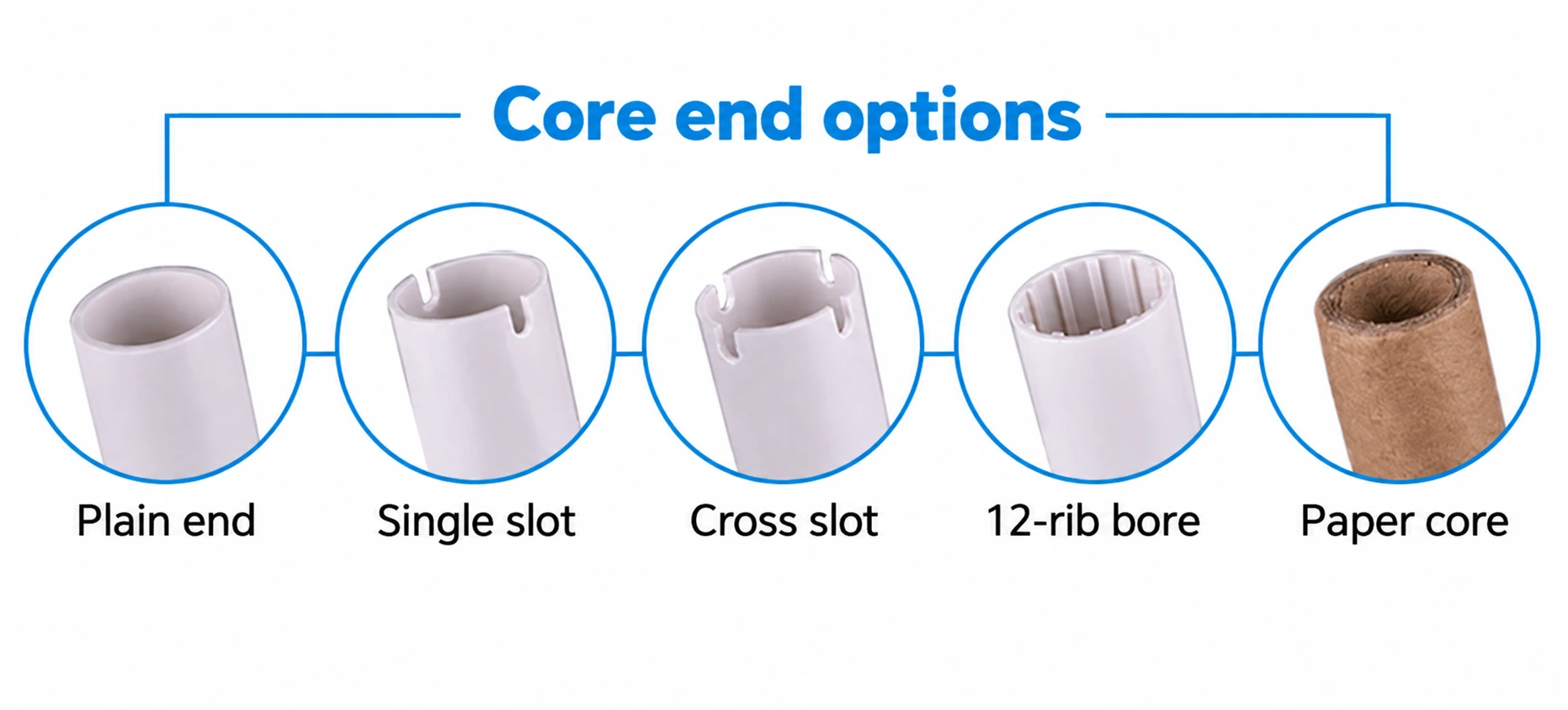
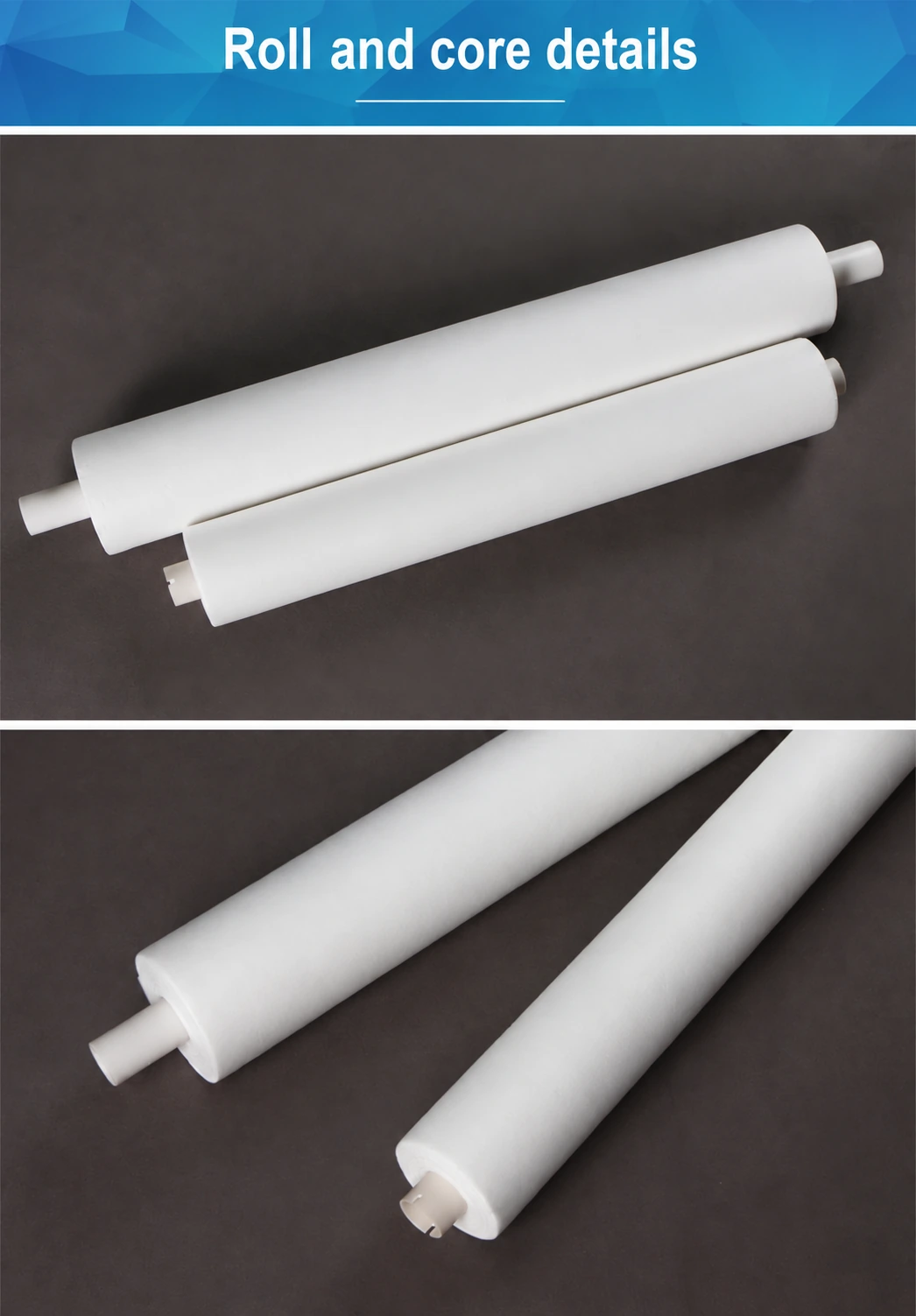
Plain, single-slot, cross-slot and ribbed cores use different mounting arrangements. The photographs show available format types across the roll range. Confirm the selected construction, bore, end dimensions and winding position for the individual order.
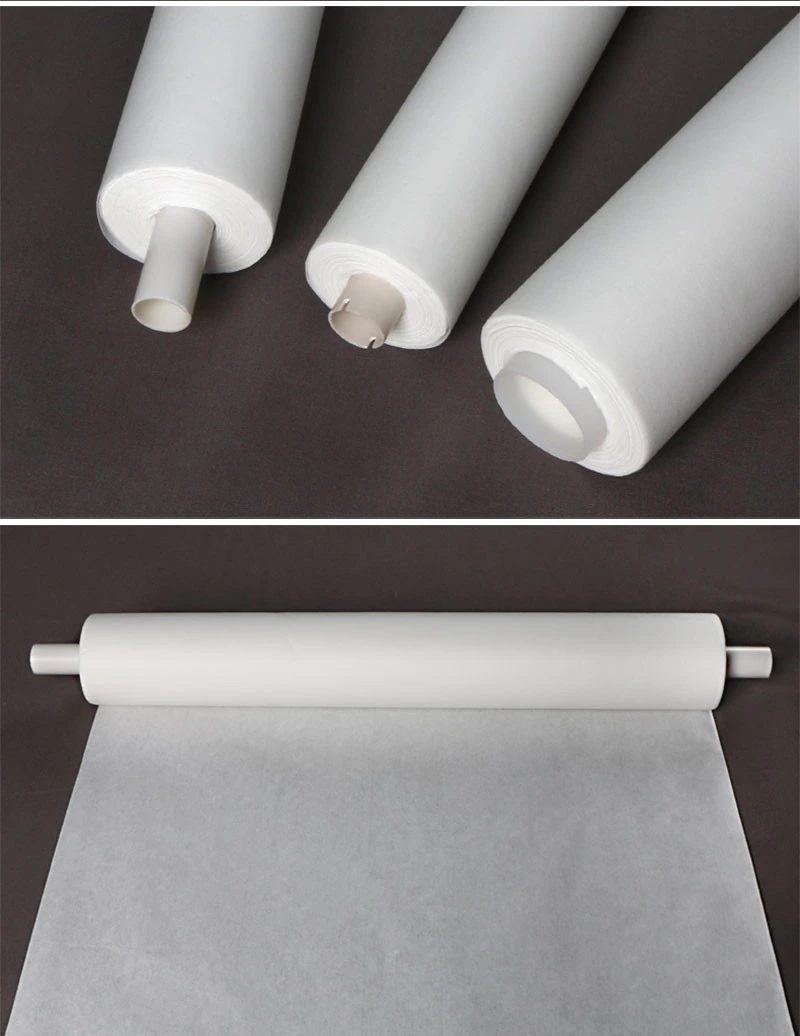
Printer-family format guide
These format combinations are provided for checking conversion requirements. A printer brand can use several cleaning assemblies: verify the exact model and installed cassette before selecting a row. Dimensions are core length, core inner diameter, paper width and wound paper length; they do not specify the complete slot geometry or guarantee fit.
| Printer family | Core length (mm) | Core ID (mm) | Paper width (mm) | Paper length (m) | Core / end |
|---|---|---|---|---|---|
| MPM | 455 | 19.5 | 250 | 10 | 12-rib bore / plain end |
| MPM | 455 | 19.5 | 280 | 10 | 12-rib bore / plain end |
| MPM | 455 | 19.5 | 200 | 10 | 12-rib bore / plain end |
| MPM | 455 | 19.5 | 350 | 10 | 12-rib bore / plain end |
| JUKI | 270 | 38 | 200 | 10 | Plastic / plain end |
| JUKI | 408 | 38 | 250 | 10 | Plastic / plain end |
| YAMAHA | 535 | 26 | 500 | 13 | Paper / plain end |
| YAMAHA | 360 | 25.5 | 350 | 10 | Paper / plain end |
| YAMAHA | 420 | 25.5 | 400 | 10 | Paper / plain end |
| DEK | 530 | 19.6 | 250 | 10 | Plastic / single slot |
| DEK | 530 | 19.6 | 300 | 10 | Plastic / single slot |
| DEK | 530 | 19.6 | 400 | 10 | Plastic / single slot |
| DEK | 530 | 19.6 | 490 | 10 | Plastic / single slot |
| DEK | 530 | 19.6 | 510 | 10 | Plastic / single slot |
| SONY | 280 | 19.6 | 260 | 20 | Plastic / single slot |
| MINAMI | 290 | 8 | 270 | 15 | Plastic / single slot |
| MINAMI | 410 | 8 | 350 | 10 | Plastic / single slot |
| FUJI | 500 | 26 | 500 | 10 | Plastic / single slot |
| GKG | 410 | 19.6 | 400 | 10 | Plastic / plain end |
| KME | 480 | 38 | 480 | 20 | Plastic / cross slot |
Roll dimensions, core configuration and packaging can be customized to the application and approved machine interface.