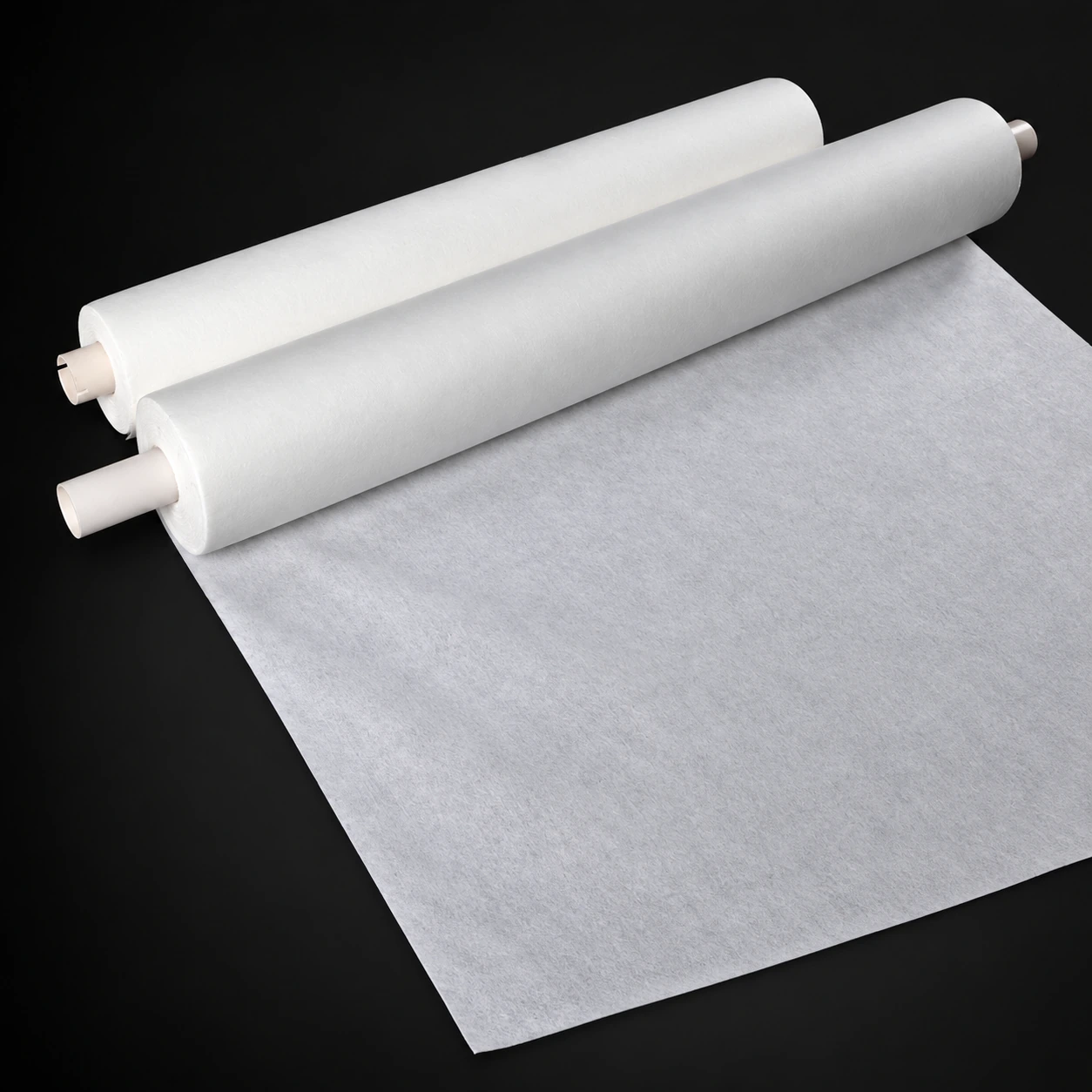

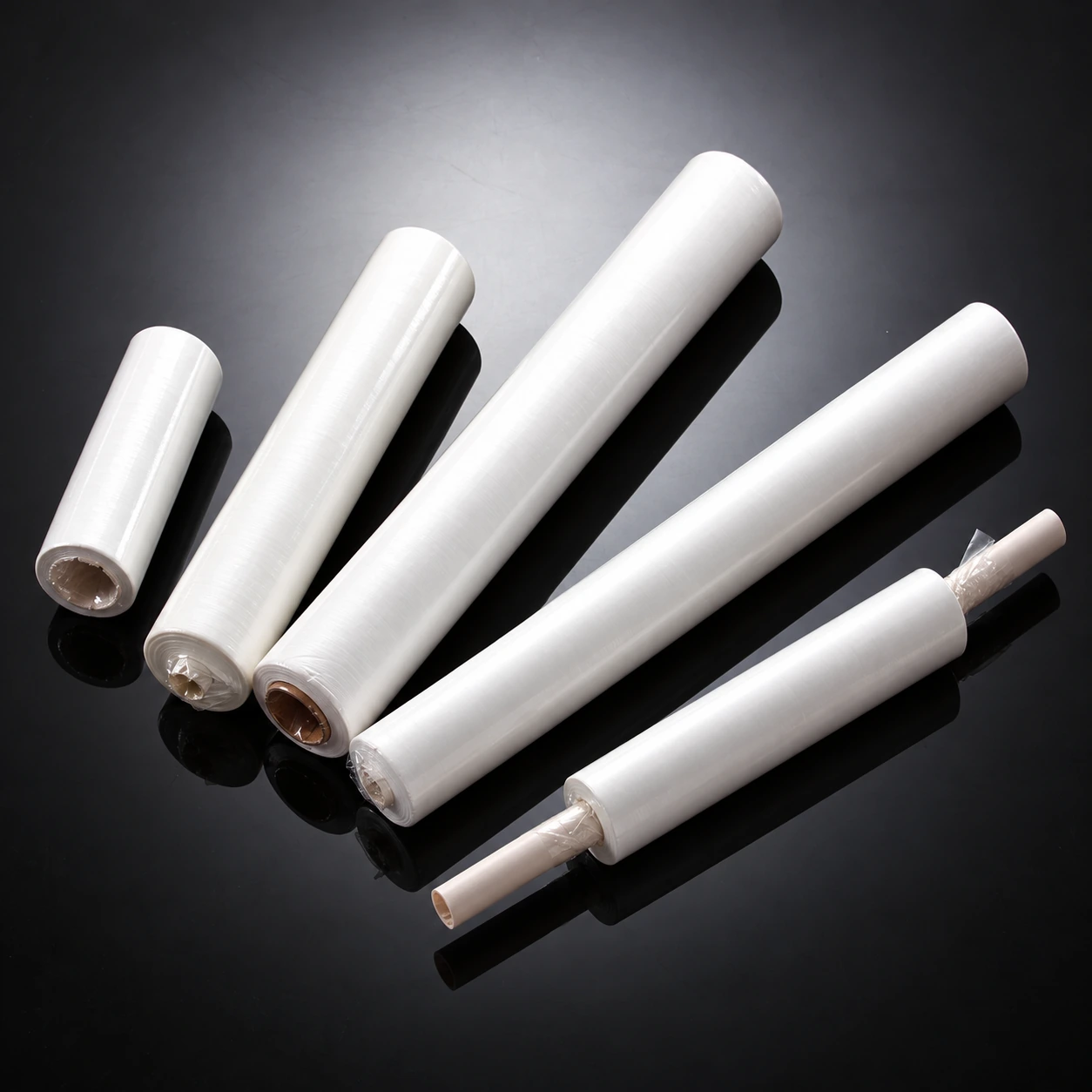
Open a product image to view its full detail. Range photographs show different converted formats.
Cleanroom Paper Rolls
Cleanroom Paper Roll MS-MF65G
| Material | 50% wood pulp / 50% polyester |
|---|---|
| Basis weight | 65 g/m² |
| Roll width × length | 350 mm × 9 m |
| Core type; Ø × length | Plain plastic core; Ø19.6 × 530 mm |
| Water absorption* | ≥230 |
| Packing | 25 rolls / carton |
Listed configuration; custom sizes available. *Absorption unit and test method are not specified, so the figure is not a verified comparison value. Confirm the core bore and end profile against the machine drawing.
Roll dimensions, core configuration and packaging can be customized to the application and approved machine interface.
MS-MF65G is a 65 g/m² pulp/polyester roll for stencil underside cleaning. Correct web placement and stable feeding help the cleaning head use the intended contact area.
Bring the wiping web into even contact
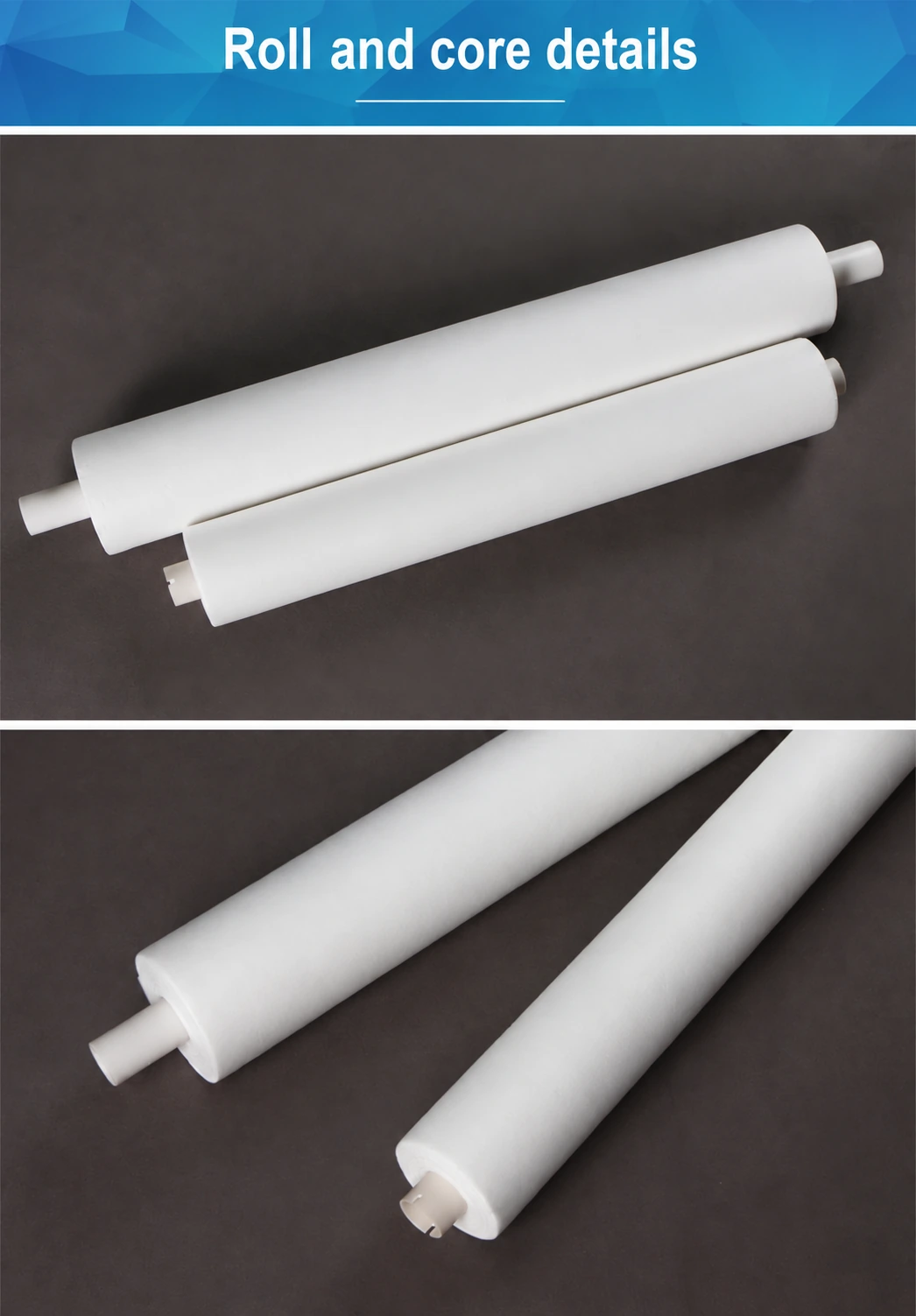
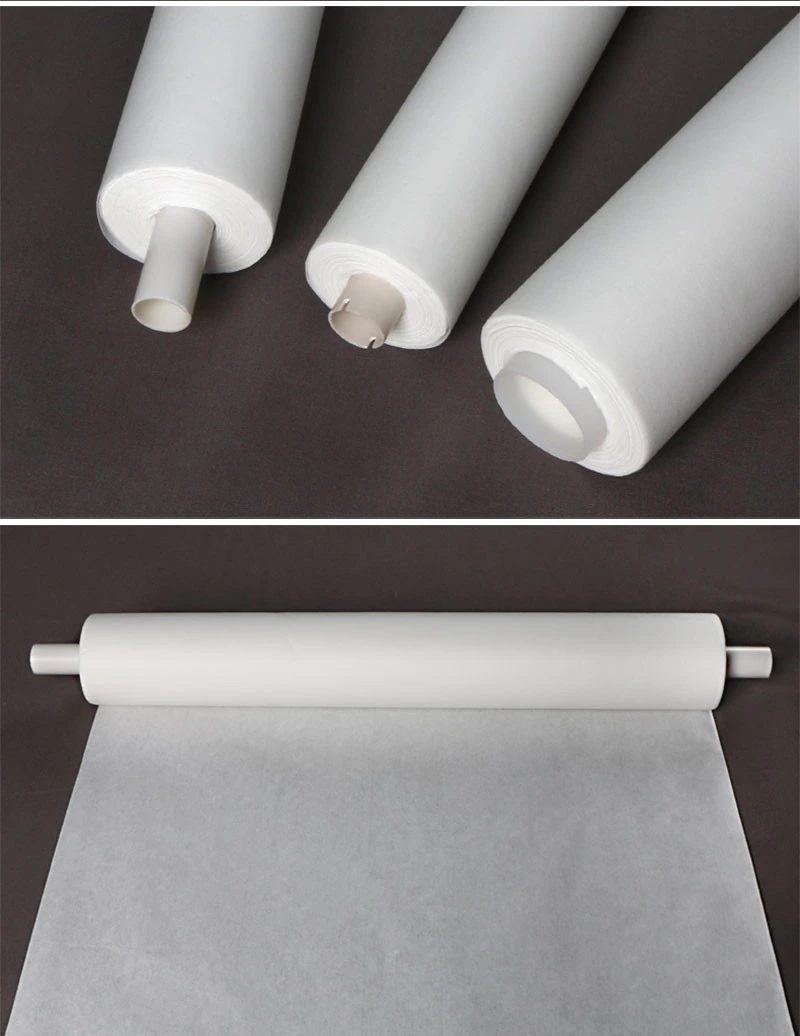
MS-MF65G is a cellulose/polyester roll for removing residual solder paste during stencil underside cleaning. The unrolled material and core photographs make two practical features visible: the continuous wiping surface and the mounting tube. Both affect operation. A suitable material cannot clean an area that the mechanism fails to contact.
Start with the width of the cleaning head and the position of the web on its core. A web that sits to one side can leave a strip untreated even when its nominal width is adequate. Tension, straight winding and free rotation should be checked with the printer's normal loading procedure.
Read the pattern left on the used web
| What appears during a trial | What to investigate |
|---|---|
| A narrow band of residue with clean material beside it | Contact width, stencil position and whether the head reaches the required area. |
| Diagonal creasing or repeated edge folds | Roll alignment, winding position and the path through the holders. |
| Tearing near a core end | Edge rubbing, damaged mounting parts and excessive feed resistance. |
| Residue repeatedly reappears after a pass | Fresh-web advancement, fluid condition and the cleaning head itself. |
These observations guide fault finding; they do not replace the printer manufacturer's instructions or demonstrate a guaranteed cleaning result for every paste and stencil.
A heavier grade needs a process trial
Basis weight describes material mass per unit area. It is useful for identifying this grade, but cannot by itself establish thickness, absorption speed or the amount of residue removed in one cycle. Compare a trial roll using the actual cleaning fluid and operating sequence before treating another basis weight as an equivalent replacement.
The mounting drawing should state the measured bore, overall core length, end shape and paper position. Confirm the diameter convention before manufacture: a nominal diameter without an inner/outer designation is insufficient for a close spindle fit. Keep the approved drawing with the material specification so that later replacement rolls retain the same interface.
Core profiles and converted roll details
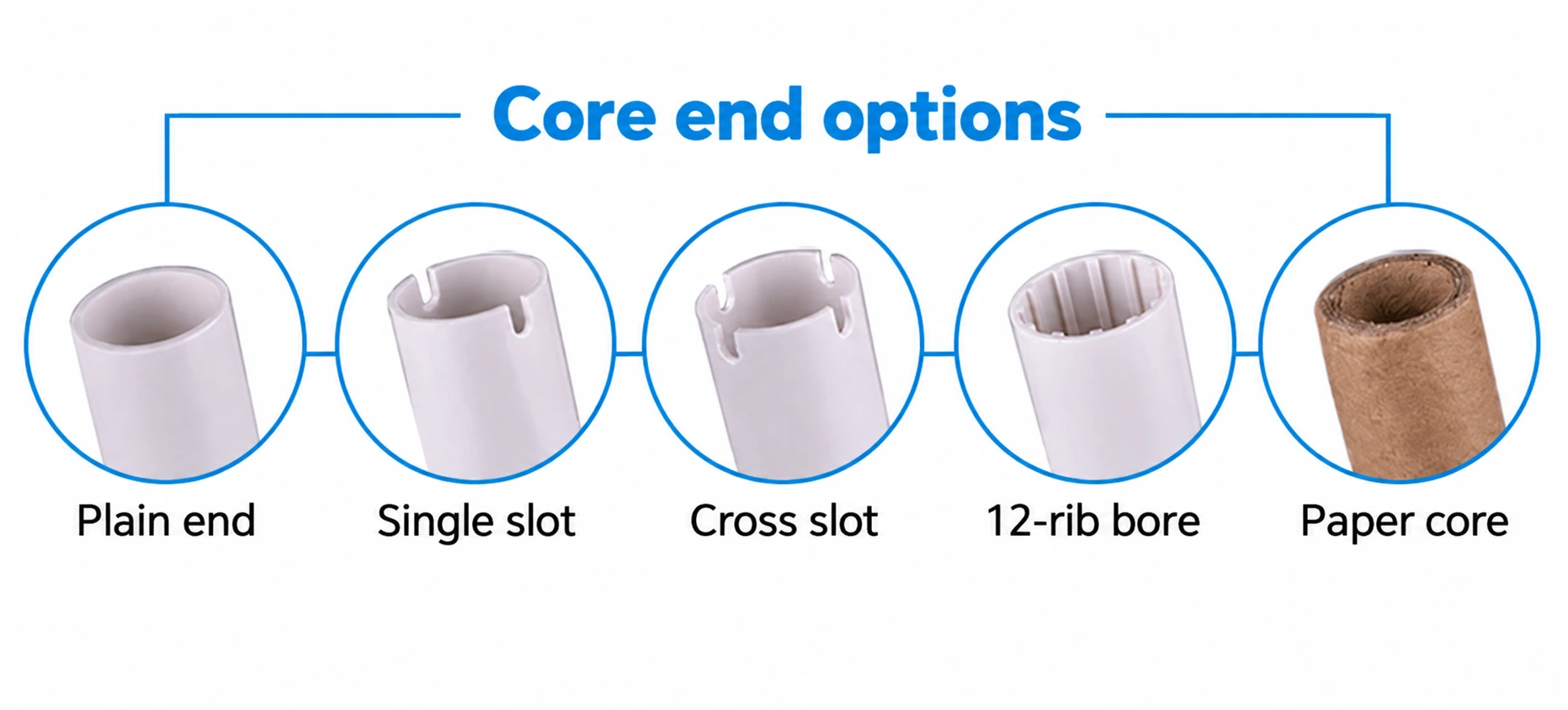
Plain, single-slot, cross-slot and ribbed cores use different mounting arrangements. The photographs show available format types across the roll range. Confirm the selected construction, bore, end dimensions and winding position for the individual order.
Printer-family format guide
These format combinations are provided for checking conversion requirements. A printer brand can use several cleaning assemblies: verify the exact model and installed cassette before selecting a row. Dimensions are core length, core inner diameter, paper width and wound paper length; they do not specify the complete slot geometry or guarantee fit.
| Printer family | Core length (mm) | Core ID (mm) | Paper width (mm) | Paper length (m) | Core / end |
|---|---|---|---|---|---|
| MPM | 455 | 19.5 | 250 | 10 | 12-rib bore / plain end |
| MPM | 455 | 19.5 | 280 | 10 | 12-rib bore / plain end |
| MPM | 455 | 19.5 | 200 | 10 | 12-rib bore / plain end |
| MPM | 455 | 19.5 | 350 | 10 | 12-rib bore / plain end |
| JUKI | 270 | 38 | 200 | 10 | Plastic / plain end |
| JUKI | 408 | 38 | 250 | 10 | Plastic / plain end |
| YAMAHA | 535 | 26 | 500 | 13 | Paper / plain end |
| YAMAHA | 360 | 25.5 | 350 | 10 | Paper / plain end |
| YAMAHA | 420 | 25.5 | 400 | 10 | Paper / plain end |
| DEK | 530 | 19.6 | 250 | 10 | Plastic / single slot |
| DEK | 530 | 19.6 | 300 | 10 | Plastic / single slot |
| DEK | 530 | 19.6 | 400 | 10 | Plastic / single slot |
| DEK | 530 | 19.6 | 490 | 10 | Plastic / single slot |
| DEK | 530 | 19.6 | 510 | 10 | Plastic / single slot |
| SONY | 280 | 19.6 | 260 | 20 | Plastic / single slot |
| MINAMI | 290 | 8 | 270 | 15 | Plastic / single slot |
| MINAMI | 410 | 8 | 350 | 10 | Plastic / single slot |
| FUJI | 500 | 26 | 500 | 10 | Plastic / single slot |
| GKG | 410 | 19.6 | 400 | 10 | Plastic / plain end |
| KME | 480 | 38 | 480 | 20 | Plastic / cross slot |
Roll dimensions, core configuration and packaging can be customized to the application and approved machine interface.