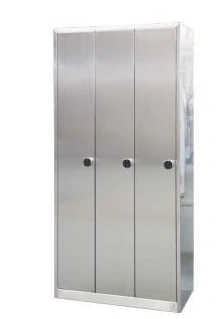
Three-door stainless locker with electronic locks
Cleanroom Lockers & Garment Cabinets
Stainless Steel Cleanroom Locker
| Specification | Configuration options |
|---|---|
| Brand | shengtongJH |
| Material | 304 stainless steel; 316 stainless steel optional |
| External size, W × D × H (mm) | 900 × 450 × 1800 / 1200 × 500 × 1800 / 1200 × 600 × 2100 |
| Compartment arrangement | 3 full-height doors; 6 or 9 compartments; combined garment and shoe storage |
| Door hardware | Mechanical or electronic locks; recessed handles |
| Top and base | Flat or sloping top; plinth or adjustable feet |
| Interior | Hanging rail, hooks and shelves configured to garment length |
| Customization | Compartment layout, size, locks and finish |
Dimensions and configurations can be customized for your application.
Give each operator a defined place for garments and belongings without turning the changing aisle into a storage area.
Separate storage before the gowning sequence begins
A stainless steel locker organizes the belongings that should stay outside the controlled workspace. Full-height compartments allow long garments to hang without being folded against shoes. Divided lockers give more people individual storage when the contents are smaller. Combining these arrangements can make better use of a changing room than filling every wall with the same cabinet.
Start with what each person carries: street clothes, reusable garments, a bag, footwear or small tools. These items should not automatically share one compartment. A dedicated lower shoe section keeps footwear from touching hanging garments, while separate clean and used garment locations make the intended routine easier to follow.
Choose doors around the peak shift change
The useful capacity is the number of people who can retrieve their belongings without blocking one another. Check opposing door swings, room exits and the space occupied by someone dressing. A row with many small doors can offer ample storage yet become difficult to use if everyone needs the same narrow aisle at once.
Recessed handles reduce projections into circulation routes. Mechanical locks suit simple individual allocation; electronic locks can support shared use when their reset and emergency-opening procedures are defined. Sloping tops discourage storage above the cabinet and make the upper surface easier to reach for cleaning.
Clean the complete cabinet, including its base
Choose a base that matches the room's cleaning method. Accessible legs leave the floor visible; a closed plinth needs a well-considered junction with the floor. Inspect door edges, hinges and shelf supports for reachable cleaning surfaces. Stainless steel still requires compatible cleaning chemicals and prompt removal of residues.
A locker organizes garments; it does not wash, sterilize or actively filter them. Where garments need filtered storage between uses, consider a purpose-designed filtered garment cabinet. Compartment sizes, locks and garment separation can be customized to your changing-room routine.