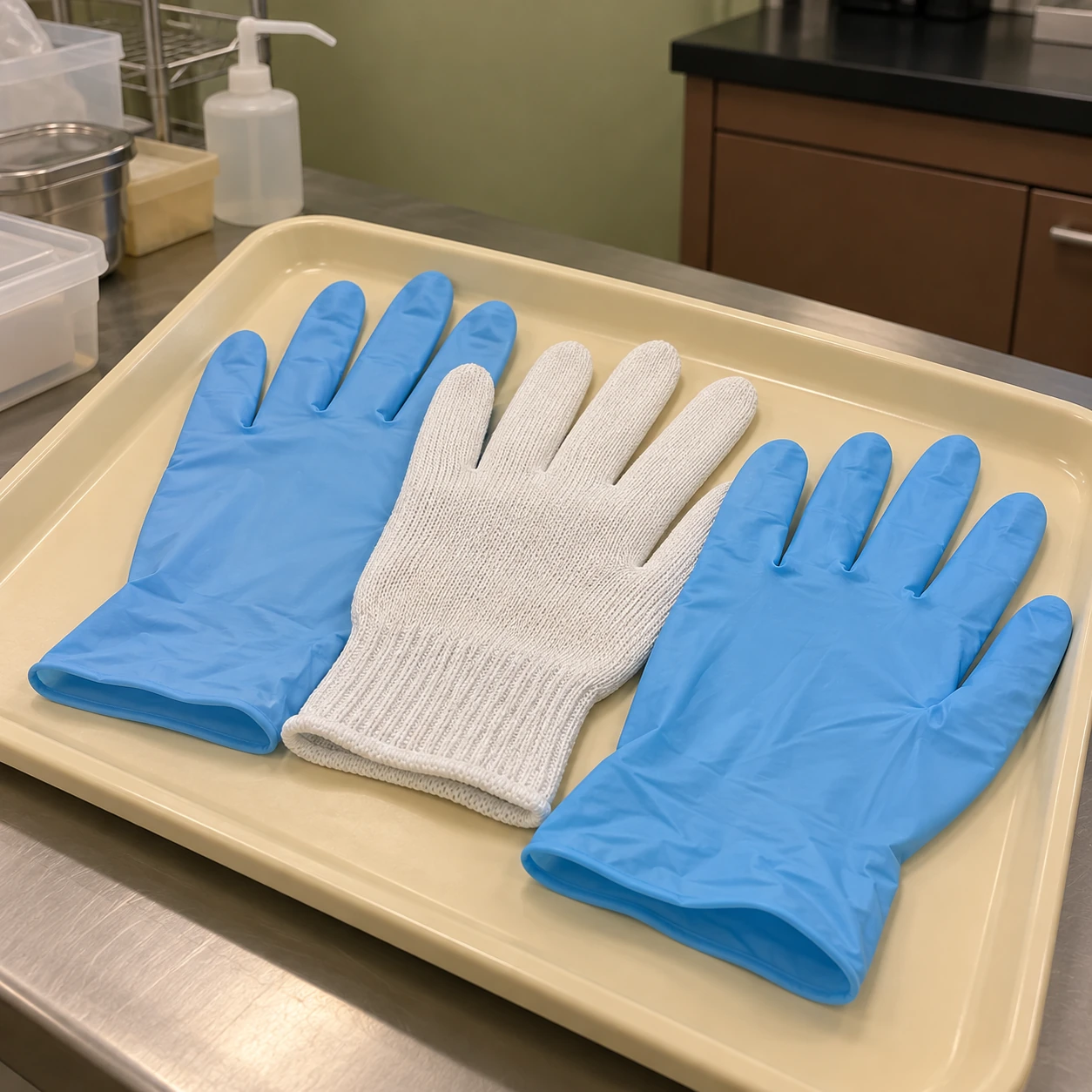
Cleanroom Gloves
cut resistant cleanroom gloves
| Protective construction | Fine-knit UHMWPE-based cleanroom liner with compatible barrier layers |
|---|---|
| Liner sizes | XS, S, M, L and XL |
| Liner total length (mm) | 160–200, depending on size and selected construction |
| Outer barrier options | Nitrile or other process-approved cleanroom glove; size trial required |
| Barrier-glove length options (mm) | 300 or 305, separate from the shorter liner dimension |
| Layering | Manufacturer-approved combination; selected liners are intended between two barrier gloves |
| Cut performance | Required test method and level specified for the actual liner; no cut-proof claim |
| Clean supply | Compatible cleanroom packaging; validated sterile liner option where required |
Liner dimensions describe the knitted component, not the overall barrier-glove coverage. The cut rating and cleanliness evidence must relate to the selected product and the approved layered arrangement.
The liner size assortment and compatible barrier-glove supply can be customized for your handling task, subject to the selected products' approved use.
Cut resistance and cleanroom surface control often require a layered glove arrangement. A fine-knit protective liner can support selected sharp-part handling, while compatible barrier gloves maintain the intended contact surface and containment.
Deal with the edge before choosing the glove
Identify how the hand could meet the edge: holding a component, assembling a small metal part or working around a fixture. Use suitable handling tools, guards and workholding wherever possible. Gloves are one part of the control, not a reason to handle a sharp item in an otherwise unsafe way.
No liner gives complete protection against cuts. Cut resistance also does not establish puncture, needle, heat or chemical protection. Specify the actual hazard and the relevant evidence instead of asking for a broadly “stronger” cleanroom glove.
The liner supplies a different function
The knitted structure provides a protective layer whose fit and mechanical behaviour must be considered separately from a thin barrier film. Ordinary exposed work gloves can introduce fibres or surface contamination and should not be substituted for a qualified cleanroom liner arrangement.
Some cleanroom liners are designed to sit between two barrier gloves. Use the selected manufacturer's instructions for the layer order and compatible products. A photograph of a liner alone does not describe the approved working configuration.
The outer layer remains important
The outer glove is the surface that meets the component or clean working area. It can still become damaged or contaminated even if the liner reduces a cut hazard. Keep the approved replacement triggers for that outer barrier.
The layers are not a single universal rating. A sterile liner does not make non-sterile outer gloves sterile, and an intact-looking outer film does not prove that the complete arrangement has the required mechanical performance.
Trial the arrangement in the fixture
Check finger clearance, thumb movement and grip with all required layers in place. Added bulk can make a formerly easy operation awkward, increasing the effort or encouraging the operator to remove a layer. If that occurs, reconsider the tool, fixture or approved combination rather than improvising a thinner unqualified substitute.
Record the liner and barrier product identities together with the approved size pairing. Replacing only one component can change fit and handling. For the outer surface options, review cleanroom gloves; shengtongJH coordinates a supply package around the complete specified arrangement.
The liner size assortment and compatible barrier-glove supply can be customized for your handling task, subject to the selected products' approved use.