Clean Benches & Local Clean Air Systems
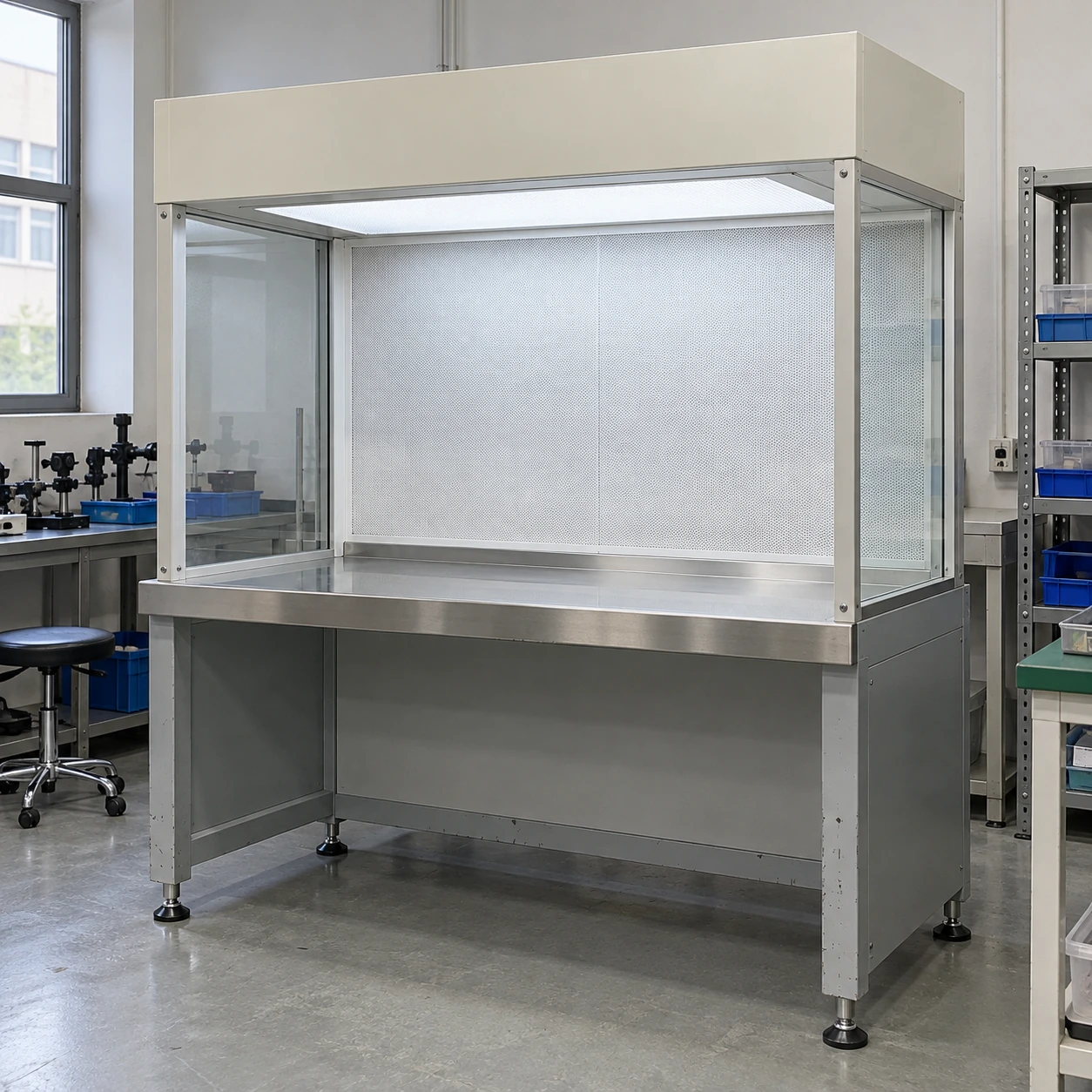
vertical laminar flow clean bench
| Brand | shengtongJH |
|---|---|
| Air arrangement | Vertical filtered downflow over the work zone |
| Work-zone W × D × H | 1200 × 645 × 610 / 1700 × 645 × 610 mm |
| Cabinet W × D × H | 1300 × 750 × 2040 / 1800 × 750 × 2040 mm, including stand |
| Work surface / housing | 304 stainless steel / powder-coated steel; stainless enclosure option |
| Final filtration | HEPA; H14 selection with matching filter test documentation |
| Air velocity setting | 0.3–0.5 m/s average, selected and checked for the working arrangement |
| Cabinet electrical input | 400 / 450 W configurations; connected instrument loads additional |
| Supply options | 220 V, 50/60 Hz; 110 V, 60 Hz by matched configuration |
| Controls and lighting | Fan adjustment and LED task light; airflow monitor option |
| Work opening | Glass side screens; sash and opening height selected for the task |
Select one matched cabinet configuration. Working space, outside size and service clearance are different; final dimensions and electrical loads follow the approved equipment schedule.
Internal height, working width, diffuser coverage and service penetrations can be customized to the equipment and process.
A vertical laminar flow clean bench supplies a downward stream of filtered air over the working zone. The enclosure is most useful when its overhead supply and the equipment beneath it are planned as one arrangement.
Plan the space above the exposed surface
Vertical supply can work well for a broad worktop because air approaches from above rather than travelling past every object from the rear. It is still sensitive to what sits between the diffuser and the product. A large instrument head, overhead cable bundle or shelf can produce a sheltered area directly beneath it.
Draw the working envelope of the equipment, including moving covers and the operator's hands. Position the sensitive surface where filtered air can reach it directly. A taller cabinet may help physical access, but added height alone does not remove an overhead obstruction.
Instrument footprint
Leave enough clear worktop to handle and clean around the instrument. Large objects affect the surrounding air pattern as well as occupying floor area.
Heat and moving air
Heaters and instrument cooling fans can oppose or redirect the supplied flow. Their normal running condition belongs in the layout review.
Services
Route power leads and tubing through suitable interfaces. A cable draped through the work opening can obstruct access and make wiping difficult.
Match the outlet arrangement to the enclosure
Air must leave the working zone through the routes intended by the cabinet design. Keep rear slots, edge openings or other designated paths clear where they are provided. A mat or fixture placed over these areas can change the flow, even when the overhead filter is unobstructed.
Do not add an exhaust duct or seal a working opening as an improvised modification. Such changes alter pressure and flow conditions and need an engineered review. A standard clean bench is a product-protection device, not a ready-made containment enclosure.
Check the operating layout, not only the empty cabinet
Establish the required performance with a defined loading condition. Empty-zone checks are useful for the equipment itself; a representative operating setup reveals the effect of fixtures, heat and handling. Agree which condition is relevant to acceptance and retain the layout with the results.
Filter replacement or a changed instrument may affect that condition. Plan service access above or within the cabinet, including a safe way to remove the filter without contacting its face.
Select vertical flow for the right process
Suitable tasks include nonhazardous component preparation and precision inspection where particles falling onto the work are a concern. The bench does not control vapours, infectious aerosols or every source of contamination carried in on materials. Where the critical surface is easier to protect from behind, a horizontal laminar flow configuration may provide a clearer route.
Internal height, working width, diffuser coverage and service penetrations can be customized to the equipment and process.