Clean Benches & Local Clean Air Systems
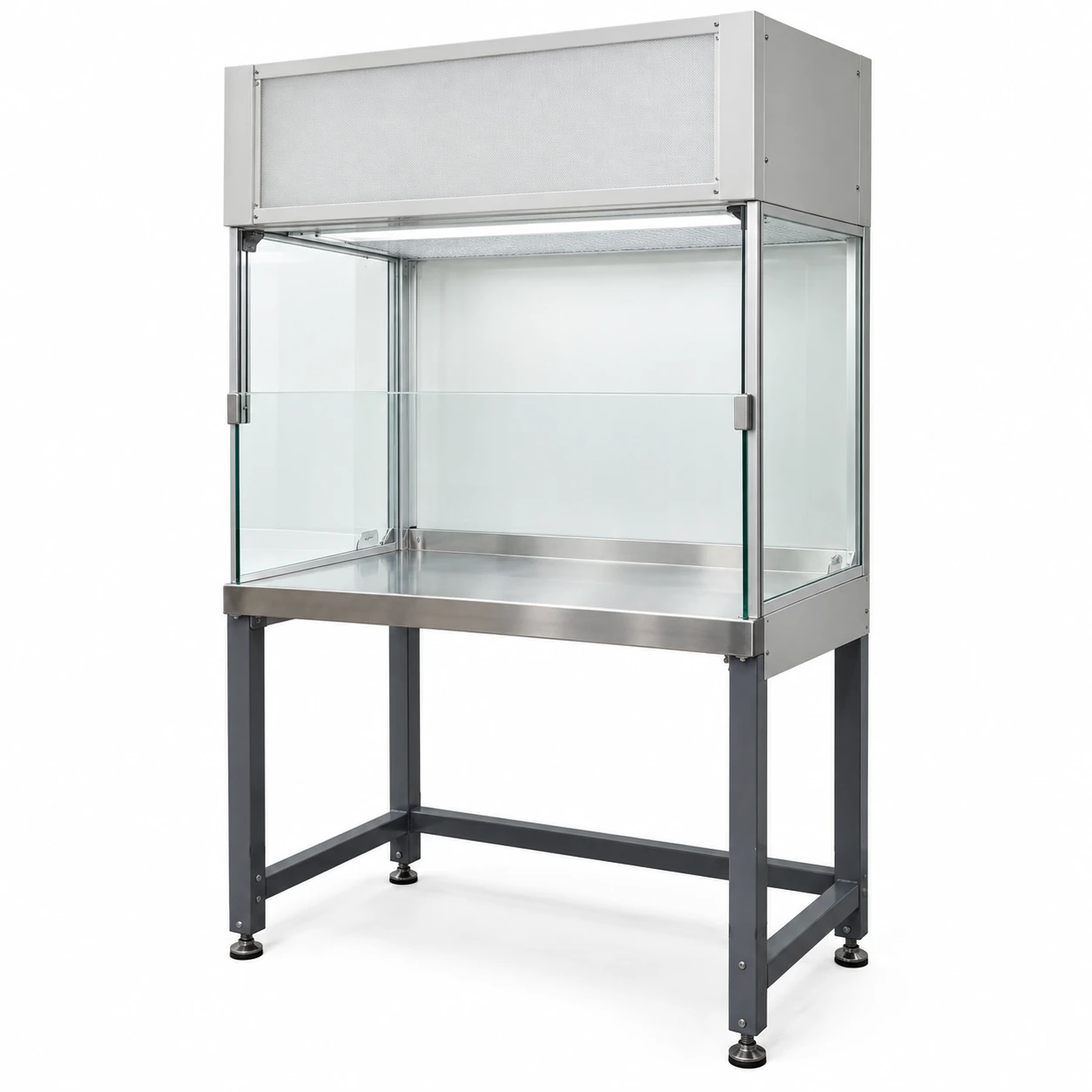
vertical clean bench
| Brand | shengtongJH |
|---|---|
| Air arrangement | Vertical filtered downflow over the work zone |
| Work-zone W × D × H | 1200 × 645 × 610 / 1700 × 645 × 610 mm |
| Cabinet W × D × H | 1300 × 750 × 2040 / 1800 × 750 × 2040 mm, including stand |
| Work surface / housing | 304 stainless steel / powder-coated steel; stainless enclosure option |
| Final filtration | HEPA; H14 selection with matching filter test documentation |
| Air velocity setting | 0.3–0.5 m/s average, selected and checked for the working arrangement |
| Cabinet electrical input | 400 / 450 W configurations; connected instrument loads additional |
| Supply options | 220 V, 50/60 Hz; 110 V, 60 Hz by matched configuration |
| Controls and lighting | Fan adjustment and LED task light; airflow monitor option |
| Work opening | Glass side screens; sash and opening height selected for the task |
Select one matched cabinet configuration. Working space, outside size and service clearance are different; final dimensions and electrical loads follow the approved equipment schedule.
Cabinet size, working opening, stand, screen arrangement and service access can be customized for the installation.
A vertical clean bench places the fan and final-filter assembly above the work area. It offers local downward filtered air with a front opening for access to suitable nonhazardous products and equipment.
A compact footprint still needs operating space
The enclosure may occupy a modest floor area, but the operator, chair, trolley and maintenance work need additional room. Allow the normal approach to the front without forcing people to pass immediately behind the operator.
Include the delivery route before choosing the final position. The cabinet, stand and any removable parts must pass through the available doors and turns. A unit that fits its final corner can still be difficult to bring into the room.
Choose the opening for real hand movement
A front screen can help define access, but its working position must suit the cabinet design. The tallest item is not the only consideration: allow room to lift a cover, move a tool and remove the product without contacting the screen.
Do not hold a sash in an improvised position simply to fit an oversized instrument. Select a suitable work opening and assess the resulting airflow with the intended equipment.
Keep the downflow path useful
The overhead filter supplies air towards the table. Shelves, large fixtures and instrument heads can interrupt that route. Position the critical exposed surface beneath a clear supply area, and keep designated discharge or return openings free where the cabinet uses them.
A tall device can also release heat or use a cooling fan that redirects air locally. These effects should be considered with the equipment running. Physical clearance and suitable air delivery are separate requirements.
Make the stand part of the selection
The supporting structure determines working height, stability and access underneath. Level the installed bench and use the support arrangement specified for the equipment. Casters can help relocation, but they do not remove the need to secure and reassess the unit in its operating position.
Leave a route for maintenance
Identify where the inlet prefilter is accessed and where the final filter is removed. An overhead plenum placed tightly below a ceiling or shelf may be hard to service. Keep isolation controls accessible and avoid routing permanent services through removable panels.
After installation, establish the normal fan setting and the checks required before sensitive work begins. Routine cleaning should protect the filter face and suit the worktop, screen and seals. The single and double-sided configurations address different access patterns when the process requires more than one working face.
This equipment supports product protection. Infectious aerosols, hazardous dust and chemical vapours require an enclosure selected for those hazards; the vertical direction does not provide that containment by itself.
Cabinet size, working opening, stand, screen arrangement and service access can be customized for the installation.