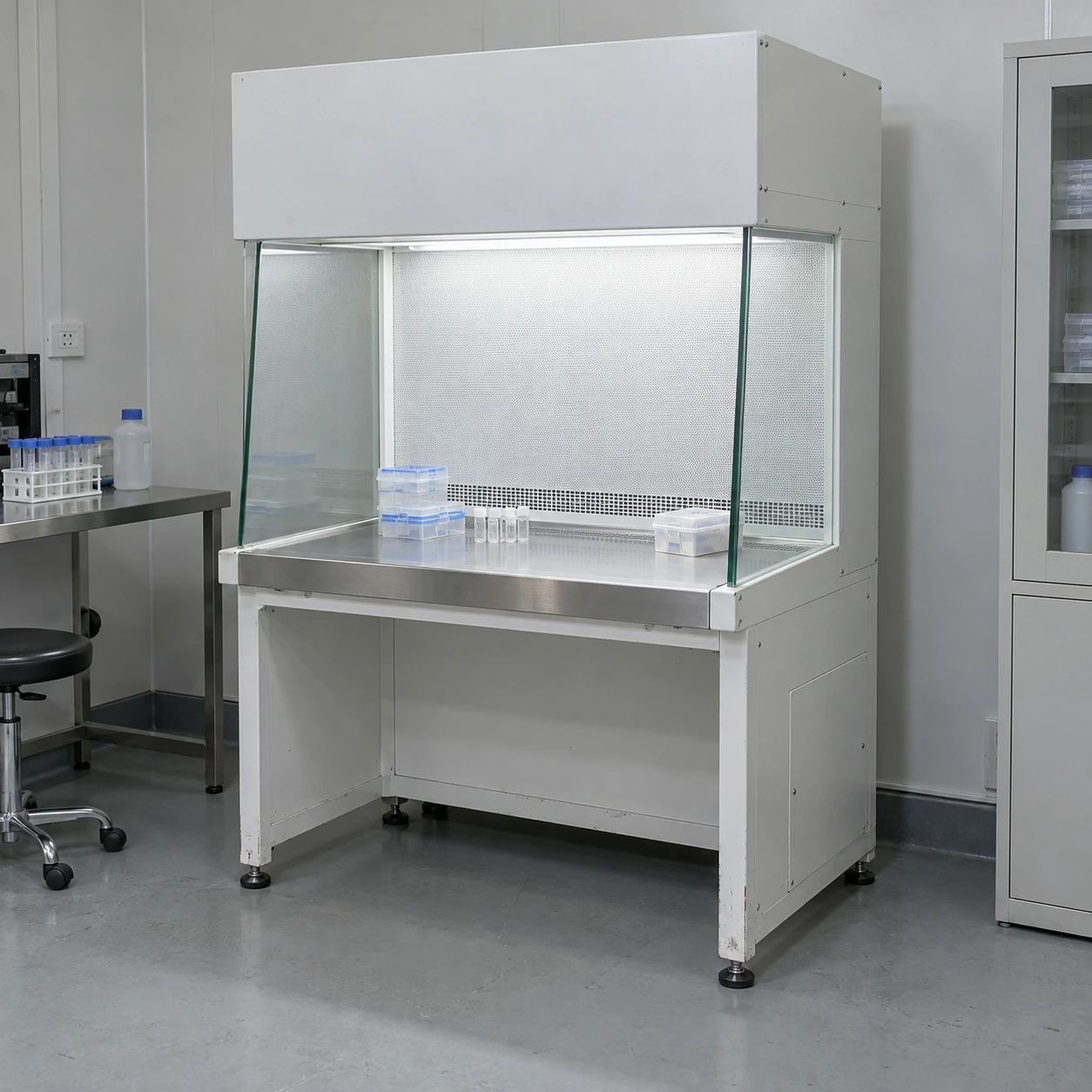
Clean Benches & Local Clean Air Systems
laboratory clean bench
| Brand | shengtongJH |
|---|---|
| Air arrangement | Vertical filtered downflow over the work zone |
| Work-zone W × D × H | 1200 × 645 × 610 / 1700 × 645 × 610 mm |
| Cabinet W × D × H | 1300 × 750 × 2040 / 1800 × 750 × 2040 mm, including stand |
| Work surface / housing | 304 stainless steel / powder-coated steel; stainless enclosure option |
| Final filtration | HEPA; H14 selection with matching filter test documentation |
| Air velocity setting | 0.3–0.5 m/s average, selected and checked for the working arrangement |
| Cabinet electrical input | 400 / 450 W configurations; connected instrument loads additional |
| Supply options | 220 V, 50/60 Hz; 110 V, 60 Hz by matched configuration |
| Controls and lighting | Fan adjustment and LED task light; airflow monitor option |
| Work opening | Glass side screens; sash and opening height selected for the task |
Select one matched cabinet configuration. Working space, outside size and service clearance are different; final dimensions and electrical loads follow the approved equipment schedule.
Work-zone dimensions, surfaces, service connections and accessories can be customized for your laboratory procedure.
A laboratory clean bench provides a local particle-controlled area for tasks that need product protection. Selecting it begins with the sample and procedure, followed by the working layout and the laboratory routine.
Classify the procedure before selecting the cabinet
Clean component inspection, preparation of nonhazardous materials and suitable plant work may benefit from filtered air over the working area. Procedures involving potentially infectious material, hazardous powders or volatile chemicals need a different protection assessment. The word laboratory does not identify which enclosure is appropriate.
Consider both the material and what the procedure does to it. A closed item and an operation that releases aerosols have different requirements. An ordinary clean bench does not provide personnel or environmental containment, even when its working air meets a specified particle class.
Make sample movement understandable
Separate incoming containers, active preparation and completed work. Keep outer packaging outside the clean zone, and avoid reaching across an exposed item to retrieve a tool. A simple, repeatable sequence is often more useful than filling a large cabinet with everything used during the day.
Where samples have different contamination concerns, decide whether they can share the same workstation at all. Filtered air does not eliminate residues carried on tools, gloves or the worktop.
Fit the actual equipment
Check the instrument with its lid open and its tubing connected. A device can fit the nominal work area while blocking the supply above the sample. Leave space for hands, routine wiping and access to controls.
Instrument heat and cooling fans can affect the local air pattern. A balance or vibration-sensitive device may also need an arrangement beyond a standard clean-air table. Review these needs as part of the procedure.
Shared use needs a defined handover
In a shared laboratory, the next user needs to know whether the previous materials have been removed and the prescribed cleaning has been completed. Define the responsible user, permitted activities and readiness checks. A clear worktop is easier to inspect than one permanently occupied by unrelated equipment.
Use cleaning agents and contact conditions suitable for the process and cabinet materials. A stainless tray, glass screen and polymer seal can have different compatibility limits. Do not treat an optional UV lamp as a substitute for cleaning or as proof of sterility.
Plan support after installation
Identify the final filter and prefilter so replacements can be matched without guesswork. Retain the manual, electrical details and relevant installation results with the equipment. Reassess affected performance after relocation, filter service or a major change in the work setup.
For a small laboratory with limited space, a benchtop clean bench may be practical, provided its support table and work envelope suit the procedure. shengtongJH can coordinate a configuration around the approved task and its maintenance needs.
Work-zone dimensions, surfaces, service connections and accessories can be customized for your laboratory procedure.