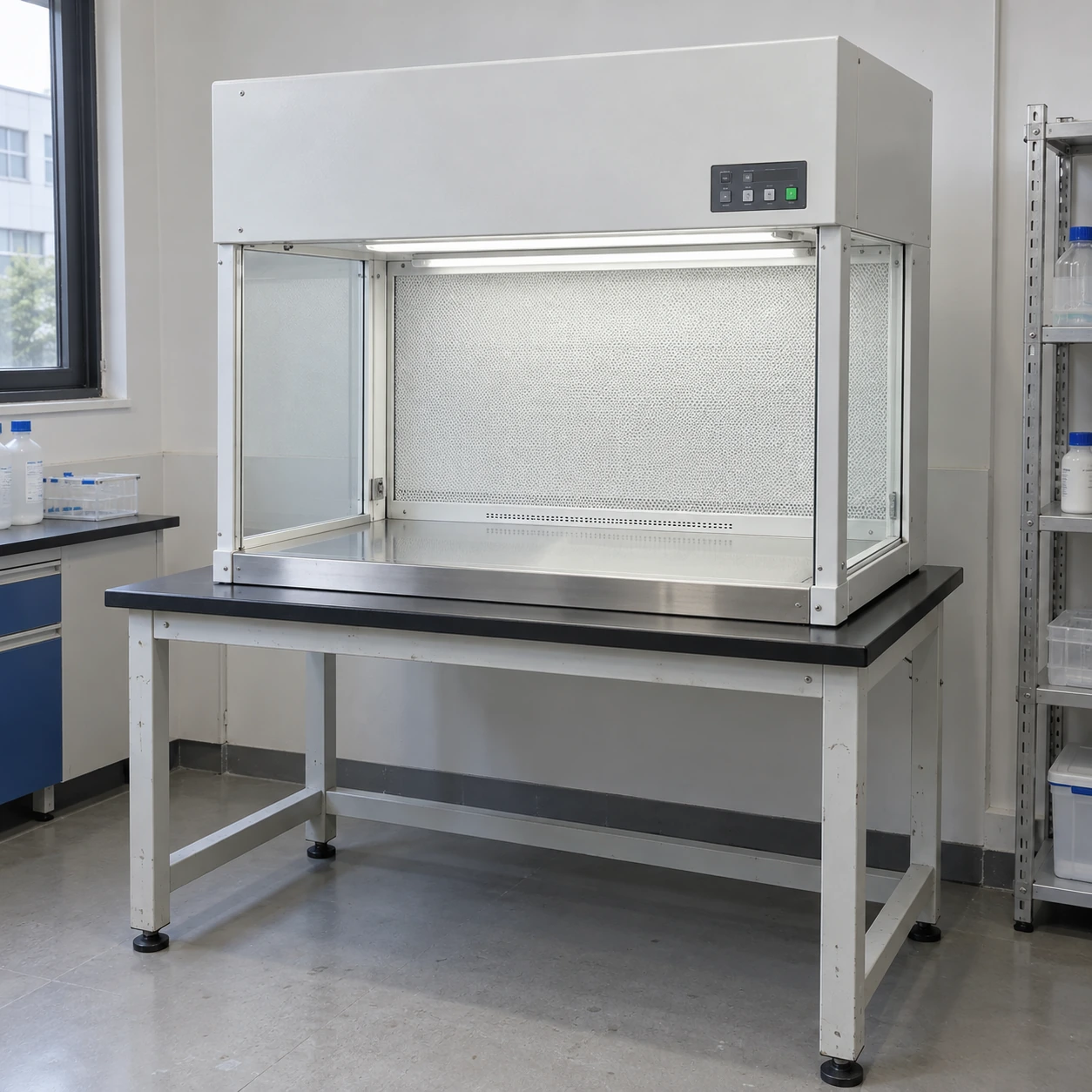
Clean Benches & Local Clean Air Systems
lab clean bench
| Brand | shengtongJH |
|---|---|
| Format | Benchtop vertical clean-air cabinet |
| Cabinet W × D × H | 610 × 610 × 889 / 914 × 610 × 889 / 1219 × 610 × 889 mm; support table excluded |
| Work-zone depth / height | 571 / 591.5 mm; clear width depends on the selected enclosure |
| Filtration | HEPA with replaceable inlet prefilter |
| Work surface | Stainless steel tray or integrated work surface by configuration |
| Support | Existing table or dedicated stand, checked for load and stability |
| Electrical supply | 230 V, 50 Hz; 120 V, 60 Hz matched option |
| Control | Local fan and LED light; airflow indication by selection |
| Installation services | Accessible power isolation and filter-removal space |
Select one matched cabinet configuration. Working space, outside size and service clearance are different; final dimensions and electrical loads follow the approved equipment schedule.
Cabinet width, support arrangement, lighting and service interfaces can be customized for the laboratory layout and approved procedure.
A compact lab clean bench can add local filtered air to an existing laboratory table. It is useful where space is limited, provided the actual procedure fits the working zone and the supporting furniture is suitable.
Check the work, not just the tabletop
A small cabinet should be chosen around the sample, tools and hand movements. Nominal width does not equal clear internal width, and the available height can be reduced by a diffuser or screen. Test the layout with the instrument lid open and containers in their working positions.
If every tool has to be moved to reach the sample, the cabinet may be too small for that procedure. Keeping bulk supplies outside the zone can help, but crowding the active task defeats the purpose of local protection.
The existing table becomes part of the equipment
The table must support the selected cabinet and any instruments without excessive movement. Check its top, frame, levelling and the space beneath it. A table that is convenient for storage may be unsuitable for a vibration-sensitive operation.
Overall working height depends on both the cabinet and the support. Consider the seated or standing position so users can see and reach the task without leaning into the opening.
Leave room for air and maintenance
A benchtop unit still needs an unobstructed inlet and the filter-removal space specified for its design. Shelves above the table may interfere with those requirements. Avoid placing the opening directly in the path of a room supply grille or a frequently opened door.
Keep power isolation accessible. Route instrument leads through suitable interfaces rather than trapping them under a screen. The electrical demand of a device inside the bench should be considered separately from the cabinet blower and lighting.
Small size does not change the protection boundary
This is a product-protection cabinet for suitable nonhazardous work. It does not become a biological safety cabinet because it is used for laboratory preparation, and it does not capture hazardous vapour. Select the enclosure from the procedure and risk assessment before deciding its size.
Keep use simple and repeatable
Prepare supplies before loading, keep only the current task in the work zone and clean accessible surfaces with a compatible method. Establish the relevant airflow and cleanliness condition after installation, then retain the configuration and filter identity for service.
When the process grows, consider whether a larger workstation or a separate preparation area is the better change. A wider cabinet may help space, while separate stages may reduce conflicting hand movements. The laboratory clean bench configuration covers shared use and a broader equipment layout.
Cabinet width, support arrangement, lighting and service interfaces can be customized for the laboratory layout and approved procedure.