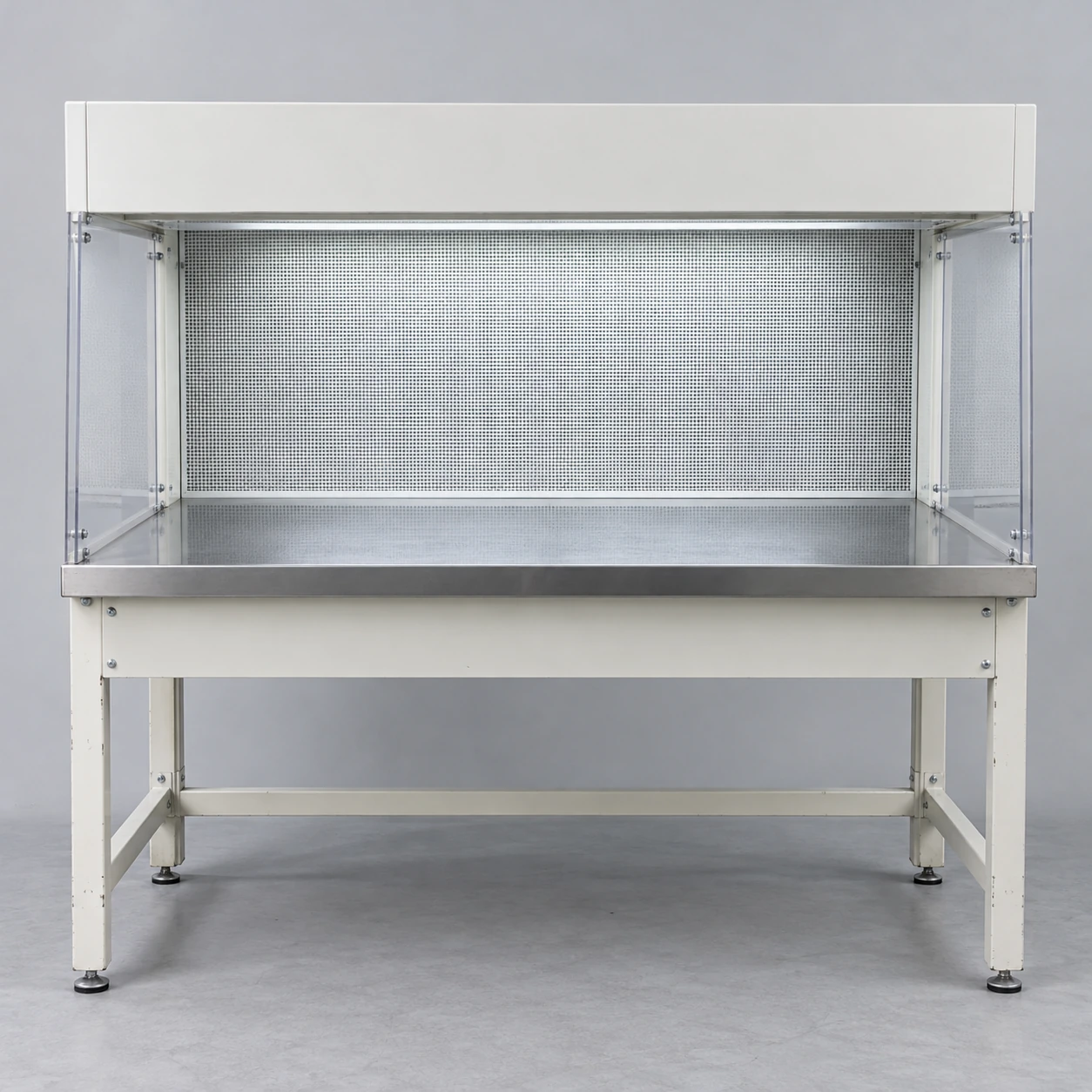
Clean Benches & Local Clean Air Systems
horizontal clean bench
| Brand | shengtongJH |
|---|---|
| Air arrangement | Horizontal, rear filter to front work opening |
| Work-zone W × D × H | 1200 × 500 × 570 / 1700 × 500 × 570 mm |
| Cabinet W × D × H | 1300 × 820 × 2040 / 1800 × 820 × 2070 mm, including stand |
| Work surface / housing | 304 stainless steel / powder-coated steel; stainless enclosure option |
| Final filtration | HEPA; H14 selection with matching filter test documentation |
| Air velocity setting | 0.3–0.5 m/s average, selected and checked for the working arrangement |
| Cabinet electrical input | 400 / 500 W configurations; connected instrument loads additional |
| Supply options | 220 V, 50/60 Hz; 110 V, 60 Hz by matched configuration |
| Controls and lighting | Fan adjustment, LED task light; airflow indication option |
| Access and service | Open working face; accessible prefilter and replaceable final filter |
Select one matched cabinet configuration. Working space, outside size and service clearance are different; final dimensions and electrical loads follow the approved equipment schedule.
Cabinet width, work surface, side screens and stand arrangement can be customized to the product and working position.
A horizontal clean bench is an open-access workstation that supplies filtered air from a rear panel. It is a practical choice when a small, nonhazardous product can be placed directly in that air path.
Open access is useful when the task stays low
Small assemblies, clean component inspection and similar operations often benefit from a clear approach from above and in front. With the filter at the rear, the operator can work without an overhead filter box immediately above the task. Transparent sides help with visibility while limiting some lateral disturbance.
The advantage depends on the product shape. A broad upright part or tall machine can block the stream and create a sheltered region. Evaluate the surfaces that actually need protection, including recesses and openings, rather than judging only whether the part fits on the table.
Arrange a workable reach distance
Placing everything close to the rear filter may seem attractive, but it can make the operator lean into the opening and reach over the work. Locate the active area within a comfortable reach while preserving its clear air supply. Frequently used tools should be reachable without crossing exposed parts.
The base stand affects this relationship. A seated task needs knee and foot space; a standing task needs a suitable table height and clear approach. Footrests, chairs and storage beneath the bench should not obstruct service access or encourage awkward posture.
When horizontal flow helps
It can provide a simple, direct route to low-profile parts, with clear visibility of the work. It suits a sequence in which clean material is prepared elsewhere and only the sensitive stage occupies the bench.
When another arrangement helps
Tall equipment may be easier to place under a properly arranged vertical supply. Very light material or an air-sensitive measurement may need a different process enclosure. Hazardous emissions require containment equipment, regardless of the preferred working posture.
Allow the installation to remain serviceable
The rear assembly contains the final filter and air-distribution components. The selected design determines where those parts are removed; leaving only front working space may be insufficient. Plan the service route before fixing adjacent cabinets or utilities in place.
Keep the bench away from strong drafts and avoid using its worktop as general storage. Establish the airflow and cleanliness condition after installation, with the normal fixture arrangement. The broader workstation configuration can add task-specific supports and services when the bench is part of a repetitive assembly operation.
Cabinet width, work surface, side screens and stand arrangement can be customized to the product and working position.