Clean Benches & Local Clean Air Systems
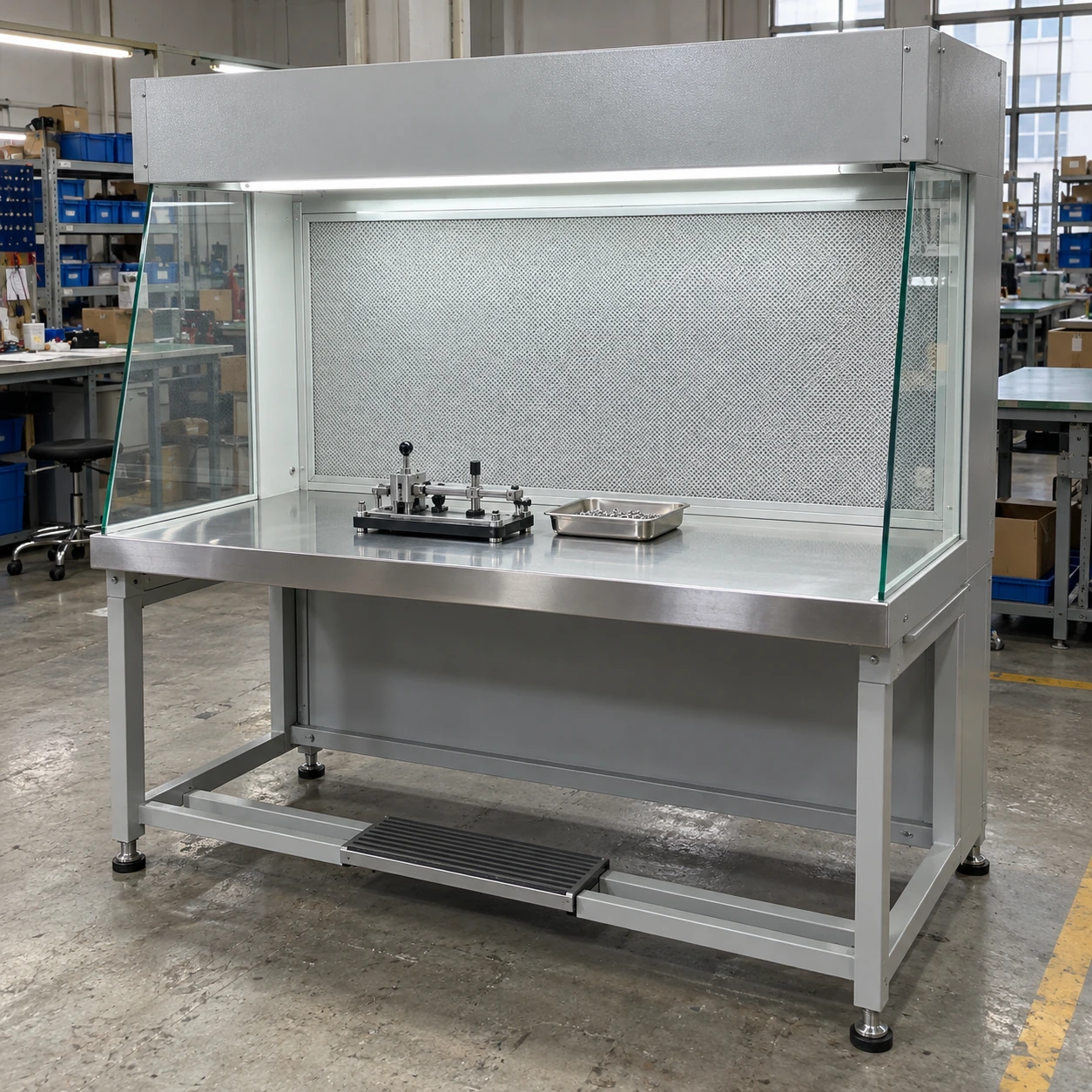
horizontal clean bench workstation
| Brand | shengtongJH |
|---|---|
| Air arrangement | Horizontal, rear filter to front work opening |
| Work-zone W × D × H | 1200 × 500 × 570 / 1700 × 500 × 570 mm |
| Cabinet W × D × H | 1300 × 820 × 2040 / 1800 × 820 × 2070 mm, including stand |
| Work surface / housing | 304 stainless steel / powder-coated steel; stainless enclosure option |
| Final filtration | HEPA; H14 selection with matching filter test documentation |
| Air velocity setting | 0.3–0.5 m/s average, selected and checked for the working arrangement |
| Cabinet electrical input | 400 / 500 W configurations; connected instrument loads additional |
| Supply options | 220 V, 50/60 Hz; 110 V, 60 Hz by matched configuration |
| Controls and lighting | Fan adjustment, LED task light; airflow indication option |
| Access and service | Open working face; accessible prefilter and replaceable final filter |
| Workstation options | Fixture supports, task-specific lighting, footrest and service pass-throughs by selection |
Select one matched cabinet configuration. Working space, outside size and service clearance are different; final dimensions and electrical loads follow the approved equipment schedule.
Fixture interfaces, working height, service locations and material-transfer arrangements can be customized to your workstation process.
A horizontal clean bench workstation combines filtered air with the supports, services and handling space needed for a repeated task. The aim is a station operators can use consistently without compromising the air path.
Start with one complete work cycle
Follow an item from arrival through handling to collection. Note where the operator picks up tools, turns the part, connects services and puts completed work. This reveals requirements that a cabinet width alone cannot capture: space for a fixture handle, clearance for a lid or a place to set down a protected part.
A useful workstation keeps the exposed operation within the filtered stream while moving bulky stock and outer packaging elsewhere. Repetitive work becomes harder to control when the clean area is also used for unpacking, paperwork and spare-tool storage.
Fixture and product
Support the part without building a wall between it and the rear filter. Low-profile fixtures and suitable orientation preserve a direct air path.
Operator and tools
Place frequently used tools to the side and provide a comfortable reach. Arrange lighting so the operator can inspect the surface without leaning across it.
Services and movement
Locate power, tubing and controls where they can be connected without trailing across exposed work. Leave enough room to remove the product safely.
Separate vibration from airflow
A microscope, small balance or sensitive inspection fixture may be affected by vibration from the fan or by the air itself. A heavier table is not a universal cure. Identify whether the problem is structural movement, air disturbance or the instrument's own requirements before choosing supports.
Where electrical components are handled, grounding and static-control requirements should be specified separately. Stainless steel is conductive, but a metal table alone does not establish the complete ESD protection of the station.
Keep useful services maintainable
Service fittings should be accessible and compatible with the intended use. Decide which loads use cabinet outlets and which need separate supplies. The bench blower's rated input is not the total electrical demand of every instrument placed inside.
Cable and tube routes also need cleaning access. Avoid placing junction boxes or shelves where they block the filter face or become surfaces that cannot be wiped.
Define the station's acceptance as a whole
Review the normal fixture, lighting, tools and operator position together. The airflow arrangement should be assessed with representative equipment in place, while mechanical supports and electrical interfaces are checked for their own duties. This makes acceptance relevant to the actual operation.
shengtongJH can coordinate the bench and accessories as a purchase package with clear supply boundaries. Use this arrangement for approved nonhazardous work; solder fumes, solvent vapour and hazardous dust need appropriate extraction or containment rather than being directed outwards by the clean bench.
Fixture interfaces, working height, service locations and material-transfer arrangements can be customized to your workstation process.