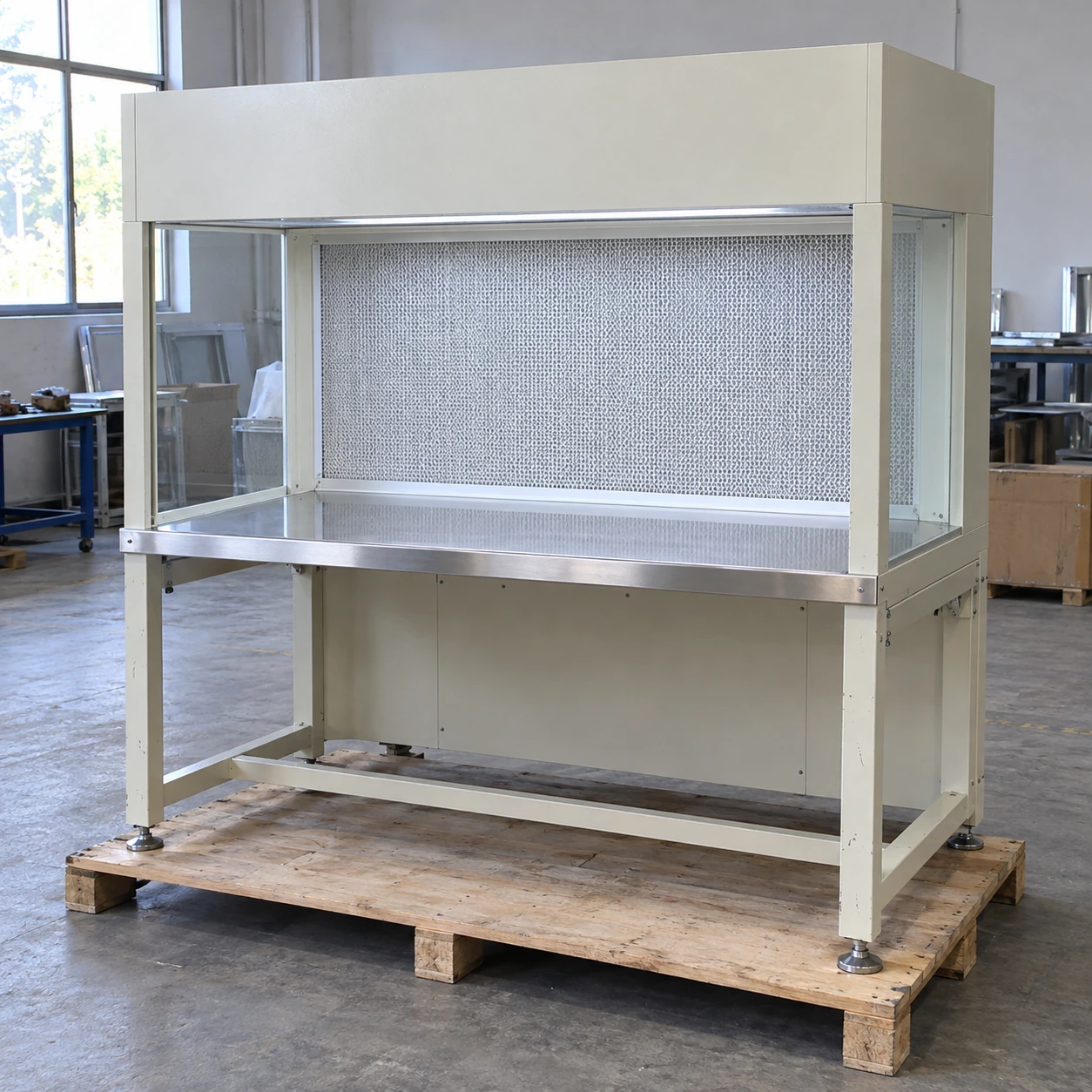
Clean Benches & Local Clean Air Systems
clean bench factory
| Brand | shengtongJH |
|---|---|
| Air arrangement | Horizontal, rear filter to front work opening |
| Work-zone W × D × H | 1200 × 500 × 570 / 1700 × 500 × 570 mm |
| Cabinet W × D × H | 1300 × 820 × 2040 / 1800 × 820 × 2070 mm, including stand |
| Work surface / housing | 304 stainless steel / powder-coated steel; stainless enclosure option |
| Final filtration | HEPA; H14 selection with matching filter test documentation |
| Air velocity setting | 0.3–0.5 m/s average, selected and checked for the working arrangement |
| Cabinet electrical input | 400 / 500 W configurations; connected instrument loads additional |
| Supply options | 220 V, 50/60 Hz; 110 V, 60 Hz by matched configuration |
| Controls and lighting | Fan adjustment, LED task light; airflow indication option |
| Access and service | Open working face; accessible prefilter and replaceable final filter |
Select one matched cabinet configuration. Working space, outside size and service clearance are different; final dimensions and electrical loads follow the approved equipment schedule.
Cabinet dimensions, worktop, controls, packing and accessory scope can be customized to the project and receiving conditions.
Factory selection for a clean bench is most useful when it is tied to a defined equipment requirement. shengtongJH coordinates sourcing from an identified manufacturing source and aligns the cabinet, documents and delivery scope with the buyer.
Look beyond the cabinet appearance
Two benches can look similar while using different filter seals, fan arrangements and service access. Exterior finish alone does not show whether the work zone receives the intended air or whether the filter can be replaced correctly. A useful factory review therefore follows the air path and the parts that maintain it.
Examine the enclosure joints, filter retaining arrangement and support structure. Ask how the selected filter is identified and how replacement compatibility is recorded. These details influence maintenance long after the first purchase.
Before production
Agree the working envelope, cabinet drawing, materials, electrical supply and included accessories. Resolve dimensions around the actual fixture and delivery route.
Before dispatch
Identify the equipment and the inspections agreed for that configuration. Distinguish filter documentation, assembly checks and any bench performance results.
At installation
Check the received condition and complete the required site verification. Transport and room conditions can affect a system that was acceptable before dispatch.
Control changes to the agreed configuration
A different fan or filter may require a revised duty calculation, setting or interface. A substituted screen material may change cleaning compatibility. Treat such changes as technical decisions rather than assuming every equivalent-looking part is interchangeable.
Keep the approved configuration with the order so later spare-part requests have a traceable basis. A model label without component details may be insufficient when a production series changes.
Specify packing around vulnerable parts
The filter face, glass screens and control fascia need protection during handling. The cabinet should be restrained through appropriate structural points, with removable accessories secured separately.
Check the packed dimensions and unloading method for the destination. A complete unit and a cabinet shipped with its stand detached can have different handling requirements.
Keep supply responsibilities explicit
The quotation should state which party supplies the bench, which manufacturer builds the selected configuration, what documentation is included and how service parts are ordered. Site commissioning, electrical connection and process qualification should have clear owners.
shengtongJH's role is equipment and material procurement coordination. For a structured comparison of technical offers, see clean bench manufacturer selection. The selected equipment must remain suitable for the intended nonhazardous product-protection duty.
Cabinet dimensions, worktop, controls, packing and accessory scope can be customized to the project and receiving conditions.