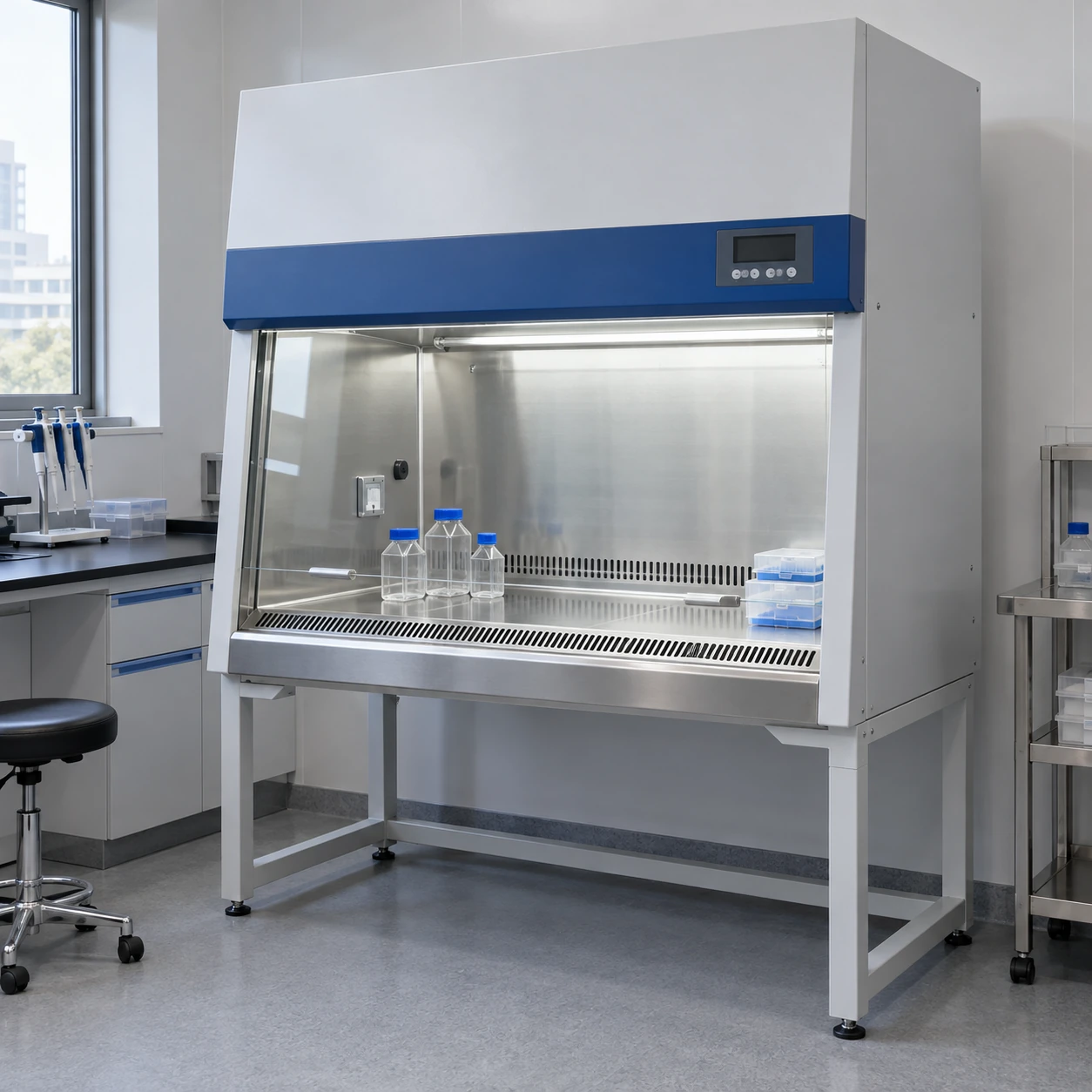
Biological Safety Cabinets
laminar flow hood for cell culture
| Brand | shengtongJH |
|---|---|
| Equipment selection | Class II biological safety cabinet; containment type selected from the laboratory risk assessment |
| Work zone W × D × H | 1000 × 520 × 640 / 1300 × 520 × 640 mm |
| Overall dimensions | Set by cabinet type, stand and exhaust arrangement; working dimensions are not the delivery envelope |
| Air system | HEPA-filtered downflow and exhaust with inward airflow at the front opening |
| A2 option | Partial air recirculation; exhaust connection follows the selected cabinet design |
| B2 option | Total exhaust with dedicated compatible building extraction |
| Surfaces | Coated steel cabinet and stainless steel work area |
| Power supply | 220 V, 50 Hz; destination-specific selection |
| Controls | Sash position indication, airflow monitoring and applicable alarms |
| Installation acceptance | Field verification of airflow, filter integrity, alarms and exhaust interfaces |
These options refer to biological safety cabinets. A clean bench with downward airflow is a different product and cannot substitute for the required containment.
Working width, service connections and installation interfaces can be configured for the laboratory application, within the selected containment design.
For mammalian cell culture, select an appropriate Class II biological safety cabinet through the laboratory risk assessment. An ordinary laminar-flow clean bench protects the work product and does not protect the operator or room.
Start with the material being handled
The phrase “cell culture hood” is used loosely, so a purchase description can point to the wrong equipment. Mammalian cells, human-derived material and potentially infectious samples call for a formal assessment of the procedure and its exposure risks.
A Class II cabinet combines a protective inward air stream at the opening with filtered air over the work and filtered exhaust. A horizontal or vertical clean bench lacks that containment function. Do not choose a clean bench for mammalian cell culture merely because it has a HEPA filter or a UV light.
Build a usable culture workspace
Map the routine from clean supplies to active work and waste. Pipette holders, vessels and collection containers need room without covering the front intake or rear return grilles. A crowded cabinet can force repeated crossings over open work and disturb the air pattern around it.
Choose width for the complete equipment layout and operator movement. A large device may fit through the opening yet block the path needed for downflow. Review the normal working sash position and the loaded arrangement during installation verification.
Cabinet and room must work together
Keep the open front away from door traffic and strong room supply jets. Leave access for filter testing, servicing and any required exhaust connection. Relocation can change these conditions even when the cabinet itself is untouched.
Choose the exhaust arrangement deliberately
An A2 and a B2 cabinet have different dependencies on building ventilation. Chemical use must be assessed separately because HEPA filtration does not remove chemical vapours. A cabinet type should follow the procedure and the specific equipment's allowed use.
Purchase the installation evidence as well as the cabinet
Include the applicable installed airflow checks, filter-integrity testing, alarm functions and operator instructions in the supply scope. A factory document cannot describe every disturbance at the final room location.
Servicing previously used equipment can require specialist decontamination. Define that responsibility and a competent service route before selecting a cabinet for sustained laboratory operation. shengtongJH can coordinate equipment options and interfaces around the approved requirement; it does not replace the laboratory's biosafety assessment.
For the existing range, see biological safety cabinets. Include the process, largest equipment and available room services in the enquiry.
Working width, service connections and installation interfaces can be configured for the laboratory application, within the selected containment design.