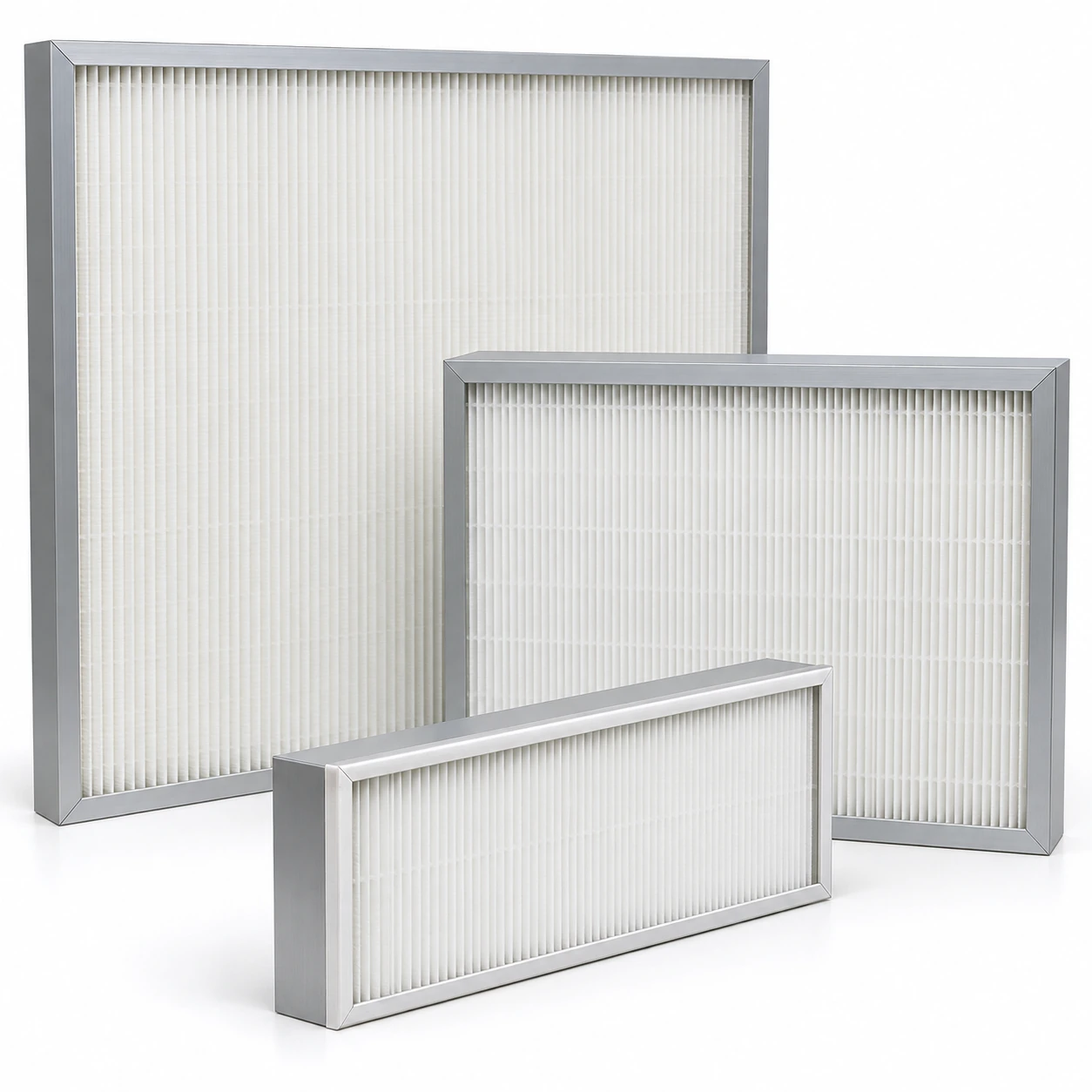
Air Filters
hepa filter for laminar flow hood
| Brand | shengtongJH |
|---|---|
| Component | Replacement mini-pleat HEPA cassette, without fan or enclosure |
| Frame W × H × depth | 610 × 610 × 66 / 915 × 610 × 66 / 1220 × 610 × 66 mm |
| Alternative depths | 90 or 110 mm where the cabinet seat and clamps accept them |
| Cabinet-specific formats | 820 × 600 × 50 / 780 × 610 × 50 / 1270 × 610 × 50 mm, only for a matching filter seat |
| Media and frame | Glass-fibre mini-pleat media; aluminium frame option |
| Filter grade | H13 or H14 with corresponding individual test documentation |
| Perimeter seal | Continuous compression gasket; gel seal only with matching knife-edge housing |
| Face protection | Protective grille as specified for access and handling |
| Pressure and flow | Selected against the cabinet fan duty; no universal drop-in airflow rating |
W × H refers to the frame face, and depth follows the airflow direction. The exposed media area, cabinet opening and overall hood width are different measurements.
Filter frame, seal location, grade and face protection can be customized to the documented hood interface.
The correct HEPA filter for a laminar flow hood matches the cabinet seat and its operating duty. A similar-looking panel or a nominal bench width is not enough to establish a replacement part.
Measure the interface that holds the filter
Record the outside frame width, face height and depth, then identify the seating ledge and clamp positions. The visible grille may be smaller than the cassette behind it. Measuring only the front opening can therefore produce a filter that cannot be seated.
Check which face carries the gasket and whether there is enough space for its intended compression. For a gel-sealed design, obtain the corresponding knife-edge details. Frame size and seal type must agree with the same housing.
Specify the operating condition with the size
A filter must pass the required air volume within the available fan pressure. Pressure-drop figures are comparable only when the flow and filter format are stated. A deeper cassette may offer different media area but can exceed the cabinet's available installation depth.
Changing grade can also change resistance. Select the final filter together with its test documentation and the cabinet duty; do not assume a higher grade is a direct replacement without checking the system.
Some wider cabinets use two smaller filters instead of one continuous panel. Their joint, individual seals and holding frames form part of the air path. Preserve the intended arrangement unless a competent redesign establishes a different one.
Drawing
Provide a dimensioned frame and seal sketch. Mark airflow direction and any protected or exposed face.
Duty
Identify the required flow, available pressure and approved filter grade. Include the existing cabinet information where available.
Service route
Confirm the cassette can enter through the access panel and be clamped without bending the frame or touching the media.
Receive and fit it as a fragile component
Inspect the protective packaging and frame on receipt, keeping the media protected during storage and handling. A crushed edge can prevent uniform gasket contact even if the pleats appear intact.
Installed seal and airflow checks are still needed after replacement. A filter supplied with an individual test record has not yet been tested in the customer's cabinet. Where the old equipment handled hazardous material, use an appropriate specialist service process rather than treating replacement as ordinary bench maintenance.
For a complete workstation, see HEPA-filtered laminar flow hoods.
Filter frame, seal location, grade and face protection can be customized to the documented hood interface.